
Excess Cysteine Triggers Novel Mitochondrial Iron-Dependent Cell Death
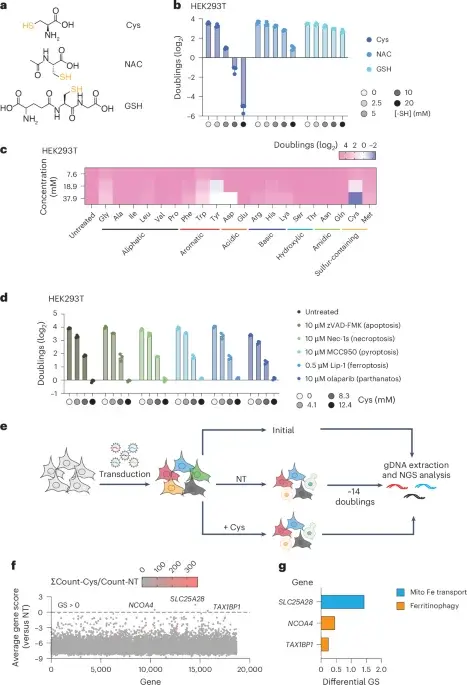
Researchers at The Rockefeller University have identified a new mechanism of cell death triggered by excess cysteine, distinct from ferroptosis. A genome-wide CRISPR screen revealed that mitochondrial iron transporters are essential mediators of this toxicity. Excess cysteine mobilizes iron from ferritin, expanding the cytosolic iron pool and driving accumulation in mitochondria. This disrupts iron-sulfur cluster biogenesis and respiration. Enhancing mitochondrial glutathione reductase activity restores redox balance and protects cells, suggesting that maintaining low cysteine levels is critical for mitochondrial iron homeostasis.
Key points
- A genome-wide CRISPR screen identified mitochondrial iron transporters as essential mediators of cysteine-induced cell death.
- Excess cysteine mobilizes iron from ferritin, expanding the cytosolic iron pool and driving mitochondrial iron accumulation.
- This accumulation impairs iron-sulfur cluster proteins and mitochondrial respiration, leading to cell death.
- Enhancing glutathione reductase activity specifically within mitochondria restores redox balance and protects cells by maintaining iron-sulfur cluster integrity.
- The findings suggest that maintaining low cysteine levels safeguards mitochondrial iron homeostasis under conditions of thiol imbalance.
Background
Previous research established that cysteine depletion triggers ferroptosis, an iron-dependent form of non-apoptotic cell death. However, the mechanisms by which excess cysteine causes cell death remained unclear. This study builds on earlier findings regarding cysteine's role in redox balance and iron-sulfur cluster biogenesis, providing a new perspective on how thiol imbalance affects cellular viability.
Why it matters
Understanding the mechanisms of cysteine-induced cell death could lead to new therapeutic strategies for diseases associated with thiol imbalance, such as cancer and neurodegenerative disorders. The identification of mitochondrial iron transporters as key mediators provides potential targets for intervention. Additionally, the role of glutathione reductase in protecting cells from cysteine toxicity highlights the importance of redox balance in maintaining cellular health.
What to watch
Further research is needed to determine the specific conditions under which excess cysteine triggers this form of cell death and to explore the therapeutic potential of targeting mitochondrial iron transporters or enhancing glutathione reductase activity. Clinical trials may eventually investigate the efficacy of these interventions in treating diseases associated with thiol imbalance.
Want the full story? Read the original reporting
Read on nature.com