Excess cysteine drives mitochondrial iron collapse and cell death
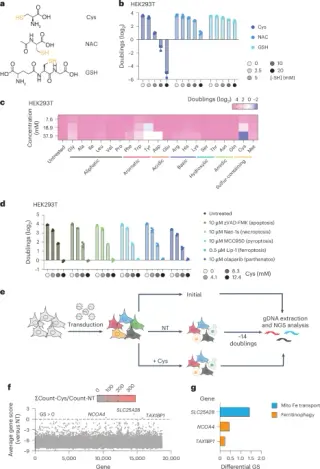
A Nature Metabolism study finds that too much cysteine triggers a mitochondrial iron–dependent cell death. A genome-wide CRISPR screen shows mitochondrial iron transporters are essential for this toxicity; limiting mitochondrial iron prevents death and preserves iron–sulfur cluster proteins and respiration. Mechanistically, excess cysteine mobilizes iron from ferritin, expands the cytosolic iron pool, and drives mitochondrial iron accumulation, while mitochondrial glutathione reductase activity helps restore redox balance and iron–sulfur integrity to protect cells. The work suggests maintaining low cysteine levels to safeguard mitochondrial iron homeostasis under thiol imbalance.