
Fingerprints on 15,000-Year-Old Clay Reveal Natufian Artistic Apprenticeship
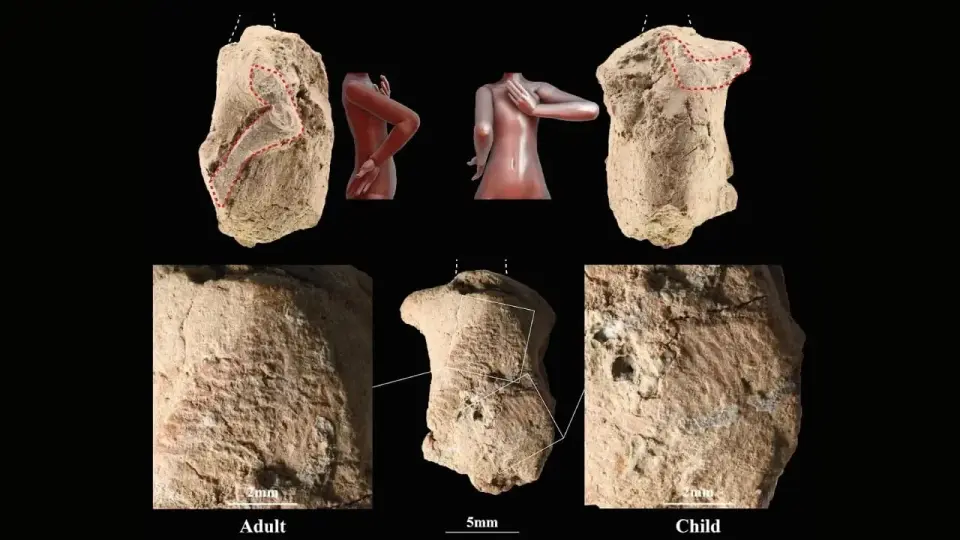
A new study identifies 154 clay figurines from Natufian sites in Israel, pushing the timeline of clay art in Southwest Asia back by 3,000 years. Microscopic analysis reveals fingerprints from children and adults, suggesting intergenerational knowledge transfer before the advent of agriculture.
Key points
- Researchers from the Hebrew University of Jerusalem analyzed 154 clay artifacts from Eynan-Mallaha, Hayonim Terrace, and el-Wad Terrace, dating them to 15,000 to 11,650 years ago.
- The findings include 15 recognizable figurines, mostly depicting birds, and 139 cylindrical fragments, challenging the view that clay sculpture emerged only during the Neolithic agricultural period.
- Fingerprint analysis on a human-shaped figurine shows overlapping marks from an adult and a pre-pubescent child, indicating that children participated in shaping and decorating the objects.
- Some bird figurines depict courtship postures, suggesting they may have been used to teach seasonal behaviors and cultural traditions, with one artifact providing the earliest known evidence of the engobe coloring technique.
- The study, published in PLOS ONE, was led by Dr. Laurent Davin and colleagues, highlighting that artistic expression and symbolic knowledge were shared across generations in early permanent settlements.
Background
Previous research had identified Natufian figurines made from bone or stone, but clay artifacts were generally associated with the later Neolithic period. A 2025 study described a 12,000-year-old figurine depicting a woman and a goose, while a 2026 study identified 142 Natufian clay ornaments. This new research expands on those findings by confirming a widespread clay-sculpting tradition among hunter-gatherers.
How outlets are covering it
The Jerusalem Post and SciTechDaily emphasize the significance of the 3,000-year shift in the timeline for clay art, highlighting the involvement of children in the creative process. ZME Science focuses on the 'family workshop' aspect, interpreting the overlapping fingerprints as evidence of hands-on apprenticeship. Archaeology Magazine provides minimal detail, primarily noting the publication date and the sites involved. All sources agree that the figurines likely served educational or ceremonial purposes, but ZME Science specifically notes that the lack of wear suggests they were not everyday toys.
Why it matters
This discovery reshapes the understanding of cultural development in prehistoric Southwest Asia, demonstrating that complex artistic traditions and intergenerational knowledge transfer existed long before the agricultural revolution. It provides physical evidence of how early societies preserved and transmitted symbolic knowledge, offering insights into the cognitive and social structures of the first permanent settlements.
What to watch
Researchers will continue to analyze the remaining fragments to determine if the figurines were used in specific ceremonies or seasons. Further studies may explore the broader implications of these findings for understanding the origins of symbolic expression and educational practices in early human communities.
- Israeli researchers uncover 15,000-year-old clay figurines, the earliest in Southwest Asia The Jerusalem Post
- A Child's Fingerprints on a 15,000-Year-Old Figurine Reveal a Surprisingly Human Moment From Prehistory ZME Science
- News - Natufian Clay Figurines Dated to 15,000 Years Ago Archaeology Magazine
- Scientists Discover 15,000-Year-Old Clay Figures That Rewrite the History of Human Art SciTechDaily
- 15,000-Year-Old Clay Figurines Carry The Fingerprints of Children And Adults, Suggesting a Shared Craft ScienceAlert
Want the full story? Read the original reporting
Read on The Jerusalem Post