
USC Study Links Vagus Nerve Signals to Memory Formation and Alzheimer’s Risk
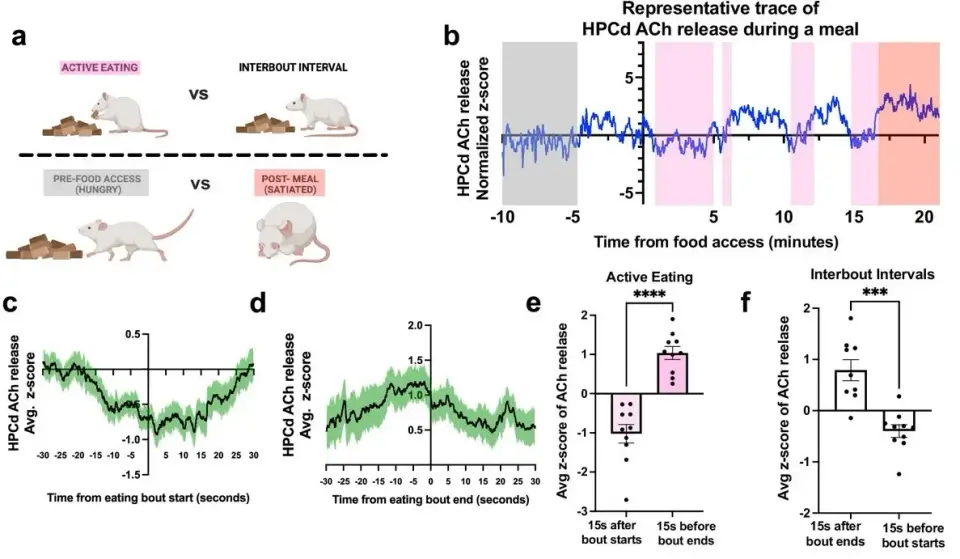
A new study in Nature Communications reveals that the gut actively helps the brain form memories by sending nutrient signals via the vagus nerve to the hippocampus. Researchers found that early-life exposure to a high-fat, high-sugar diet permanently blunts this acetylcholine signaling pathway, potentially increasing long-term risks for cognitive decline and Alzheimer’s disease.
Key points
- USC researchers used fiber photometry to observe real-time acetylcholine release in rat hippocampi during eating, confirming a direct gut-to-brain memory link.
- The signal is triggered by caloric nutrients (fat and protein) detected by the hormone cholecystokinin, not by taste or artificial sweeteners.
- Surgical severing of the vagus nerve or destruction of medial septum neurons eliminated the memory response, proving the pathway’s necessity.
- Rats raised on a Western diet for 30 days showed persistent deficits in post-meal acetylcholine elevation and spatial memory, even after returning to a healthy diet.
- The study suggests that vagus nerve stimulation could be a therapeutic target for Alzheimer’s, as the disease involves the depletion of the same acetylcholine pathways.
Background
This research builds on earlier 2026 findings from Stanford, which demonstrated that gut microbiome changes could drive age-related memory loss in mice, and a US trial showing that vagus nerve stimulators provide lasting relief for severe depression. These studies collectively highlight the critical role of the gut-brain axis in both mood and cognitive function.
How outlets are covering it
While Hackaday and Earth.com focus on the fundamental mechanism of how the gut aids memory, Tech Times emphasizes the alarming implications for public health, specifically how junk food can permanently damage this circuit. ScienceAlert, however, covers a different aspect of gut neuroscience, identifying specific neurons in the colon that regulate motility and pain, rather than cognitive memory. The outlets agree on the importance of the vagus nerve but diverge on whether the focus should be on cognitive preservation or gastrointestinal symptom management.
Why it matters
This research provides a mechanistic rationale for using vagus nerve stimulation to treat Alzheimer’s and highlights the long-term cognitive risks of poor childhood diets. It shifts the understanding of memory from a purely cerebral process to one that is fundamentally dependent on digestive health and nutrient signaling.
What to watch
Stanford University has a registered clinical trial (NCT07214194) investigating vagus nerve stimulation for memory in aging, with an estimated start date of February 2027. Further research is needed to determine if the permanent blunting of the gut-brain circuit observed in rats applies to humans and to clarify the roles of other hormones like GLP-1.
- How The Vagus Nerve Promotes Healthy Cognition Via Acetylcholine Signaling Hackaday
- The stomach helps the brain form memories—this is how it may work Medical Xpress
- A 'Second Brain' in The Gut Could Be Driving Constipation And Pain ScienceAlert
- Junk Food Permanently Damages Gut-Brain Memory Circuit, USC Study Reveals Tech Times
- Your gut may play a bigger role in memory than scientists realized Earth.com
Want the full story? Read the original reporting
Read on Hackaday