
Thymus Health Linked to Longevity and Cancer Risk in Major New Study
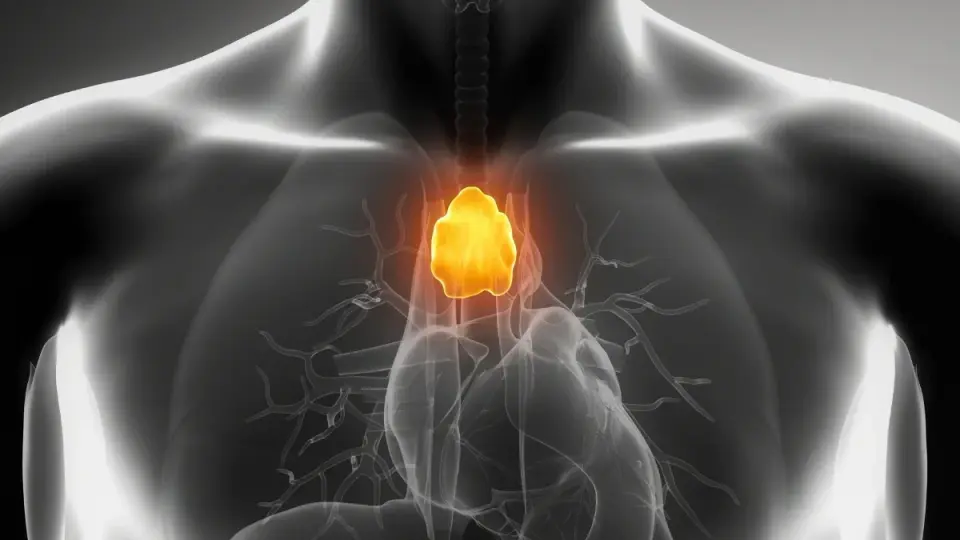
A new study in Nature suggests the thymus, often dismissed as useless in adults, significantly impacts longevity and disease risk. Researchers found that higher thymic health correlates with lower risks of death, cancer, and cardiovascular disease. A separate NIH-funded study at USC explores how thymulin, a hormone from the thymus, may regulate inflammation and improve cancer immunotherapy in older patients.
Key points
- Researchers at Harvard analyzed data from over 27,000 people in the Framingham Heart Study and National Lung Screening Trial.
- Participants with high thymic health had a 50% lower risk of death and 36% lower risk of lung cancer compared to those with low thymic health.
- High thymic health was associated with up to 92% lower risk of cardiovascular death in one cohort.
- USC researchers received a $3.2 million NIH grant to study thymulin, a hormone produced by the thymus, and its role in reducing chronic inflammation.
- The USC study aims to determine if thymulin can improve immunotherapy responses in older patients with breast cancer and melanoma.
Background
Previous research has challenged the view that organs become inert with age. For instance, a 2026 study found postmenopausal ovaries shift to an immune-driven role, and another linked PTSD to accelerated aging in multiple organs. These findings align with the current research, which suggests that maintaining immune organ function, such as the thymus, is critical for overall health and longevity, rather than just early-life development.
How outlets are covering it
ScienceAlert highlights the broad implications of the Harvard study, emphasizing that thymic health is a fundamental component of immune fitness that can be measured via routine CT scans. The outlet notes that while the findings show strong correlations, they do not prove causality. News-Medical and Bioengineer.org focus on the USC study, which identifies thymulin as a specific causal factor linking thymic decline to 'inflammaging' and cancer progression. These outlets emphasize the therapeutic potential of thymulin as an add-on to immunotherapy, particularly for older patients who often respond poorly to current treatments. While ScienceAlert focuses on population-level health outcomes, the USC-focused outlets concentrate on molecular mechanisms and clinical applications for cancer treatment.
Why it matters
These findings suggest that the thymus is not merely a childhood organ but a key player in adult health. If thymic health can be measured and preserved, it could lead to new strategies for preventing cancer and cardiovascular disease. The potential use of thymulin to enhance immunotherapy in older patients could significantly improve cancer treatment outcomes for a demographic that currently faces high mortality rates from metastatic disease.
What to watch
The Harvard team plans to replicate their findings in other cohorts to confirm the correlations. The USC team will use their new grant to investigate the molecular mechanisms of thymulin and test its efficacy in aged mice with breast cancer and melanoma. They will also explore whether thymulin can prevent metastasis or slow the growth of existing metastatic tumors. If successful, these findings could lead to new clinical trials for thymulin-based therapies in humans.
- This Tiny Organ Plays a Far More Profound Role in Human Longevity Than We Realized, Study Finds ScienceAlert
- NIH funds research to explore the role of thymulin in inflammaging and cancer News-Medical
- USC Receives $3.2 Million NIH Grant to Study Age-Related Inflammation and Cancer Bioengineer.org
- The Gland You Forgot About May Hold the Key to Cancer Immunity in Older Adults Yahoo Health
Want the full story? Read the original reporting
Read on ScienceAlert