
Stanford Team Creates Mice with Human Cortex to Model Brain Diseases
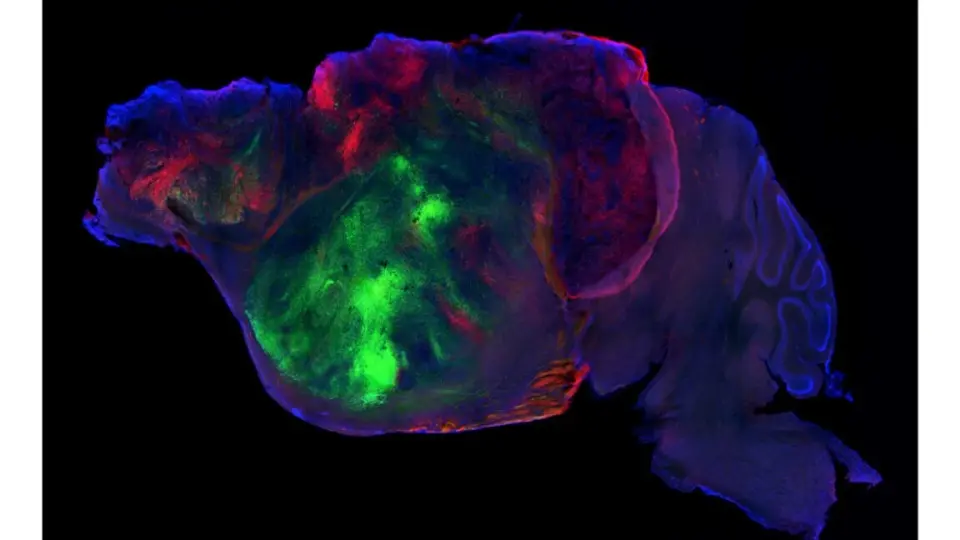
Stanford researchers have developed a new model for studying human brain disorders by genetically removing the cortex of mice and replacing it with human brain organoids. Published in Nature, the study shows that these 'xenocortical' mice survive and exhibit behaviors intermediate between normal and cortex-free mice, offering a potential platform for testing therapies for conditions like epilepsy and autism.
Key points
- Stanford University researchers, led by Sergiu Pașca, genetically deleted the mouse cortex and implanted human cortical organoids derived from stem cells.
- The human cells integrated into the mouse nervous system, forming connections as far as the spinal cord and generating diverse neuron types, including layer 5 projection neurons.
- Behavioral tests showed that mice with human cortex performed better than those with no cortex but worse than normal mice in tasks involving memory and motor coordination.
- The study aims to address the gap between animal models and human clinical trials, particularly for psychiatric and neurodevelopmental disorders that do not manifest in rodents.
- Ethical concerns were raised regarding the cognitive status of the animals, though researchers emphasized that the mice do not exhibit human-like intelligence or enhanced function.
Background
This development follows earlier research in 2026 on human brain organoids and their integration into animal hosts. Previous studies highlighted the limitations of standard organoids, which lack circulatory and immune system connections, and the challenges of transplanting human cells into intact animal brains due to spatial constraints and competition with host neurons. The current study builds on these efforts by creating a more extensive integration platform to better model human neurodevelopment and disease mechanisms.
How outlets are covering it
Ars Technica emphasizes the technical limitations of the new model, noting that while the human cells form connections, they lack the organized layer structure of a normal cortex, resulting in only slight improvements over mice with no cortex at all. The BBC highlights the ethical implications, quoting experts who question the welfare of the animals and the potential for altering animal cognition, while also noting the potential for transformative treatments for human-specific disorders. The New York Times focuses on the scientific breakthrough and the subsequent call for new ethical guidelines, framing the work as a significant advance in replicating human brain complexity outside the body. The Nature article provides the detailed technical methodology, confirming the genetic depletion of mouse cortical neurons and the successful engraftment of human organoids, while noting the intermediate behavioral outcomes.
Why it matters
This research provides a potential bridge between in vitro organoid models and in vivo animal studies, offering a more realistic platform for testing therapies for human brain disorders that cannot be effectively modeled in standard rodents. It may lead to more accurate predictions of drug efficacy and a better understanding of human neurodevelopment, potentially reducing the failure rate of clinical trials for psychiatric and neurodevelopmental conditions.
What to watch
Researchers will need to further characterize the anatomical and functional properties of the humanized cortex to determine its utility as a disease model. Ethical guidelines for such research are likely to be developed in response to the public and scientific debate. Future studies may explore the use of this platform for modeling specific diseases like epilepsy, autism, and cerebral palsy, and for testing therapeutic interventions.
- Researchers swap in human brain cells for a mouse’s cortex Ars Technica
- Developmental xenocortication using human-derived organoids in mice Nature
- Part-human part-mouse brain developed in science breakthrough BBC
- These Mice Have Partly Human Brains The New York Times
- Scientists create mice with part-human brains The Guardian
Want the full story? Read the original reporting
Read on Ars Technica