
Immune signals lock brown fat cells into low-heat states, explaining age-related cold sensitivity
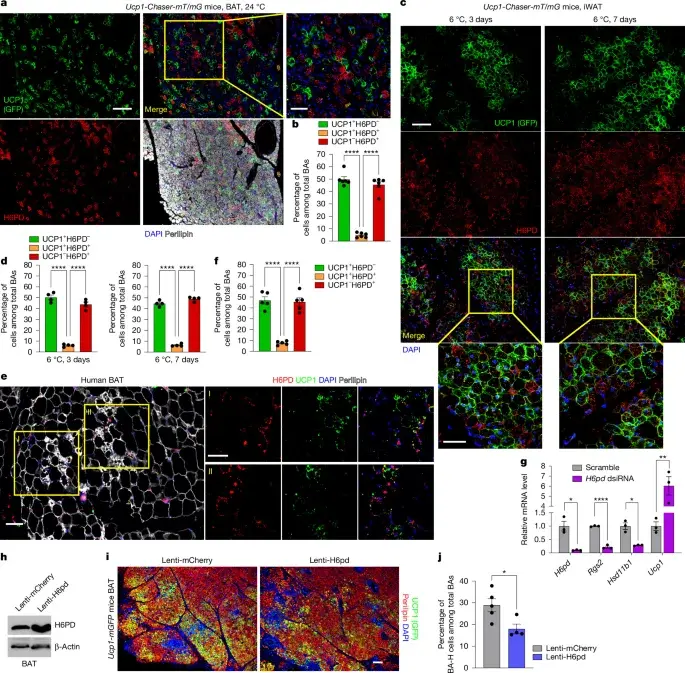
A study in Nature reveals that brown adipocytes exist in two distinct states: high-thermogenic (BA-H) and low-thermogenic (BA-L). Interleukin-1 beta (IL-1β) from immune cells stabilizes the BA-L state by preserving hexose-6-phosphate dehydrogenase (H6PD), which activates glucocorticoid receptors to suppress heat production. Cold exposure triggers sympathetic nerves to reduce IL-1β, allowing cells to switch to the heat-producing BA-H state. In aging mice, elevated IL-1β locks cells in the BA-L state, causing cold intolerance. Blocking the glucocorticoid receptor in aged mice restores heat production and energy expenditure.
Key points
- Brown adipocytes are heterogeneous, existing as BA-H (high UCP1 expression) or BA-L (low UCP1 expression) cells.
- IL-1β secreted by neutrophils and macrophages stabilizes BA-L cells by preventing the degradation of H6PD protein.
- H6PD generates active glucocorticoids, which activate the glucocorticoid receptor (GR) to increase Rgs2 expression and suppress UCP1.
- Cold exposure reduces IL-1β via sympathetic innervation, leading to H6PD degradation and a shift to the BA-H state.
- Aging is associated with elevated IL-1β in brown adipose tissue, locking cells in the BA-L state and causing cold intolerance.
- Inducible deletion of the glucocorticoid receptor gene (Nr3c1) in BA-H cells locks them in the high-thermogenic state, increasing energy expenditure even at room temperature.
Background
Previous research identified brown adipocyte heterogeneity but did not explain the mechanisms governing the switch between thermogenic states. This study builds on earlier findings that BA-H cells constitute 30-50% of brown adipocytes at room temperature and predominate after cold exposure. It integrates these observations with new findings on immune-neuronal regulation to explain age-related declines in thermogenesis.
Why it matters
Understanding the molecular switch between brown adipocyte states provides a target for treating age-related cold sensitivity and metabolic disorders. The discovery that IL-1β and glucocorticoid signaling lock cells into a low-heat state offers a potential therapeutic avenue to restore thermogenesis in older individuals, potentially improving energy homeostasis and metabolic health.
What to watch
Researchers may investigate whether suppressing IL-1β or blocking glucocorticoid receptor activity in aged humans can restore brown adipose tissue function and improve cold tolerance. Further studies will likely explore the long-term metabolic effects of locking brown adipocytes in the high-thermogenic state.
Want the full story? Read the original reporting
Read on Nature