
Lab-grown retinal vessels restore function in mice, fueling hope for blindness treatments
TL;DR
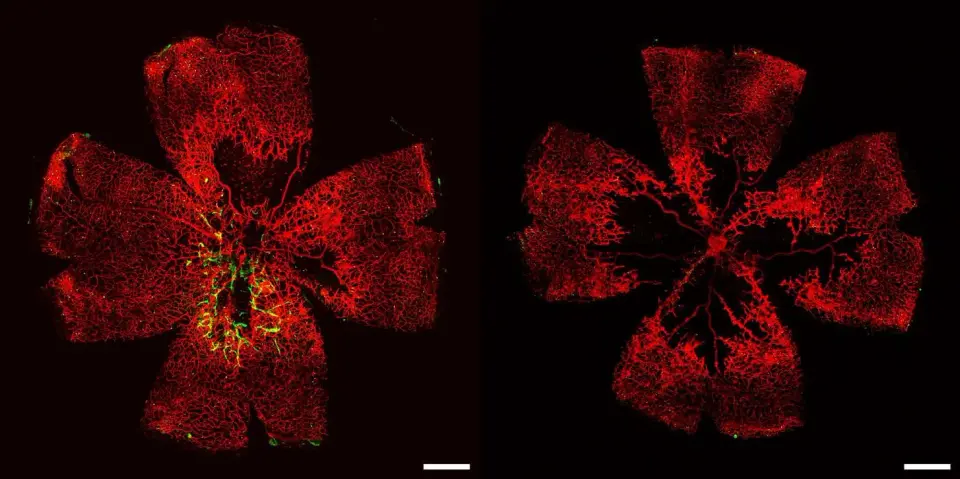
Duke University researchers used induced pluripotent stem cells (iPSCs) to grow retinal endothelial cells—the vessels lining the retina—and demonstrated they can form functional vascular networks in lab conditions. When injected into mouse models of retinal disease, the lab-grown cells integrated with existing tissue to rebuild blood vessels and restore retinal function, suggesting a cheaper, scalable path toward preventative therapies for conditions like diabetic retinopathy.
- Blind People Offered Hope of Seeing Again After Stem Cell Breakthrough Remakes Retinal Blood Vessels Good News Network
- Duke engineers grow retinal blood vessel cells from pluripotent stem cells News-Medical
- Derivation of functional retinal endothelial cells from human pluripotent stem cells for therapeutics and modelling Nature
- Photoswitch drug shows early signs of restoring light sensitivity in severely damaged retinas in first human trial Medical Xpress
- Researchers Grow Rare Eye Vessel Cells to Halt Vision Loss Neuroscience News
Want the full story? Read the original reporting
Read on Good News Network