Tag

Ipscs

All articles tagged with #ipscs

Stem-cell therapy shows promising heart recovery in a small Chinese trial
health22 days ago

Stem-cell therapy shows promising heart recovery in a small Chinese trial

In a small 12‑month trial at Nanjing Drum Tower Hospital, 10 heart‑failure patients received stem cells derived from their own iPSCs and differentiated into heart muscle cells injected into diseased heart tissue, while 10 controls underwent bypass surgery. Nine treated patients showed significant heart‑function improvements at 12 months versus the control group, with better six‑minute walk test results and an increased ejection fraction on average. No severe adverse events were reported in the treated group, though two patients experienced tachycardia that resolved. One control patient died eight months after surgery. While promising, the study’s tiny size means larger trials are needed to confirm safety and benefit.
Lab-grown retinal vessels restore function in mice, fueling hope for blindness treatments
science2 months ago

Lab-grown retinal vessels restore function in mice, fueling hope for blindness treatments

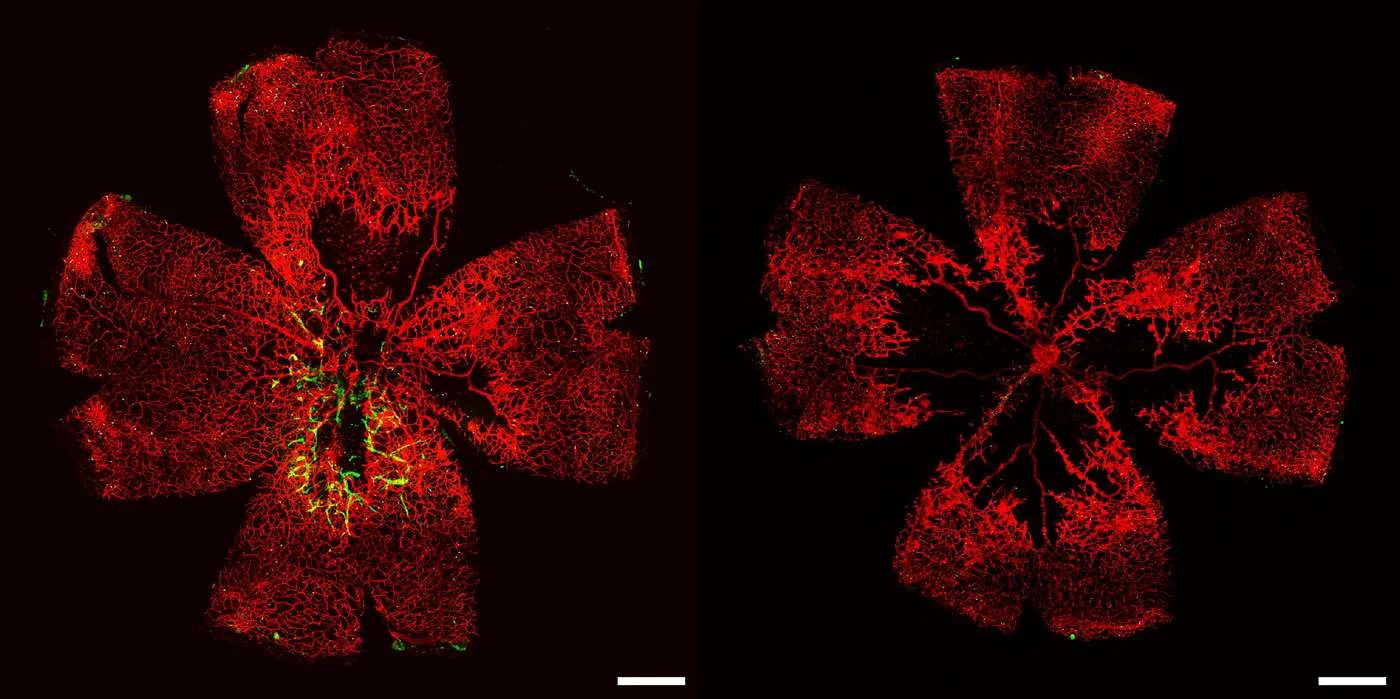
Duke University researchers used induced pluripotent stem cells (iPSCs) to grow retinal endothelial cells—the vessels lining the retina—and demonstrated they can form functional vascular networks in lab conditions. When injected into mouse models of retinal disease, the lab-grown cells integrated with existing tissue to rebuild blood vessels and restore retinal function, suggesting a cheaper, scalable path toward preventative therapies for conditions like diabetic retinopathy.

Stem-derived retinal vessels repair damaged retinas in mice, paving way for new eye therapies
science2 months ago

Stem-derived retinal vessels repair damaged retinas in mice, paving way for new eye therapies

Duke researchers derived retinal endothelial cells from human iPSCs, generated lab-grown retinal vasculature, and showed these cells can integrate into diseased mouse retina to rebuild vessels and restore barrier function, offering a scalable model for studying eye diseases and a potential preventative therapy.