
Lung-resident immune cells reveal hidden genetic drivers of autoimmune and lung diseases
TL;DR
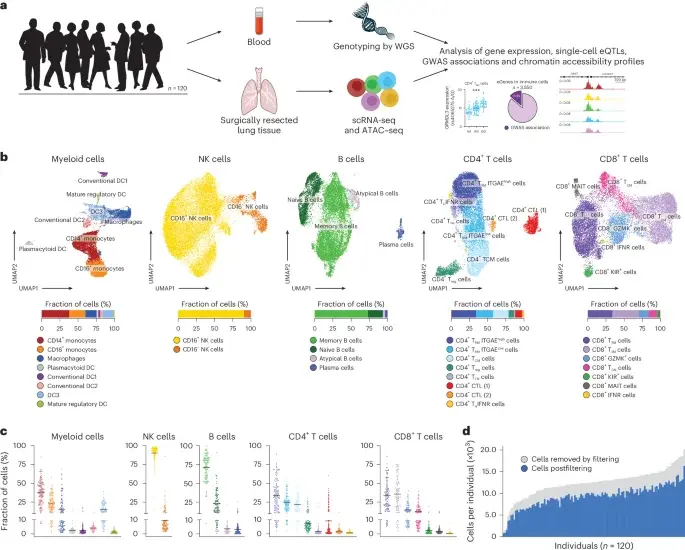
A large single-cell eQTL study across 29 lung immune cell subsets from 120 individuals links disease-risk variants to gene expression in tissue-resident immune cells, revealing cell-type–specific regulatory mechanisms for autoimmune diseases and COPD. The researchers identify thousands of eGenes, with hundreds showing colocalization to GWAS signals; COPD heritability is estimated at 15–20% mediated by lung-immune-cell expression, and genes like IRF5, IFITM3, and ZNF683 illustrate how regulatory variants shape immune responses in the lung. Many signals are not detected in blood-based eQTL datasets, highlighting the value of studying tissue-resident cells.
- Tissue-resident immune cells drive genetic risk in autoimmune and lung diseases nature.com
- Immune cells in human lung tissue may drive the development of autoimmune disease | Newswise Newswise
- Building immunity: Tissue-resident immune cells defend human lungs from viral, bacterial, and fungal infections Medical Xpress
- Pandurangan Vijayanand, M.D., Ph.D. (IMAGE) EurekAlert!
- This Is What Really Happens Inside Your Lungs After Every Illness MindBodyGreen
Want the full story? Read the original reporting
Read on nature.com