Tag

Single Cell

All articles tagged with #single cell

Malva: a rapid, reference-free search engine for single-cell sequence data
technology4 days ago

Malva: a rapid, reference-free search engine for single-cell sequence data

A new platform called Malva enables ultrafast, reference-free querying of raw single-cell and spatial transcriptomics data at atlas scale. It builds a scalable index of non-overlapping k-mers linked to cell barcodes (Malva Index), allowing exact, protein- and genome-agnostic searches for any sequence, mutations, splice junctions, circRNAs, pathogens, or nonreference transcripts. Malva supports sequence-based cell-type clustering, de novo marker sequence assembly, and integration with neural networks via an API and natural-language query translator. TheIndex aggregates tens of millions of cells from public datasets (e.g., Human Cell Atlas) in a compressed, on-disk structure, delivering real-time results (milliseconds to minutes) and enabling analyses beyond traditional gene-centric pipelines. Demonstrations include germline SNP allele frequencies, isoform and 3′ UTR usage, circRNA detection, viral/contaminant screening, and pan-cancer somatic mutation detection, all without read alignment. Limitations include a minimum 24-nt query, reliance on exact k-mer matching, and pseudocounts rather than absolute molecule counts. Malva provides a new discovery layer for sequence-defined questions and AI-assisted biology across huge public atlases.

Lung-resident immune cells reveal hidden genetic drivers of autoimmune and lung diseases
science1 month ago

Lung-resident immune cells reveal hidden genetic drivers of autoimmune and lung diseases

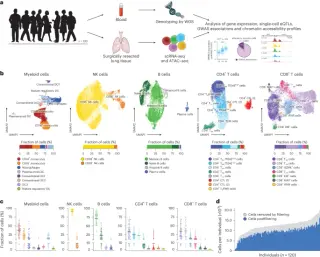
A large single-cell eQTL study across 29 lung immune cell subsets from 120 individuals links disease-risk variants to gene expression in tissue-resident immune cells, revealing cell-type–specific regulatory mechanisms for autoimmune diseases and COPD. The researchers identify thousands of eGenes, with hundreds showing colocalization to GWAS signals; COPD heritability is estimated at 15–20% mediated by lung-immune-cell expression, and genes like IRF5, IFITM3, and ZNF683 illustrate how regulatory variants shape immune responses in the lung. Many signals are not detected in blood-based eQTL datasets, highlighting the value of studying tissue-resident cells.


3D lamprey brain atlas maps ancient vertebrate brain evolution
science2 months ago

3D lamprey brain atlas maps ancient vertebrate brain evolution

Chinese researchers have built the first 3D spatial single-cell atlas of the lamprey brain, enabling reconstruction of ancestral vertebrate brain features and revealing conserved gene expression and neurogenesis patterns with mammals; published as a Science cover article on June 19, 2026, the work suggests early vertebrate brains were already well-partitioned and provides a new resource for brain-evolution studies.

Single-cell atlas links IBD risk to cell-type specific gene regulation
science3 months ago

Single-cell atlas links IBD risk to cell-type specific gene regulation

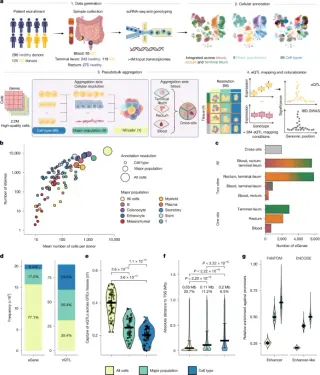
Researchers built IBDverse, the largest single-cell eQTL atlas for inflammatory bowel disease, mapping cis-eQTL effects across blood and gut tissues in about 400 individuals to link genetic risk to specific cell types. They find cell-type eQTLs are more distal, enhancer-rich, and far more likely to colocalize with IBD GWAS signals than bulk-tissue eQTLs, nominating effector genes such as MAML2 and ZMIZ1 in dendritic cells and MYC and RASGRP1 in colonocytes. Notch pathway regulators in dendritic cells and Wnt-driven epithelial renewal in colonocytes emerge as key mechanisms, tying regulatory variation to barrier dysfunction and inflammation. The study also highlights therapeutic angles—including PRKCB inhibitors and targets like ITGA4/JAK2—and provides a framework for interpreting GWAS loci via cell-type–resolved eQTL mapping in complex diseases.

Single-cell proteomics maps human liver zonation and its fragility in diseased tissue
science6 months ago

Single-cell proteomics maps human liver zonation and its fragility in diseased tissue

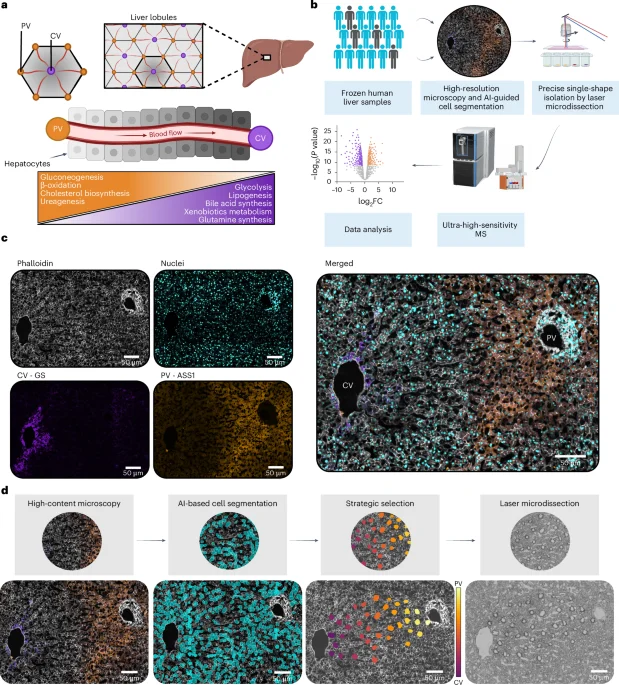
Researchers used advanced scDVP to profile hundreds of hepatocytes from 18 people, building a high-resolution map of protein gradients along the liver's porto–central axis. They quantified ~2,500 proteins per cell, showed roughly half are zonated, and introduced gradient-based analysis to quantify zonation without binning. Cross-species comparison with mice revealed shared and human-specific zonation features; in tissues with disrupted architecture, zonation is broadly lost. The study delivers an open-access liver proteome resource and a framework applicable to spatial proteomics.