
Psilocybin Reveals Hidden Brain Order Linked to Context and Experience
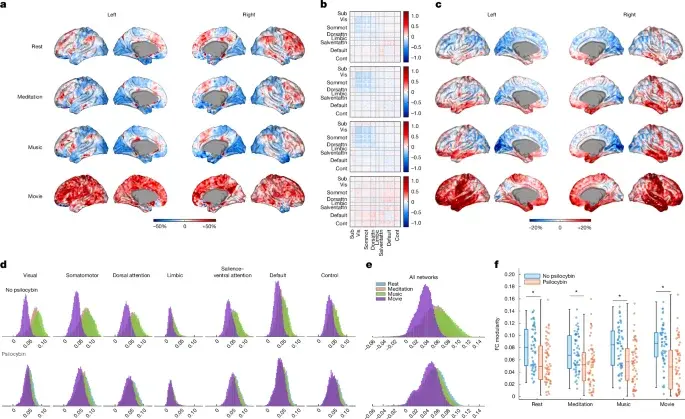
A large-scale study finds that psilocybin creates structured, context-sensitive brain patterns linked to profound subjective experiences, challenging the view that psychedelics only cause neural chaos.
Key points
- 62 adults underwent fMRI and EEG scans before and after psilocybin administration.
- Brain activity showed structured patterns aligned with context (music, meditation, movie, rest).
- Stronger context alignment correlated with deeper self-dissolving experiences and next-day mindset changes.
- Machine learning revealed hidden order missed by traditional time-averaged analyses.
- Findings suggest context sensitivity is crucial for therapeutic outcomes.
Background
Previous research suggested psilocybin increases brain entropy and disrupts neural connectivity, potentially leading to lasting psychological changes. Earlier studies indicated that a single dose could reshape brain networks and boost well-being for weeks, but the mechanisms linking acute brain changes to subjective experience remained unclear. This new study builds on those findings by examining how context shapes brain activity during the acute phase.
How outlets are covering it
Nature and Scientific American emphasize the discovery of 'hidden order' in brain activity, linking it to the subjective experience of 'embeddedness' or oneness. New Atlas highlights the importance of context in shaping the psychedelic experience, suggesting that setting and mindset are critical for therapeutic outcomes. Nautilus focuses on the individual variability of experiences, noting that positive, blissful trips led to more organized brain patterns, while negative or anxious trips did not. All sources agree that the study provides a neurobiological basis for the importance of context in psychedelic therapy, but they differ in emphasis: Nature and Scientific American focus on the neural mechanisms, New Atlas on the therapeutic implications, and Nautilus on the individual variability of experiences.
Why it matters
This research provides a neurobiological explanation for why context and mindset are crucial in psychedelic therapy. By revealing that brain activity becomes structured and context-sensitive during positive experiences, the study suggests that therapeutic outcomes may depend on the quality of the subjective experience. This could lead to more personalized and effective psychedelic treatments, where context and setting are optimized to enhance the therapeutic potential of psilocybin.
What to watch
Future research will aim to determine if the brain signatures identified in this study can predict therapeutic outcomes. Researchers also plan to explore factors that predict the depth of subjective experience, such as personality traits and mindset, to better understand how to optimize psychedelic therapy for individual patients.
- Psychedelics align brain activity with context Nature
- How psilocybin alters consciousness to create a sense of ‘oneness’ Scientific American
- Landmark study upends how we think the brain responds to psychedelics newatlas.com
- World's largest psilocybin brain-imaging study maps how context reshapes psychedelic effects Medical Xpress
- What a Blissful Psychedelic Trip Looks Like Inside the Brain Nautilus | Science
Want the full story? Read the original reporting
Read on Nature