
New Single-Cell Atlas Identifies Five Myeloma Archetypes and FCRL2 Target
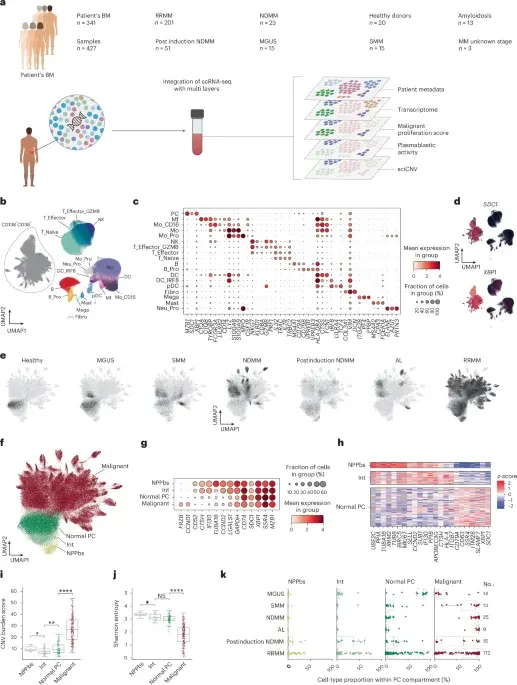
Researchers published a large-scale single-cell atlas of multiple myeloma in Nature Genetics, identifying five distinct malignant transcriptional archetypes and a separate proliferative program. The study analyzed 341 individuals to link these biological states with genomic features, therapeutic resistance, and clinical outcomes. It also identified FCRL2 as a specific surface target on malignant plasma cells, which showed promise in CAR-T cell therapies.
Key points
- A new atlas covers 341 patients to map the heterogeneity of multiple myeloma.
- Five recurrent malignant transcriptional archetypes were identified.
- An orthogonal proliferative program was linked to genomic features and resistance.
- FCRL2 was identified as a plasma-restricted surface target for therapy.
- FCRL2-targeted CAR-T cells showed activity in vitro and survival benefits in vivo.
Background
Multiple myeloma is a plasma-cell malignancy characterized by extensive genomic and transcriptional heterogeneity, which complicates disease classification and precision therapy. Recent advancements include the FDA approval of Zenbexus, a first-in-class oral therapy for advanced cases, and the development of tools like Malva for rapid RNA search across single-cell data. These developments highlight the growing focus on molecular profiling to improve treatment outcomes in blood cancers.
Why it matters
This research provides a clinically actionable blueprint for stratifying patients and nominating precision targets in plasma-cell malignancies. By defining distinct malignant archetypes and identifying FCRL2 as a viable target, the study offers new avenues for developing therapies like CAR-T cells, potentially improving survival rates and overcoming therapeutic resistance in multiple myeloma.
What to watch
The next steps involve further validation of the FCRL2 target in clinical settings and the integration of the identified transcriptional archetypes into routine patient stratification. Researchers will likely continue to explore the prognostic value of these states across different clinical stages and platforms to refine risk assessment and treatment strategies.
Want the full story? Read the original reporting
Read on Nature