Five years after a lupus patient achieved lasting remission with CAR-T therapy, the case has stirred broad pharma interest and spurred ongoing research into CAR-T for autoimmune diseases, offering renewed hope while highlighting challenges ahead.
A 47-year-old woman with autoimmune haemolytic anaemia (AIHA), immune thrombocytopenia (ITP) and antiphospholipid syndrome (APS) achieved rapid, lasting remission after CD19-targeted CAR-T cell therapy, effectively resetting her immune system and enabling a near-normal life; she has remained in treatment-free remission for about 14 months, while researchers note the need for trials to determine durability and wider applicability.
A Pilates instructor’s flu-like symptoms led to a diffuse large B-cell lymphoma diagnosis; after initial chemotherapy, the cancer recurred in her brain, but a personalized CAR-T immunotherapy treatment induced complete remission. She experienced no major side effects, returned to daily life, and will continue regular scans to monitor for recurrence, marking a hopeful turnaround.
Gilead will acquire Arcellx for $115 per share in cash plus a $5-per-share contingent value right (CVR), valuing the deal at about $7.8 billion and giving Gilead full control of Anito-cel, its BCMA-directed CAR-T therapy for multiple myeloma. The transaction aims to accelerate development and commercialization, with Anito-cel’s BLA accepted by the FDA and a PDUFA date of December 23, 2026; the deal is expected to close in Q2 2026 and to be accretive to EPS after FDA approval, with the CVR tied to cumulative global net sales milestones through 2029.
Gilead Sciences announced plans to acquire Arcellx for about $7.8 billion, valuing Arcellx at $115 per share with a 79% premium and potential additional $5 per share contingent on meeting a future sales target, anchored by Arcellx’s CAR-T therapy anito-cel co-developed with Kite Pharma for multiple myeloma.
Gilead agreed to acquire Arcellx for about $7.8 billion in cash to take full control of the BCMA-targeted CAR-T therapy anito-cel as FDA review proceeds, paying $115 a share—a 68% premium to Arcellx's 30-day VWAP with a $5-per-share contingent payout if global sales reach $6 billion by 2029; the deal aims to sharpen Gilead's cell-therapy portfolio and compete with J&J/Legend's Carvykti, with analysts noting anito-cel's safety profile and potential to restore momentum for Gilead's Kite unit.
Gilead will buy Arcellx for $7.8 billion in cash, valuing Arcellx at $115 per share with a 79% premium and expanding their joint development of the anti-cancer CAR-T therapy anito-cel for multiple myeloma. The deal follows Arcellx's collaboration with Kite Pharma, and the FDA is reviewing anito-cel with a decision expected by year-end. The acquisition is expected to be EPS-accretive in 2028 and includes a $5 per share milestone payment if cumulative global net sales of anito-cel reach $6 billion through 2029.
Eli Lilly will acquire Orna Therapeutics in a deal worth up to $2.4 billion in cash, expanding Lilly’s genetic-medicine platform with Orna’s circular-RNA–based in vivo CAR-T technology (ORN-252) designed to treat B cell–driven autoimmune diseases, leveraging lipid nanoparticle delivery for potentially more durable therapeutic protein expression and broader in vivo cell-therapy options.
A 75th American Cancer Society Cancer Statistics report shows the U.S. five-year cancer survival rate has risen to about 70% (7‑in‑10) thanks to earlier detection and new treatments like immune checkpoint therapy and CAR‑T cell therapy. Survival has improved across cancers (breast 92%, melanoma 95%, prostate 98%), with leukemia and non‑Hodgkin lymphoma up ~20% and 18% and pancreatic and liver cancers also rising (to 13% and 22%). Myeloma and lung cancer survival have climbed to 62% and 15–28%, while late-stage survival now averages 35% (up from 17%). The death rate has fallen about 34% since 1991, saving roughly 4.8 million lives by 2023 — achievements driven by diagnosis, screening, and innovative therapies rather than a cure.
AstraZeneca will pay up to $630 million to acquire the remaining China rights to its GPC3-targeting CAR-T therapy C-CAR031, giving it full global rights; the deal follows a prior China arrangement and aligns with AZ's push to develop CAR-T therapies for hepatocellular carcinoma, which showed promising early responses in China.
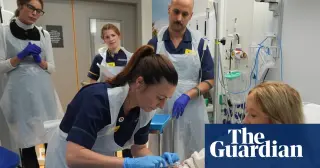
The NHS has funded and begun delivering CAR-T cell therapy for adults with B‑cell ALL, with 28‑year‑old Oscar Murphy receiving the first infusion in Manchester. The personalised “living drug” reprograms a patient’s T‑cells to attack cancer and could extend survival; trial data showed 77% remission and about 15.6 months of added life, with around 50 patients a year expected to benefit across the UK.
A new CAR-T immunotherapy developed by Legend Biotech and marketed by Johnson & Johnson has shown promising results in treating advanced multiple myeloma, with about a third of patients experiencing long-term remission, prompting discussions of a potential cure for this previously incurable blood cancer.
Chinese scientists have developed a pioneering CAR-T cell therapy that offers the potential for a one-time treatment for asthma, a condition that currently requires lifelong management. This therapy, which targets key cytokines driving asthma, has shown promising results in animal studies, providing long-term relief from symptoms. While the findings are encouraging, experts stress the need for further research to ensure the therapy's safety and efficacy in humans.
The US FDA has requested a "boxed warning" to be added to the prescribing information for CAR-T cancer therapies, including those made by Gilead Sciences, Johnson & Johnson, Novartis, and others, due to reports of patients developing T-cell blood cancer after treatment. Novartis has agreed to update the prescribing information for its CAR-T cell therapy Kymriah, while Bristol Myers is evaluating next steps for its therapies. The FDA has identified adverse events and clinical trial reports describing T-cell malignancies and considers the risks applicable to all therapies in the category.