The FDA approved Bristol Myers Squibb's oral iberdomide (Zenbexus) for advanced multiple myeloma in combination with Darzalex and dexamethasone, marking the debut of a new drug class and the use of a more sensitive measure of cancer remission.
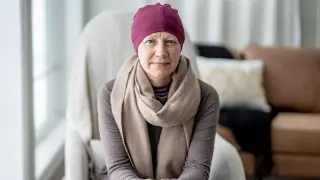
Bruce Springsteen announced in a video at the Pan-Mass Challenge that Patti Scialfa, his wife and longtime E Street Band member, is in remission from multiple myeloma, marking a hopeful turn in her battle with cancer that became public in 2018.
Bruce Springsteen announced that Patti Scialfa's blood cancer, multiple myeloma, is in remission and shared the update during a Pan-Mass Challenge fundraiser, praising her strength, the support of her medical team at Dana-Farber, and the importance of ongoing cancer research.
The FDA approved Sanofi’s Sarclisa Escena, a subcutaneous version of Sarclisa that can be delivered by hand or Enable Injections’ CirCLIQ on-body injector, marking the first subcutaneous anticancer therapy usable with an OBI. In a phase 3 trial in relapsed/refractory multiple myeloma after at least one prior line, Sarclisa Escena plus pomalidomide and dexamethasone achieved an objective response rate of 71.1%—non-inferior to 70.5% with the IV Sarclisa–pomalidomide–dexamethasone regimen—while reducing administration time. The device’s rollout positions Sanofi to better compete with Johnson & Johnson’s Darzalex Faspro. Europe had already cleared OBIs for Sarclisa, and J&J highlighted Darzalex’ broader indications and established, monthly dosing in its own subcutaneous form.
At the WSJ Leadership Institute summit, Johnson & Johnson CEO Joaquin Duato said the company aims to eliminate cancer within 10 years, citing breakthroughs in immunotherapy that have extended remission in multiple myeloma and improved longevity, with AI and biomarkers enabling earlier diagnosis and more personalized treatments. He suggested some cancers could be cured while others become chronic, and noted J&J's acquisitions like Firefly Bio to target difficult mutations, alongside advances such as a melanoma vaccine study by Merck and Moderna that underscores rapid progress in oncology.
Multiple myeloma, a brutal blood cancer, is increasingly treatable thanks to CAR-T immunotherapy, especially Carvykti, a BCMA-targeting one-time infusion that has produced durable remissions and in some cases cures. Developed in China and licensed to a Western company, Carvykti’s success—with CARTITUDE-1 showing a 76% response rate and five-year data indicating about 33% disease-free—highlights a shift in biotech leadership from the US to China, driven by faster early-stage trials and regulatory reforms. The US still dominates late-stage development, but China’s rapid trial ecosystem is accelerating the global pipeline, potentially enabling earlier, even first-line, use of such therapies and signaling a broad realignment in drug discovery and approval.
Kelonia Therapeutics’ KLN-1010, an off-the-shelf in vivo CAR-T for BCMA in relapsed/refractory multiple myeloma, produced MRD-negativity in all 18 treated patients at one month, with all assessable patients remaining MRD-negative at six months and the longest follow-up over 10 months. The safety profile is favorable (mostly grade 1–2 CRS and two ICANS cases). Lilly’s $3.2 billion deal for Kelonia could accelerate moving KLN-1010 into earlier lines and set the stage for phase 3 trials and broader in vivo CAR-T applications across cancer types.
A 60-year-old man from Newcastle, Ian Swindell, was repeatedly diagnosed with acid reflux for months before a bone marrow biopsy revealed incurable multiple myeloma. He underwent emergency radiotherapy and chemotherapy, now relies on a walking stick and wheelchair, and is planning his own funeral to ease the burden on his kids, while urging others to seek second opinions when something feels wrong and to listen to their bodies.
The FDA approved teclistamab with daratumumab hyaluronidase-fihj (Tec-Dara) for adults with relapsed/refractory multiple myeloma after at least one prior therapy, marking the third approval under the Commissioner's National Priority Voucher (CNPV) program; the Phase 3 trial showed an 83% reduction in the risk of disease progression or death and improvements in progression-free and overall survival versus standard of care, with Tec-Dara subject to a REMS due to risks such as cytokine release syndrome and immune effector cell–associated neurotoxicity (ICANS); the Tecvayli (teclistamab-cqyv) monotherapy indication will be converted from accelerated to traditional approval based on the same study.
Gilead will acquire Arcellx for $115 per share in cash plus a $5-per-share contingent value right (CVR), valuing the deal at about $7.8 billion and giving Gilead full control of Anito-cel, its BCMA-directed CAR-T therapy for multiple myeloma. The transaction aims to accelerate development and commercialization, with Anito-cel’s BLA accepted by the FDA and a PDUFA date of December 23, 2026; the deal is expected to close in Q2 2026 and to be accretive to EPS after FDA approval, with the CVR tied to cumulative global net sales milestones through 2029.
The FDA released a draft guidance proposing minimal residual disease (MRD) and complete response (CR) as endpoints to support accelerated approvals for multiple myeloma. The document outlines trial design, timing, and MRD thresholds (MRD negativity at 10^-5, assessed around CR), with MRD potentially serving as an independent endpoint alongside CR, while noting MRD’s limitations—no use in maintenance or smoldering myeloma—and that the guidance is nonbinding. Issued after ODAC support but amid leadership changes, the guidance aims to speed access to new therapies (notably for CAR‑T and T‑cell engagers), though final approvals remain at the FDA’s discretion and unproven to guarantee OS benefits.
GSK's blood cancer drug Blenrep received a narrower FDA approval than expected, leading to a more than 5% drop in GSK stock; despite showing some survival benefits in studies, concerns over ocular side effects and a panel's risk assessment limited its approval prospects.
The US FDA has approved GSK's Blenrep in combination with bortezomib and dexamethasone for treating relapsed/refractory multiple myeloma in patients who have received at least two prior therapies, based on positive results from the DREAMM-7 trial showing significant survival benefits. Blenrep is notable for its community accessibility and ongoing development in earlier treatment lines.
Bristol Myers Squibb announced that their Phase 3 EXCALIBER-RRMM study showed that combining iberdomide with standard therapies significantly improved minimal residual disease negativity rates in relapsed or refractory multiple myeloma patients, with the trial continuing to evaluate other endpoints.
Multiple myeloma is a rare blood cancer with subtle symptoms like fatigue, bone pain, and anemia, often leading to delayed diagnosis. Recognizing less obvious signs such as tingling, bubbles in urine, or persistent tiredness, especially in high-risk groups, is crucial for early detection and treatment.