
Brain Stimulation Research Reveals Cell-Specific Gene Responses and Parkinson’s Beta Rhythms
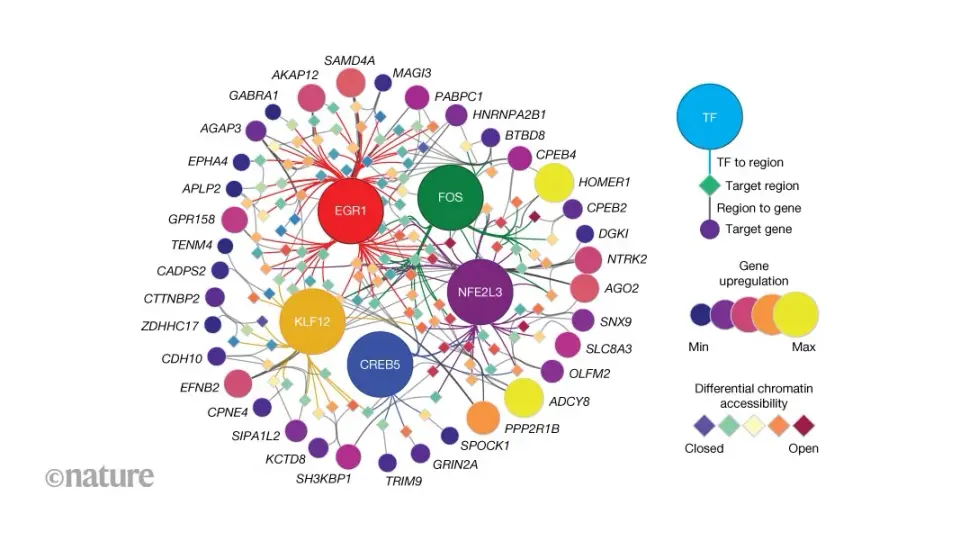
Two major studies published in August 2026 reveal how electrical brain stimulation impacts cellular and network-level activity. One study identifies cell-type-specific gene programs activated in the temporal cortex, while another maps a high-beta rhythm network in Parkinson’s patients that predicts treatment success.
Key points
- Moore et al. found that stimulating the human temporal cortex activates distinct gene programs in different cell types, linked to neuronal network activity.
- The study suggests these genetic changes could inform the development of targeted neuromodulation therapies for cognitive decline.
- A separate study by Horn et al. identified a specific brain network operating in the 20-35 Hz beta band that mediates the benefits of deep brain stimulation (DBS) for Parkinson’s disease.
- The strength of this beta-band connection between the subthalamic nucleus and frontal areas correlates with the improvement of motor symptoms in patients.
- Researchers aim to use these findings to personalize DBS settings, particularly for patients who do not respond optimally to current treatments.
Background
Recent research has increasingly focused on the molecular and network-level effects of brain stimulation. Earlier studies, such as the August 2026 work on ex vivo temporal cortex, established that stimulation reshapes gene-linked neural assemblies. This builds on broader investigations into how inflammation and specific genes like SRGAP2 influence brain development and function, providing a foundation for understanding the biological mechanisms behind neuromodulation.
How outlets are covering it
Nature highlights the molecular and genetic implications of stimulation, emphasizing how different cell types in the temporal cortex respond with unique gene programs. This perspective focuses on the potential for genetics-guided therapies to slow cognitive decline. In contrast, ScienceDaily focuses on the clinical application of these findings for Parkinson’s disease, emphasizing the discovery of a specific electrical rhythm (high beta band) that predicts treatment success. While Nature looks at the cellular basis of stimulation, ScienceDaily highlights the network-level dynamics that could improve the precision of existing deep brain stimulation treatments.
Why it matters
Understanding the specific gene programs and network rhythms activated by brain stimulation could lead to more effective and personalized treatments for neurodegenerative diseases. By identifying which cell types and networks respond to stimulation, researchers can develop therapies that target specific biological pathways, potentially improving outcomes for patients with Parkinson’s disease and cognitive decline.
What to watch
Researchers plan to investigate the causal effects of deep brain stimulation on brain networks more directly. Future studies will likely focus on translating these findings into clinical practice, aiming to adjust DBS settings based on individual patient network characteristics to improve symptom relief.
- Human brain stimulation engages different gene programs in different cell types Nature
- Stimulation modulates gene-linked cell assemblies in the human brain Nature
- How the brain stimulation used for Parkinson's changes human brain cells Earth.com
- Scientists discover a hidden brain rhythm that could improve Parkinson’s treatment ScienceDaily
- Deep Brain Stimulation Synchronizes Neuron Firing to Rewire the Brain the-scientist.com
Want the full story? Read the original reporting
Read on Nature