
Climate science links Canada's record wildfires to fossil fuels as Trump threatens trade retaliation
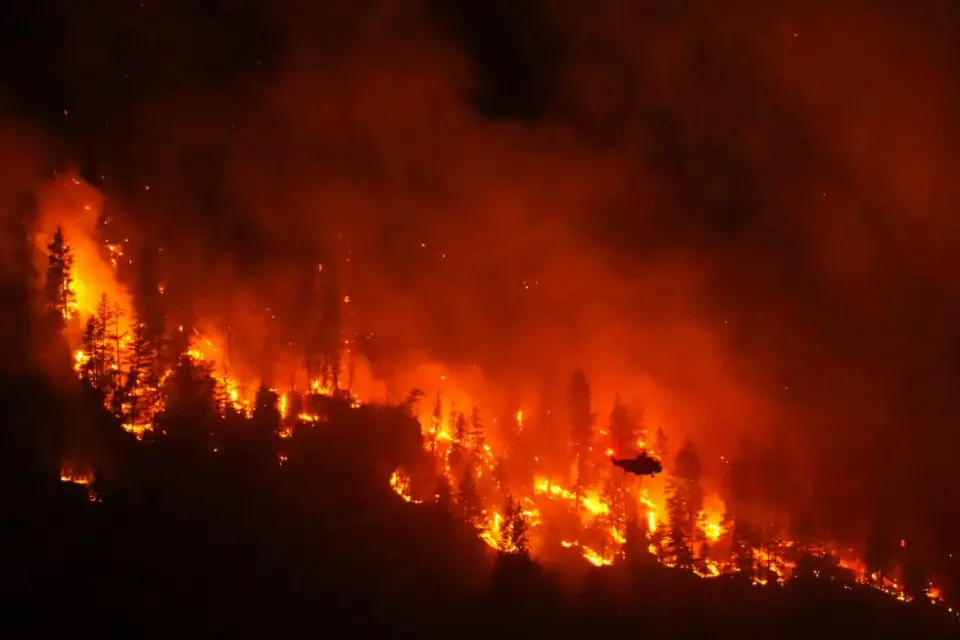
A new World Weather Attribution study confirms that human-driven climate change made the extreme fire conditions in Canada's 2026 wildfire season significantly more likely, contradicting President Trump's blame of Canadian mismanagement. While nearly 700 fires have burned 3.8 million hectares, experts emphasize that global emissions, not local management, are the primary driver. Trump has threatened tariffs against Canada over cross-border smoke, a move scientists condemn as scientifically unfounded.
Key points
- World Weather Attribution found that climate change made fire conditions in the Northwest Territories five times more likely and in Ontario two to eight times more likely than in a cooler climate.
- Nearly 700 active fires have burned approximately 3.8 million hectares in Canada this year, with 94% of the burned area occurring in a five-week window in July.
- President Trump has blamed Canada for the smoke affecting the U.S. and threatened tariffs, while scientists argue the fires are driven by global fossil fuel emissions.
- Over 120 million people in the U.S. Midwest and Northeast experienced dangerous air quality from the smoke, leading to health warnings and economic disruptions.
- The Globe and Mail highlights carbon removal technologies as a potential economic and environmental response to the carbon released by these massive wildfires.
Background
This story follows earlier coverage in July 2026 where cross-border smoke from Canadian wildfires triggered political tensions between the U.S. and Canada. Previous reports noted that while Trump and some U.S. lawmakers blamed Canadian forest management, climate experts consistently argued that the fires were driven by a warming climate and extreme heat waves. The current study provides the latest scientific backing for the experts' position, reinforcing the narrative that the issue is a global climate crisis rather than a local management failure.
How outlets are covering it
The Associated Press and The Guardian emphasize the scientific consensus that climate change is the primary driver of the fires, directly contradicting Trump's political narrative. The Globe and Mail shifts the focus to economic solutions, arguing that carbon removal technologies can help manage the aftermath and create new industries. World Weather Attribution provides the technical data, noting that while long-term drought trends are uncertain, the rapid onset of extreme fire weather is clearly linked to global warming. There is a clear divide between the political blame game in the U.S. and the scientific attribution to global emissions in Canada and international research circles.
Why it matters
The 2026 Canadian wildfire season represents a significant escalation in climate-driven extreme events, with smoke affecting over 120 million people in the U.S. The political response, including threats of tariffs, risks exacerbating international tensions without addressing the root cause. The scientific findings underscore the need for global emission reductions rather than localized blame, while the economic implications of carbon release from these fires highlight the urgent need for new climate adaptation and removal strategies.
What to watch
Canada is expected to continue its firefighting efforts and interagency coordination as the season continues. The U.S. may proceed with the threatened tariffs if political pressure persists, though scientific experts continue to advise against such measures. Canada's government is expected to further develop its carbon removal procurement programs to address the long-term carbon impact of the burned forests.
- Climate change created conditions for Canada fires, scientists say, as Trump blames mismanagement AP News
- Human-driven climate crisis fuels Canada’s deadly wildfires, study finds The Guardian
- Climate change means extreme fire seasons in Canada are here to stay World Weather Attribution
- Climate Change Made Canada’s Forests Much More Likely to Burn Bloomberg.com
- Opinion: As wildfires rage, it’s a moment for carbon removal technology to shine The Globe and Mail
Want the full story? Read the original reporting
Read on AP News