
54 Olive Ridley Hatchlings Released After Historic California Nesting
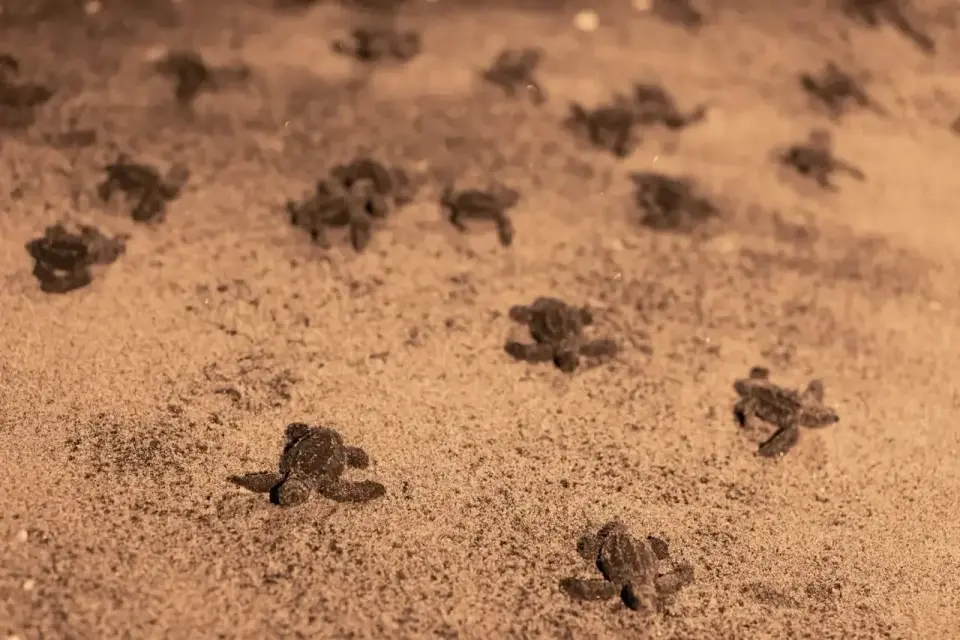
The U.S. Fish and Wildlife Service and the Aquarium of the Pacific released 54 olive ridley sea turtle hatchlings into the Pacific Ocean on November 14, 2026. These young turtles emerged from eggs laid on September 16 near Seal Beach, marking the first confirmed natural nesting of sea turtles on the U.S. West Coast. The eggs were relocated to the Aquarium of the Pacific in Long Beach in late September to protect them from high surf and storm surges. After a 58-day incubation period, the hatchlings were returned to the beach in the early morning hours to minimize human disturbance. A second batch of hatchlings from a Huntington Beach nest was released shortly after. While the survival rate for these turtles is estimated at one in 1,000, officials view this event as a significant conservation milestone, potentially linked to record-high ocean temperatures driven by a strong El Niño event.
Key points
- 54 olive ridley sea turtle hatchlings were released into the ocean on November 14, 2026, from eggs laid on September 16 near Seal Beach, Orange County.
- The eggs were moved to the Aquarium of the Pacific in Long Beach on September 25 to protect them from hazardous surf and high tides associated with Tropical Storm Rachel.
- This event marks the first confirmed natural sea turtle nesting on the U.S. West Coast, with the previous northernmost nest located approximately 700 miles south in Baja California, Mexico.
- A second group of hatchlings from a nest discovered on September 19 in Huntington Beach was released on November 15, 2026.
- A third nest was discovered on November 1 in Ventura County, but it was destroyed by high tides and low sand temperatures, rendering the eggs non-viable.
- Officials estimate that only one in 1,000 olive ridley hatchlings survive to adulthood, facing threats from predation, fishing bycatch, and ocean conditions.
Background
In late 2026, Southern California experienced unprecedented ocean temperature spikes due to a powerful El Niño event, with waters off San Diego reaching 75°F, nearly 11°F above normal. This thermal expansion led to record-high sea levels and coastal flooding in areas like Long Beach and Newport Beach. The extreme marine heat wave and strong El Niño conditions created an environment conducive to tropical marine species, including olive ridley sea turtles, which typically nest in tropical regions of the Pacific, Indian, and Atlantic oceans. Prior to September 2026, the farthest known northern nest for olive ridley turtles was in Baja California, Mexico, approximately 700 miles south of Orange County.
How outlets are covering it
KTLA and ABC7 Los Angeles emphasized the successful hatching and release of the hatchlings, highlighting the 58-day incubation period and the careful coordination with wildlife experts. The Los Angeles Times provided detailed background on the relocation of the eggs to the Aquarium of the Pacific due to high surf and noted the destruction of a third nest in Ventura County. CBS News focused on the broader conservation implications, quoting Aquarium of the Pacific officials who suggested the nesting could indicate a long-term change in species behavior due to climate change. All sources agreed on the significance of the event but differed in emphasis: KTLA and ABC7 focused on the immediate success of the release, while the Los Angeles Times and CBS News highlighted the environmental factors and potential future implications.
Why it matters
This event signals a potential shift in marine species distribution due to climate change, with record-high ocean temperatures creating conditions suitable for tropical species in previously unsuitable areas. The successful hatching and release of the turtles represent a critical conservation milestone, but the low survival rate underscores the ongoing challenges these species face. The incident also highlights the impact of extreme weather events, such as high tides and storms, on coastal ecosystems and the need for adaptive conservation strategies.
What to watch
Officials are monitoring the remaining 50 eggs from the Seal Beach nest and 104 eggs from the Huntington Beach nest for potential hatching in the coming weeks. Public awareness campaigns are underway to encourage reporting of sea turtle sightings and stranding incidents. Biologists will continue to study the environmental factors that led to the nesting event to determine if it is an anomaly or the beginning of a new trend. The Aquarium of the Pacific and U.S. Fish and Wildlife Service will provide updates on the status of the remaining eggs and any future nesting attempts.
- Eggs from California’s first sea turtle nest hatch; video shows hatchlings return to the ocean KTLA
- Rare sea turtle nest discovered on Southern California beach destroyed by high surf KTLA
- Sea turtle eggs rescued from Seal Beach released back into ocean after successfully hatching ABC7 Los Angeles
- California’s first native-born sea turtles hatch and scuttle into the sea Los Angeles Times
- Long Beach Aquarium releases sea turtle hatchlings into the ocean after relocation CBS News
Want the full story? Read the original reporting
Read on KTLA