
Injured Pelican Seeks Medical Help at NOAA Lab in Florida
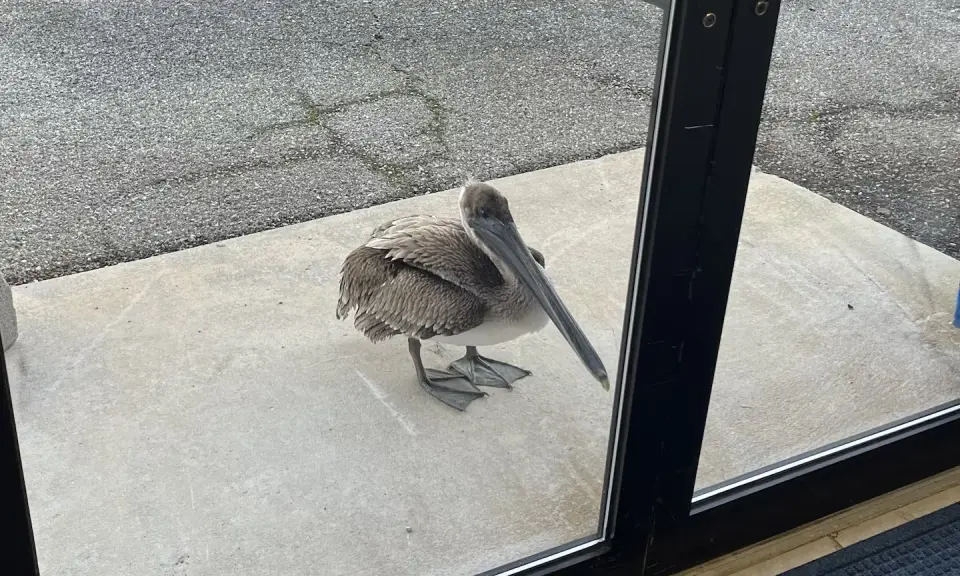
A brown pelican in Panama City, Florida, sought medical assistance by knocking on the door of a NOAA fisheries laboratory on September 8, 2026. The bird, injured by fishing line and cactus spines, was treated by marine biologists who removed a hook and monofilament line. The pelican remained calm during the 10-minute procedure and was released back into the wild. This rare incident highlights the dangers of discarded fishing gear and the unexpected intelligence of wildlife seeking help.
Key points
- On September 8, 2026, a brown pelican knocked on the back door of the NOAA Southeast Fisheries Science Center in Panama City, Florida, seeking help.
- The bird was found entangled in monofilament fishing line with a double-barbed treble hook embedded in its right wing and cactus spines in its left foot.
- Marine biologists, including Annsli Hilton, treated the bird using techniques similar to those used for tagging sharks, removing the hook and line in a 10-minute procedure.
- The pelican remained calm throughout the treatment and was released back into the wild after being cleared of injuries.
- NOAA officials emphasized the importance of proper disposal of fishing line to prevent such injuries to wildlife.
Background
This incident follows a series of unusual animal rescue stories reported in 2026, including a dog rescued from an icy pond and a kangaroo saved during harsh winter conditions. The pelican's visit to a marine research facility is particularly notable as it contrasts with typical wildlife rehabilitation scenarios, where animals are usually brought in by humans or found by rescuers. The archive also notes a separate incident in Pennsylvania where a college athlete was fatally shot after knocking on the wrong door, highlighting the rare and sometimes tragic nature of unexpected door-knocking events.
How outlets are covering it
The Washington Post and Birds & Blooms both emphasized the remarkable nature of the pelican's decision to seek help, describing it as a 'once-in-a-lifetime' experience. NOAA Fisheries focused on the technical aspects of the rescue and the broader issue of fishing line entanglement, urging anglers to dispose of line properly. WESH reported the incident as a news event, noting the pelican's calm demeanor and the biologists' surprise. All sources agreed on the basic facts but differed in emphasis, with NOAA and Birds & Blooms highlighting the educational and preventive aspects, while The Washington Post focused on the emotional and unusual nature of the event.
Why it matters
This incident underscores the impact of human activities, such as improper disposal of fishing gear, on wildlife. It also highlights the potential for animals to exhibit problem-solving behaviors, seeking help from humans in unexpected ways. The story serves as a reminder of the importance of environmental stewardship and the need for better waste management practices to protect marine and coastal wildlife.
What to watch
NOAA and the Florida Fish and Wildlife Conservation Commission are likely to continue promoting best practices for anglers, such as using barbless hooks and properly disposing of fishing line. The incident may also lead to increased awareness and research into animal behavior and the potential for wildlife to seek human assistance. There is no immediate follow-up mentioned, but the story may inspire further discussions on wildlife conservation and human-animal interactions.
- Scientists heard a knock at the door. It was a pelican in need of help. The Washington Post
- Knocking for Help: A Pelican’s Unlikely Rescue NOAA Fisheries (.gov)
- Injured Pelican Goes to the Right Place for Remarkable Rescue Birds and Blooms
- A pelican in Florida was in need of help, so it knocked on NOAA’s door WESH
- Have you heard the one about the Florida pelican that knocked on the door? Yahoo
Want the full story? Read the original reporting
Read on The Washington Post