
Rubio Denies U.S. Sabotage of Ukraine as Zelenskyy Cites Delayed Missiles and Starlink Throttling
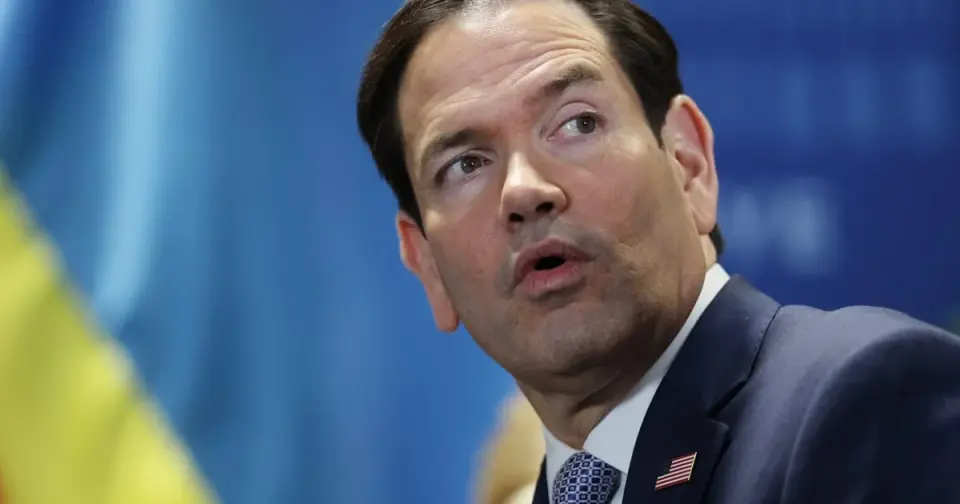
U.S. Secretary of State Marco Rubio rejected President Volodymyr Zelenskyy's allegations that Washington is deliberately withholding military support, calling such claims 'outrageous.' While Rubio affirmed that U.S. policy remains unchanged, Zelenskyy cited specific disruptions, including delayed Patriot interceptors, gaps in ballistic missile early-warning systems, and reduced Starlink speeds. These tensions occur as the Trump administration intensifies pressure on Kyiv to reach a peace deal with Moscow, leading European leaders to accuse the U.S. of forcing Ukraine into surrender.
Key points
- Rubio stated in India that the Pentagon is not deliberately denying Ukraine air defense missiles, noting that global demand for interceptors is high due to the Iran conflict and needs of other allies.
- Zelenskyy told a bipartisan group of U.S. lawmakers that the Pentagon is delaying the delivery of missiles already paid for by allies under the Prioritised Ukraine Requirements List (PURL) program.
- Ukraine reported a lack of early warnings for Russian ballistic missile strikes on October 13 and 18, which Rubio attributed to potential internal issues in how Kyiv systemizes and reacts to provided intelligence.
- Zelenskyy highlighted that Starlink and Starshield services have faced speed restrictions, hindering Ukraine's ability to intercept Russian drones, a complaint Rubio acknowledged but did not fully resolve during their discussions.
- EU High Representative Kaja Kallas accused U.S. negotiators of attempting to push Ukraine into surrender for nearly two years, a claim Rubio firmly denied.
Background
This dispute follows a series of earlier exchanges in October 2026 where Rubio dismissed Zelenskyy's claims of a U.S. intelligence pause as 'scandalous.' Previous coverage noted that while the U.S. acknowledged a 'software problem' affecting early warnings, it maintained that no political directive was issued to harm Ukraine. The current escalation reflects a broader pattern of friction as the Trump administration balances support for Ukraine with its push for a negotiated peace with Russia.
How outlets are covering it
While all sources confirm the core disagreement, they emphasize different aspects of the diplomatic fallout. POLITICO focuses on the direct confrontation between Rubio and Zelenskyy, highlighting the specific technical and logistical grievances regarding missile warnings and Starlink. The second POLITICO piece underscores the domestic U.S. political reaction, noting that Senators Blumenthal and Tillis condemned the administration's moves as 'impediments to peace' that appease Vladimir Putin. Axios provides a brief summary of Rubio's stance, framing the issue as a matter of U.S. intent rather than deliberate sabotage. The divergence lies in the interpretation of 'deliberate' action: the U.S. views the delays as logistical and global demand issues, while Ukraine and European allies interpret them as political leverage to force a peace deal.
Why it matters
The breakdown in trust between Washington and Kyiv threatens the stability of the NATO-led support framework for Ukraine. If the U.S. is perceived as unreliable in providing critical defense systems and intelligence, it may embolden Russia to escalate its attacks, as evidenced by the 85% increase in civilian casualties in October 2026. Furthermore, the dispute could fracture transatlantic unity, as European leaders like Kaja Kallas increasingly view U.S. policy as favoring Moscow's interests over Ukraine's security.
What to watch
U.S. special envoy Steve Witkoff is set to travel to Norway for new peace talks, while Zelenskyy continues to press for immediate restoration of Starlink services and delivery of Patriot interceptors. The U.S. is expected to continue investigating the technical issues surrounding the early-warning system, though no immediate policy reversal has been announced. The outcome of these negotiations will likely determine whether the U.S. can maintain its role as a dependable ally for Ukraine or if European nations will need to step in to fill the support gap.
- Rubio insists the US isn’t trying to hurt Ukraine POLITICO.eu
- Trump isn't out to hurt Ukraine, Rubio tells Zelensky Axios
- Zelenskyy briefs bipartisan group of lawmakers amid backlash over Trump’s Russia deal Politico
- Ukraine Suspects US Blocking Intelligence on Russian Attacks Bloomberg.com
- Rubio says Ukraine interceptors may not have been delivered, but not for political reasons Reuters
Want the full story? Read the original reporting
Read on POLITICO.eu