
Federal courts split on DOJ's election interference tactics as midterms conclude
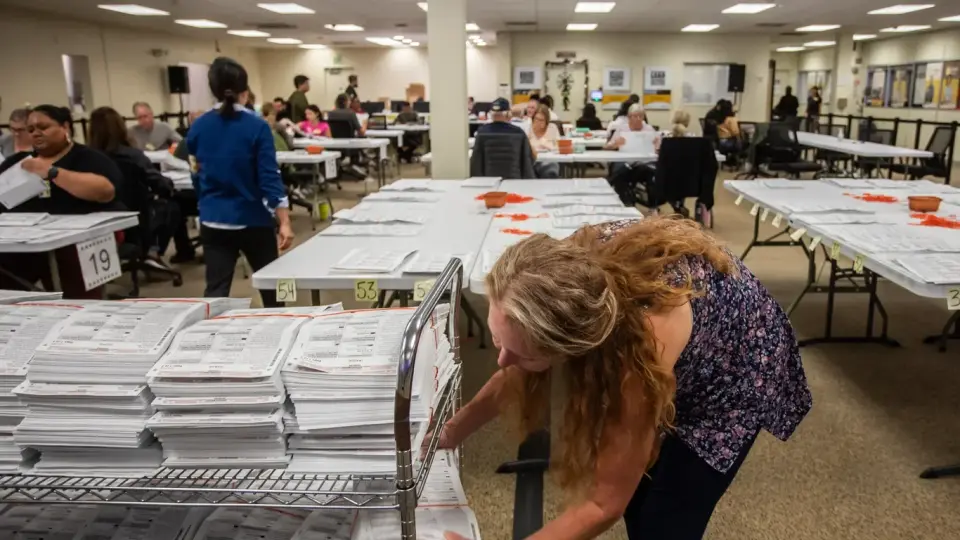
Federal courts issued conflicting rulings on the Trump administration's attempts to force states to sequester ballots allegedly cast by non-citizens. While the Supreme Court rejected a bid to set aside 20,000 California ballots, the 9th Circuit allowed the DOJ to continue threatening election officials in California and Washington. A D.C. judge declined to halt broader DHS demands, citing a lack of evidence that states had capitulated.
Key points
- The U.S. Supreme Court ruled against the Trump administration, refusing to order California to set aside 20,000 mail-in ballots claimed to belong to non-citizens, with no dissents noted.
- The 9th Circuit Court of Appeals, sitting en banc, reinstated a stay allowing the DOJ to continue sending 'threats' of prosecution to election officials in California and Washington, deeming these actions 'core Executive functions.'
- Judge James E. Boasberg denied a request to block DHS demands for ballot screening in four states, ruling that Democratic plaintiffs had not shown direct harm as states successfully resisted federal pressure.
- The DOJ claimed 20,000 non-citizens were on California voter rolls, providing a list with only 48 hours for review, while state officials and voting rights groups challenged the methodology and accuracy of the data.
- The administration's actions included criminal investigations and subpoenas of election officials, with the DOJ filing charges against 28 green card holders in California accused of voter fraud.
Background
This legal conflict follows a series of federal actions in late 2026 aimed at asserting greater oversight over state elections. Previous disputes included challenges to White House press bans and National Guard deployments in D.C. The current litigation centers on the administration's claims of widespread non-citizen voting, which experts and data indicate is extremely rare. The 9th Circuit's decision follows a district judge's temporary restraining order that was briefly lifted by a three-judge panel before the full bench intervened.
How outlets are covering it
The DOJ and its supporters, including First Assistant U.S. Attorney Bill Essayli, view the court's allowance of investigative threats as a validation of the executive branch's core functions. They argue that criminal investigations are not subject to judicial restriction. Conversely, The Guardian and The New York Times highlight the administration's aggressive tactics, such as the 48-hour ultimatum to California and the lack of evidence for the non-citizen claims. The New York Times notes that Judge Boasberg's decision to deny a broader injunction was based on the lack of evidence that states had actually capitulated, whereas The Guardian emphasizes the Supreme Court's rejection of the ballot sequestration as a 'baseless attack.' Labor unions and civil rights groups, such as the Service Employees International Union and the League of United Latin American Citizens, argue the DOJ's actions constitute intimidation in violation of the Voting Rights Act.
Why it matters
The conflicting rulings create a legal landscape where the DOJ can continue threatening election officials in some jurisdictions while being blocked in others. This uncertainty could impact the integrity of future elections and the relationship between federal and state governments. The administration's strategy of using criminal threats to influence state election procedures challenges established norms of federalism and voting rights, potentially setting precedents for future electoral disputes.
What to watch
The DOJ may continue its investigative efforts in California and Washington pending further court orders. The administration has indicated it may pursue additional states, with Judge Boasberg ordering the disclosure of a full list of targeted states. The outcome of the 2026 midterm elections and any subsequent challenges to the results will likely test the limits of these federal interventions. State officials, including California Governor Gavin Newsom and Attorney General Rob Bonta, have vowed to continue fighting the administration's attempts to disrupt their electoral processes.
- Trump wins Election Day court battle over ballot demands, poll worker threats Axios
- Full 9th Circuit caps whiplash-inducing series of election orders by backing DOJ’s 'core' functions until further notice Yahoo
- Supreme court rules against Trump over bid to force California to set aside ballots The Guardian
- Judge Declines to Halt D.H.S. Demands for States to Screen Ballots The New York Times
- 9th Circuit pauses order barring Trump administration from threatening election officials with criminal prosecution Democracy Docket
Want the full story? Read the original reporting
Read on Axios