
2026 Atlantic Hurricane Season Lags Behind, but Record-Breaking El Niño Threatens Global Warming
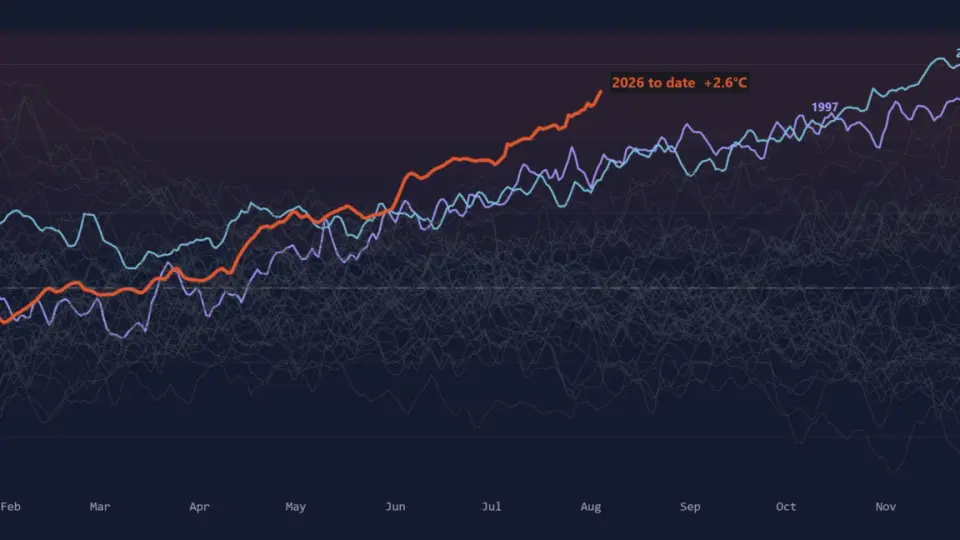
The 2026 Atlantic hurricane season is currently well below average, with only two named storms forming so far. Forecasters attribute this quiet start to a strengthening El Niño, which is increasing wind shear in the Atlantic. However, climate scientists warn that this same El Niño could become the strongest in a century, potentially driving global temperatures to record highs in 2027.
Key points
- Only two named storms, Arthur and Bertha, have formed in the Atlantic so far in 2026, both passing near Houston.
- Colorado State University’s Phil Klotzbach revised his forecast down to nine named storms and four hurricanes for the season.
- The current accumulated cyclone energy is less than 30% of the normal value for this time of year.
- A strengthening El Niño is creating high wind shear in the Atlantic, suppressing storm development.
- Climate scientist Zeke Hausfather notes the current El Niño peak is projected to be 3.6°C, surpassing the 2015-16 record by 0.8°C.
- The warming impact of this El Niño is expected to lag by several months, potentially making 2027 the hottest year on record.
Background
Previous coverage from our archive noted that NOAA initially forecast 8-14 named storms for 2026, with expectations of a below-average season due to El Niño. Earlier reports also highlighted that while the Atlantic was quiet, the Pacific was more active, and the El Niño was expected to persist into 2027, potentially influencing future hurricane seasons and winter weather patterns in South Florida.
How outlets are covering it
Ars Technica and The Washington Post both emphasize the quiet nature of the 2026 Atlantic season, attributing it to El Niño-driven wind shear and Saharan dust. However, Ars Technica places greater emphasis on the potential for a record-breaking El Niño and its subsequent impact on global temperatures in 2027, citing Zeke Hausfather’s data. USA Today and News4JAX focus more on the immediate meteorological factors, such as cooler Atlantic waters and the lack of tropical waves from Africa, while noting that the season is not over and activity could still increase. All sources agree that the El Niño is the dominant factor suppressing Atlantic activity, but they differ in their emphasis on the long-term climate consequences versus the immediate seasonal outlook.
Why it matters
A quiet hurricane season may provide temporary relief for coastal communities, but the underlying El Niño could have severe global implications. If the El Niño reaches the projected 3.6°C peak, it could push global temperatures to unprecedented levels in 2027, exacerbating climate change impacts worldwide. This highlights the complex relationship between regional weather patterns and global climate trends.
What to watch
Forecasters expect the Atlantic to remain quiet for at least the next week or 10 days, but activity could increase in late August and September. The peak of hurricane season is traditionally September 10. The El Niño is expected to strengthen further, potentially influencing the 2027 hurricane season as well. Global temperatures are likely to rise in 2027 as the warming impact of the El Niño lags behind its peak.
- This Atlantic hurricane season is looking like a dud, but there will be a price to pay Ars Technica
- Where are the storms? More are coming, hurricane outlook says USA Today
- Atlantic hurricane season likely to be very quiet, final CSU says The Weather Channel
- Tracking the Tropics: Saharan dust and wind shear limit early tropical formation in 2026 Hurricane Season News4JAX
- The Atlantic hurricane season has been calm so far. Will it last? The Washington Post
Want the full story? Read the original reporting
Read on Ars Technica