
Atlantic development odds drop as El Niño shear threatens potential storm 'Dolly'
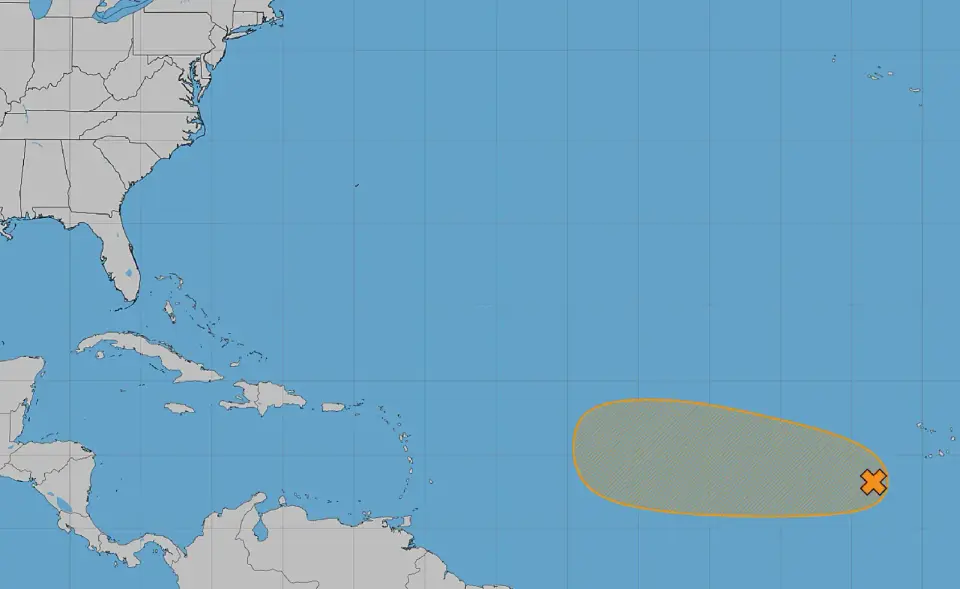
The National Hurricane Center (NHC) reduced the development probability of a tropical wave in the eastern Atlantic to 60% on August 26, 2026, citing increasingly unfavorable environmental conditions. While the system, designated Invest 96L, remains the season's most significant threat, forecasters warn that strong wind shear associated with El Niño may prevent it from intensifying. The 2026 Atlantic hurricane season remains quiet, with only three named storms so far, and NOAA predicts a below-average total of seven to 13 named storms for the year.
Key points
- NHC lowered the chance of development for Invest 96L from 70% to 60% by August 26 due to worsening conditions.
- The system is located in the eastern tropical Atlantic, southwest of the Cape Verde Islands, and is moving westward.
- A second potential system near Bermuda was dropped from tracking as its development chances fell to 0%.
- The 2026 season has produced only three named storms: Arthur, Bertha, and Cristobal.
- NOAA forecasts between seven and 13 named storms for the season, with zero to two major hurricanes expected.
Background
The 2026 Atlantic hurricane season began on June 1 and is expected to run through November 30. Earlier in August, Tropical Storm Lala impacted Hawaii, and a separate disturbance near Hawaii had an 80% chance of developing. The current focus has shifted to the Atlantic, where the next potential named storm would be 'Dolly,' a name that coincidentally matches the late country music star Dolly Parton, who died on August 25, 2026. Officials have clarified that the naming is a pre-established WMO procedure and unrelated to her passing. The season is currently below the average of 14 named storms and seven hurricanes typically seen in a neutral year.
How outlets are covering it
The Orlando Sentinel reports that the NHC dropped development chances for the primary Atlantic system to 60% due to less favorable conditions by the weekend. USA Today emphasizes the role of El Niño, noting that while the wave is the season's 'healthiest' so far, it faces a 'hostile' main development region with strong wind shear. WCAX highlights the likelihood of the system becoming Tropical Storm Dolly within two to seven days, noting that late August and September are historically active periods for the Northeast. WESH provides context on recent storm activity, detailing the remnants of Tropical Storm Edouard moving across Texas in early September, which underscores the ongoing monitoring of tropical systems despite the slow start to the season. While the Orlando Sentinel focuses on the immediate drop in probabilities, USA Today and WCAX stress the uncertainty and potential for the storm to survive the shear zone, potentially impacting the U.S. later in September.
Why it matters
The development of Invest 96L is critical for coastal communities in the Atlantic basin, as it could be the first significant storm of the peak season. Although the 2026 season is forecast to be below average, the potential for a landfalling hurricane during an El Niño year remains a risk, as seen in historical events like Hurricane Idalia in 2023. Early preparedness is essential, as even a slow-moving system can cause significant flooding and damage, as demonstrated by the recent impacts of Edouard in Texas and the ongoing monitoring of Atlantic systems by the NHC.
What to watch
Forecasters will continue to monitor Invest 96L as it moves westward across the Atlantic. The key factor will be whether the system can survive the wind shear associated with El Niño in the central and western Atlantic. If it develops into a tropical storm, it will be named Dolly. The NHC will update its outlooks daily, with a focus on whether the system can intensify over the western Atlantic in early September. The second system near Bermuda is no longer being tracked, but other disturbances may emerge as the season progresses.
- Hurricane center still tracking 1 Atlantic system, but drops development chances Orlando Sentinel
- Hurricane forecasters closely watch system that could turn dangerous USA Today
- Invest 96-L likely to become tropical depression in Atlantic, NHC says WESH
- Tropical Storm Dolly expected to develop and become the next named storm in the Atlantic WCAX
- As Invest 95L dissipates, NHC forecasters watch Atlantic disturbance with chances to develop NOLA.com
Want the full story? Read the original reporting
Read on Orlando Sentinel