
Rescued Turkey Vulture Named Gomez Bonds With Plush Toys After Lead Poisoning and Wing Surgery
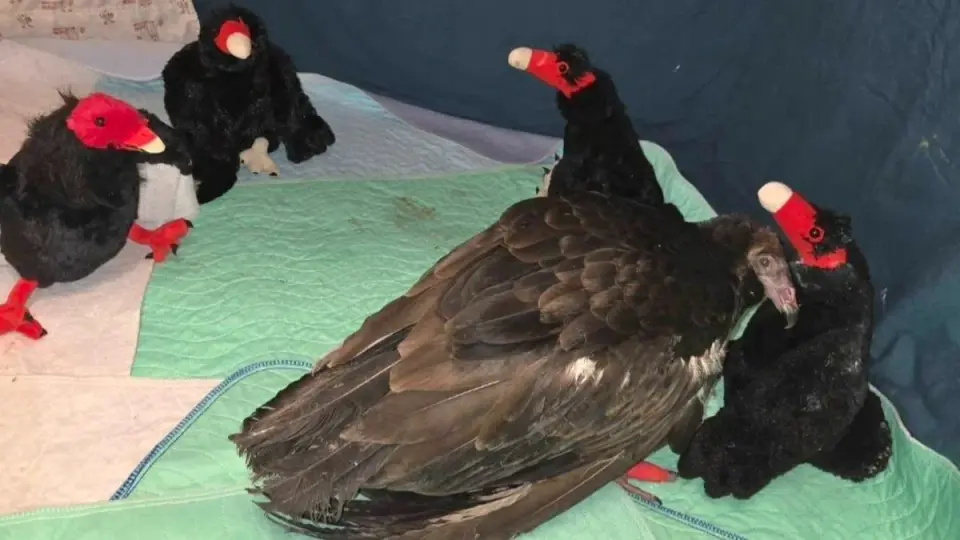
A turkey vulture named Gomez, rescued by the Pocono Wildlife Rehabilitation and Education Center, suffered from lead poisoning and a broken wing. While recovering, the bird formed a strong attachment to stuffed vultures provided for companionship. Gomez recently met another injured vulture, Gizmo, but still relies on his plush friends for comfort during his ongoing recovery.
Key points
- A homeowner discovered a vulture on her property and contacted the Pocono Wildlife Rehabilitation and Education Center for assistance.
- The rescued bird, named Gomez, was diagnosed with lead poisoning and a broken wing requiring surgical intervention.
- Staff administered chelation therapy for the lead poisoning and performed surgery to repair the wing.
- To prevent loneliness, as vultures are social animals, the center introduced stuffed vultures to Gomez.
- Gomez immediately bonded with the stuffed birds, snuggling up to them in both his indoor and outdoor enclosures.
- A second vulture, named Gizmo, arrived at the center with a broken wing and was introduced to Gomez.
Background
This story follows a recent trend in wildlife rehabilitation where facilities use enrichment items to mitigate the stress of isolation for social animals. The archive contains unrelated stories regarding reality television, sports, and financial markets, providing no direct background for this specific wildlife rescue.
Why it matters
The case of Gomez highlights the complex medical and behavioral challenges faced by wildlife rehabilitators. Lead poisoning is a significant threat to scavengers like vultures, often resulting from contaminated carcasses. The use of stuffed animals as a temporary social substitute demonstrates a compassionate approach to animal welfare, addressing the psychological needs of social species during long recovery periods. This case also underscores the ongoing need for funding in wildlife rehabilitation centers to support such intensive care.
What to watch
Gomez and Gizmo will continue their recovery process at the Pocono Wildlife Rehabilitation and Education Center. The center will monitor their progress to determine if Gomez can eventually fly and be released into the wild. In the interim, the center is actively seeking financial support from the public to cover the costs of their medical care and housing.
Want the full story? Read the original reporting
Read on The Dodo