
2.1-Million-Year-Old Fossil Reveals Early Jaw Ridge in Young Australopithecus africanus
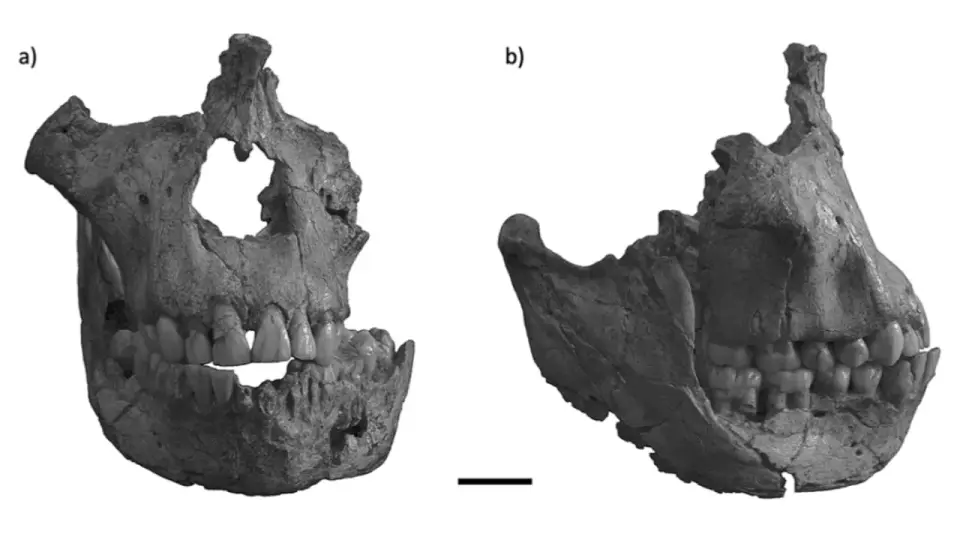
Researchers at La Trobe University identified a pronounced mandibular torus in a 2.1-million-year-old subadult Australopithecus africanus fossil from Sterkfontein, South Africa. This finding pushes the known age of this common dental trait back significantly, challenging the assumption that such ridges develop only in adults due to lifelong chewing stress.
Key points
- The fossil, designated Sts 52b, dates to between 2.8 and 2.1 million years ago and belongs to a subadult individual.
- The specimen features a grade 4 mandibular torus, a bony ridge on the tongue side of the lower jaw, which is common in modern humans but rare in fossil records.
- The ridge is bilateral, stemless, and composed of compact cortical bone, resembling clinical cases seen in living populations.
- The discovery contradicts the prevailing theory that mandibular tori result solely from cumulative chewing stress, as the individual was too young to have experienced a lifetime of such wear.
- No known Paranthropus robustus specimens, despite their robust jaws and high chewing forces, exhibit this trait, suggesting genetic or environmental factors may play a role.
Background
Recent studies have complicated the classification of Australopithecus africanus, with new dating of the Taung Child to approximately 3 million years ago suggesting that southern Africa hosted multiple distinct hominin species rather than a single lineage. This new fossil adds to the growing body of evidence that early hominin anatomy was more varied and complex than previously understood, with traits like the mandibular torus appearing earlier in the evolutionary timeline than expected.
Why it matters
This finding provides a deep-time perspective on a common anatomical variant, suggesting that the development of the human jaw and associated dental structures is influenced by factors beyond mechanical stress. It highlights the complexity of human evolution and the need to reconsider assumptions about the origins of common physical traits.
What to watch
Further research is needed to determine the exact causes of mandibular tori, including genetic, environmental, and functional factors. Additional fossil discoveries may provide more examples of this trait in early hominins, helping to refine our understanding of human evolution.
Want the full story? Read the original reporting
Read on Archaeology News Online Magazine