
X-ray analysis reveals hidden manufacturing traces in ancient Asian palm-leaf manuscripts
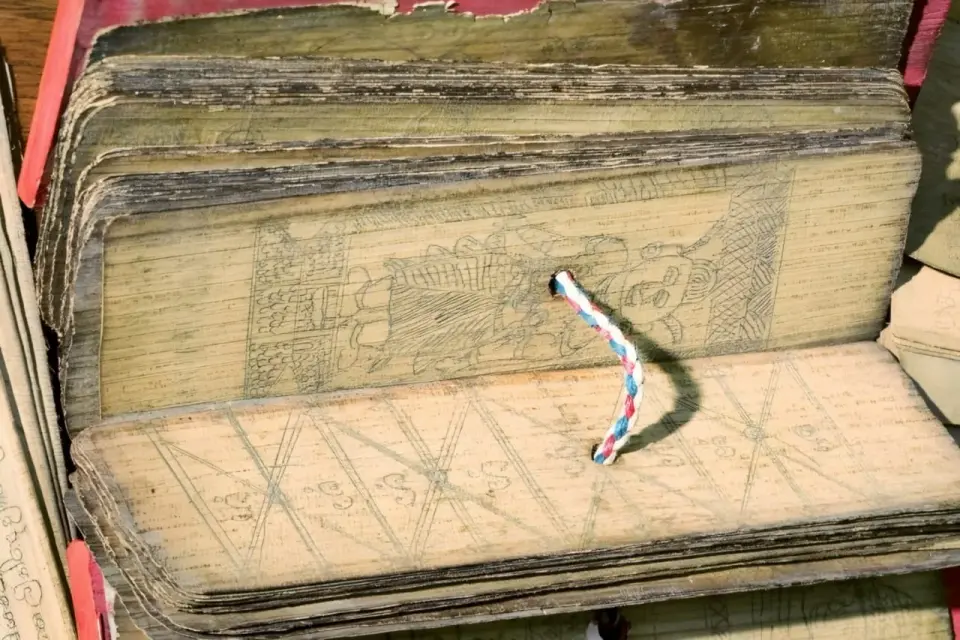
Researchers used non-invasive X-ray techniques and machine learning to identify how scribes prepared palm-leaf manuscripts in South and Southeast Asia. By analyzing 160 samples, the team found that material traits can distinguish between two palm genera and indicate processing stages, though determining exact geographic origin remains difficult due to shared regional traditions.
Key points
- An international team analyzed 160 palm-leaf samples, including 85 historical manuscripts and 75 modern references, using synchrotron X-ray facilities in Hamburg and Grenoble.
- Three X-ray methods—small-angle scattering, wide-angle scattering, and X-ray fluorescence—were combined to assess fiber structure, cellulose crystallinity, and chemical composition without damaging the artifacts.
- Machine learning successfully distinguished between two palm genera and identified processing stages, with botanical differences becoming more pronounced after treatment.
- Geographic origin was harder to determine; samples from Sri Lanka and southern India showed similar profiles, suggesting shared processing traditions, while Thai samples had distinct characteristics.
- The study, published in npj Heritage Science, offers a scalable method for studying manuscript production histories without requiring physical sampling of fragile documents.
Background
This research builds on previous efforts to understand material culture in historical documents. Unlike earlier studies that relied on script analysis or catalog records, this approach focuses on the physical substrate of the manuscript. The technique addresses gaps in understanding how knowledge transfer and manufacturing traditions evolved across South and Southeast Asia, particularly for regions where historical records are sparse or where processing methods have become extinct.
Why it matters
This non-invasive method allows scholars to analyze large collections of fragile manuscripts without causing damage. By linking physical material traits to historical and codicological evidence, researchers can better trace the transmission of knowledge and the evolution of scribe traditions across Asia, providing insights that textual analysis alone cannot offer.
What to watch
The team plans to expand the dataset to include more regions and address how age and storage conditions affect material signatures. Future work will integrate these X-ray findings with historical records to more accurately determine provenance and understand the broader network of knowledge transfer in the region.
Want the full story? Read the original reporting
Read on Archaeology News Online Magazine