
Ancient galaxies revealed with help from Milky Way's cosmic neighbors.
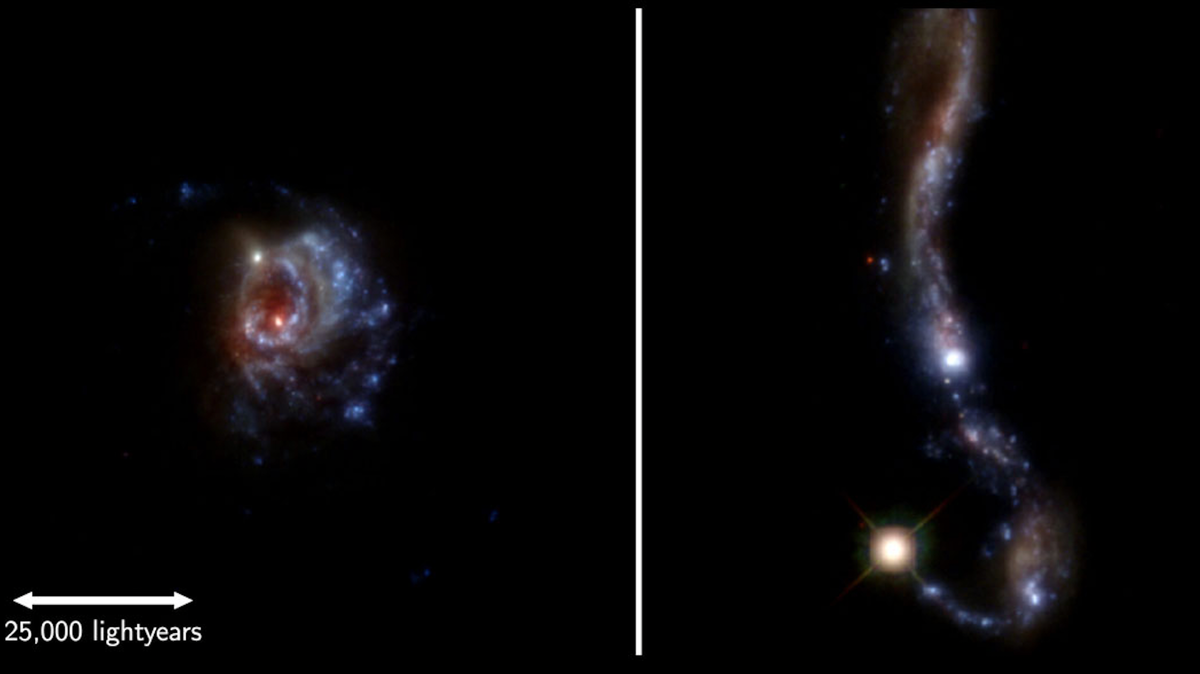
Astronomers are studying the amount of Lyman alpha light that escapes from 45 local galaxies to better understand the early, distant galaxies observed by the James Webb Space Telescope and the Hubble Space Telescope. Lyman alpha light is a wavelength of ultraviolet radiation found in star-forming galaxies, and decoding the information it carries can reveal substantial amounts of information about the physical properties of the galaxies from which it originates. The team discovered a connection between the amount of cosmic dust a galaxy has and how much Lyman alpha light it lets out, and also found that Lyman alpha light can make galaxies look considerably larger.
Reading Insights
0
11
4 min
vs 5 min read
88%
918 → 106 words
Want the full story? Read the original article
Read on Space.com