
The Boötes Void: A 330-Million Light-Year Gap That Could Have Hidden the Universe
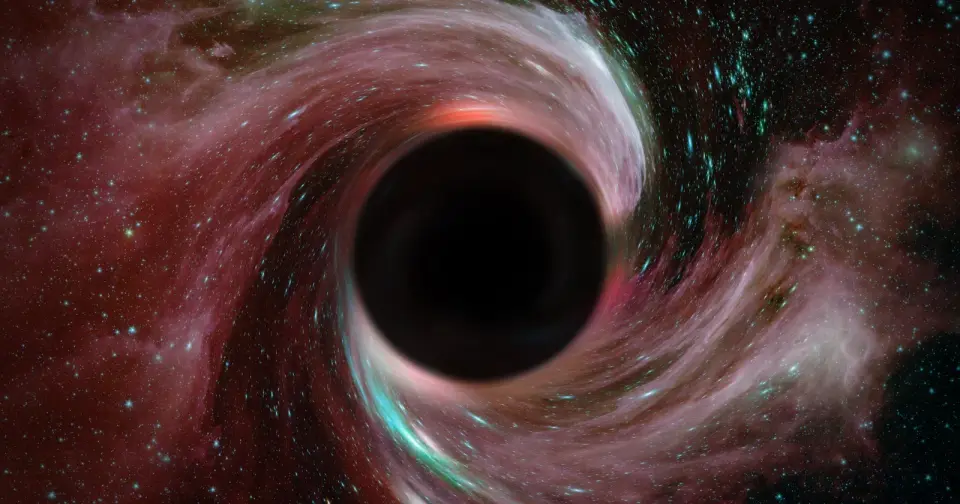
The Boötes Void is a massive, spherical region of space roughly 330 million light-years in diameter that contains significantly fewer galaxies than expected. Discovered in 1981 by Robert Kirshner and colleagues, this 'Great Nothing' challenges assumptions about the uniform distribution of matter in the universe. If the Milky Way were located at its center, the nearest galaxy would be approximately 100 million light-years away, potentially delaying the discovery of extragalactic objects until the 1960s.
Key points
- The Boötes Void, also known as 'The Great Nothing,' is a spherical region approximately 330 million light-years in diameter located about 700 million light-years from Earth.
- It was identified in 1981 by Robert Kirshner and a team at the University of Michigan during a redshift survey, revealing a region with far fewer galaxies than the cosmic average.
- While a typical region of this size would contain around 10,000 galaxies, the Boötes Void contains only about 60, as confirmed by follow-up surveys in the late 1980s and 1990s.
- The void's existence highlights the 'cosmic web' structure, where galaxies cluster along filaments separated by vast, underdense voids, contradicting earlier assumptions of uniform matter distribution.
- Astronomer Greg Aldering noted that if the Milky Way were centered in this void, the nearest galaxy would be 100 million light-years away, meaning humans might not have discovered other galaxies until the 1960s.
Background
Recent archival coverage from August 2026 re-evaluated the Boötes Void, noting that while it is large, it is not anomalously rare. Modern studies suggest it likely formed from the merging of smaller voids and is a common feature of the cosmic web. This aligns with broader findings on the universe's large-scale structure, where matter is distributed in a foam-like pattern of clusters and filaments, with voids occupying the spaces between them. The void remains a valuable tool for testing cosmological models, dark energy, and gravity at the largest scales.
Why it matters
The Boötes Void illustrates that the observable universe is not uniformly distributed, but rather structured by vast empty regions that can obscure the presence of other galaxies. This underscores the importance of location in astronomical discovery, as the density of nearby objects determines what can be observed with current technology. It also provides a critical test case for cosmological models, helping scientists understand the distribution of matter and the nature of dark energy in the universe's large-scale structure.
What to watch
Astronomers continue to use voids like the Boötes Void to refine models of the cosmic web and test theories of dark energy and gravity. Future surveys may further map the distribution of galaxies within and around these voids, providing more data on the formation and evolution of large-scale structures in the universe.
Want the full story? Read the original reporting
Read on Space Daily