Tag

Galaxy Distribution

All articles tagged with #galaxy distribution

The Boötes Void: A 330-Million Light-Year Gap That Could Have Hidden the Universe
astronomy2 months ago

The Boötes Void: A 330-Million Light-Year Gap That Could Have Hidden the Universe

The Boötes Void is a massive, spherical region of space roughly 330 million light-years in diameter that contains significantly fewer galaxies than expected. Discovered in 1981 by Robert Kirshner and colleagues, this 'Great Nothing' challenges assumptions about the uniform distribution of matter in the universe. If the Milky Way were located at its center, the nearest galaxy would be approximately 100 million light-years away, potentially delaying the discovery of extragalactic objects until the 1960s.
The Boötes Void: A 300-Million Light-Year Gap in Cosmic Structure
astronomy3 months ago

The Boötes Void: A 300-Million Light-Year Gap in Cosmic Structure

The Boötes Void is a massive underdense region in the universe, roughly 250 to 330 million light-years in diameter, located about 700 million light-years from Earth. While standard cosmic models predict approximately 2,000 galaxies within this volume, surveys have identified only around 60. This significant deviation from expected density was first noted in 1981 and confirmed in 1987, though later analysis suggests it is a typical, albeit unusually large, void rather than a unique anomaly. Its emptiness makes it a valuable tool for testing dark energy and gravity on the largest scales.

Scientists suggest Earth resides in a vast cosmic void based on Big Bang echoes
science1 year ago

Scientists suggest Earth resides in a vast cosmic void based on Big Bang echoes

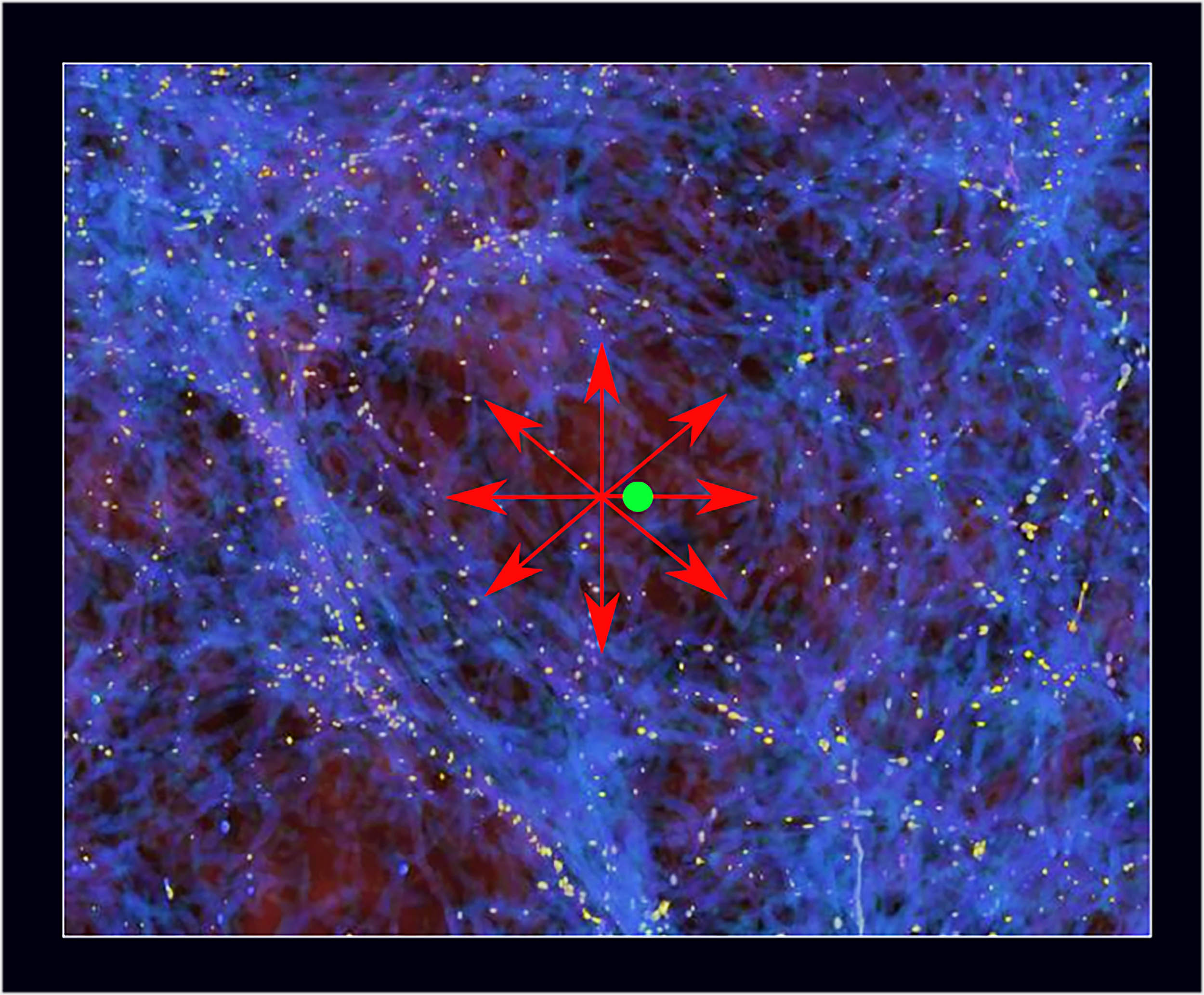
Scientists propose that our galaxy may reside in a massive under-dense region, or 'void,' which could explain the discrepancy in measurements of the universe's expansion rate known as the Hubble tension. This void, potentially spanning a billion light-years, might cause local galaxies to appear to recede faster, aligning local observations with cosmic microwave background data. While this hypothesis is supported by some galaxy surveys and baryon acoustic oscillation data, it remains controversial and requires further investigation with upcoming measurements to confirm or refute the idea.

Connecting the Clumpiness of the Universe to Dark Matter through Axions.
astronomy3 years ago

Connecting the Clumpiness of the Universe to Dark Matter through Axions.

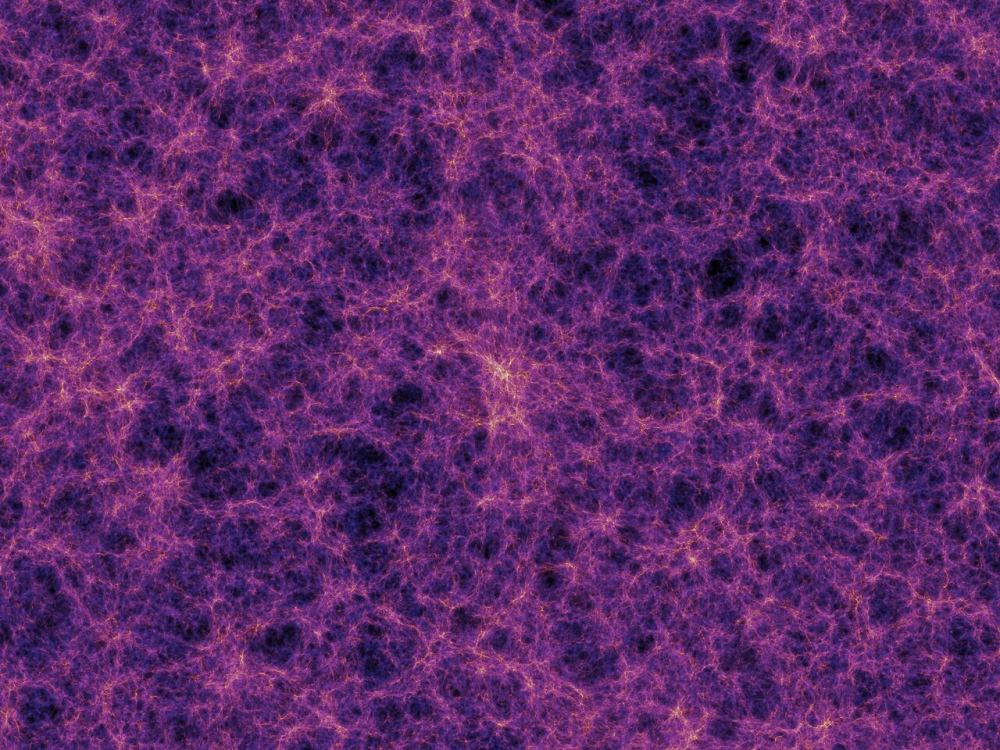
Astronomers may have found evidence that dark matter is made of axions, ultra-light particles that exhibit wave-like behavior and influence the formation and distribution of dark matter, smoothing out the Universe. The multinational team of researchers led by Keir Rogers from the University of Toronto analyzed the "clumpiness" of the Universe and found that cosmic matter is more evenly distributed than expected. While it's not iron-clad proof that axions are dark matter, the implications for axions are strong, and more observations are needed to confirm their role in the Universe.