Tag

Large Scale Structure

All articles tagged with #large scale structure

James Webb uncovers the universe's largest, most detailed map of the cosmic web
astronomy11 days ago

James Webb uncovers the universe's largest, most detailed map of the cosmic web

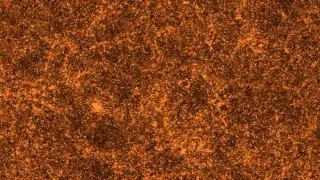
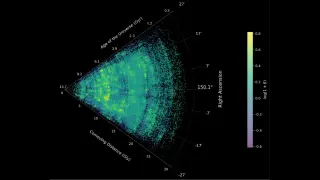
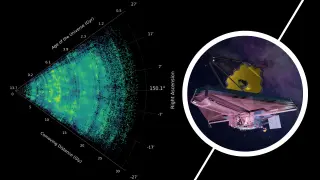
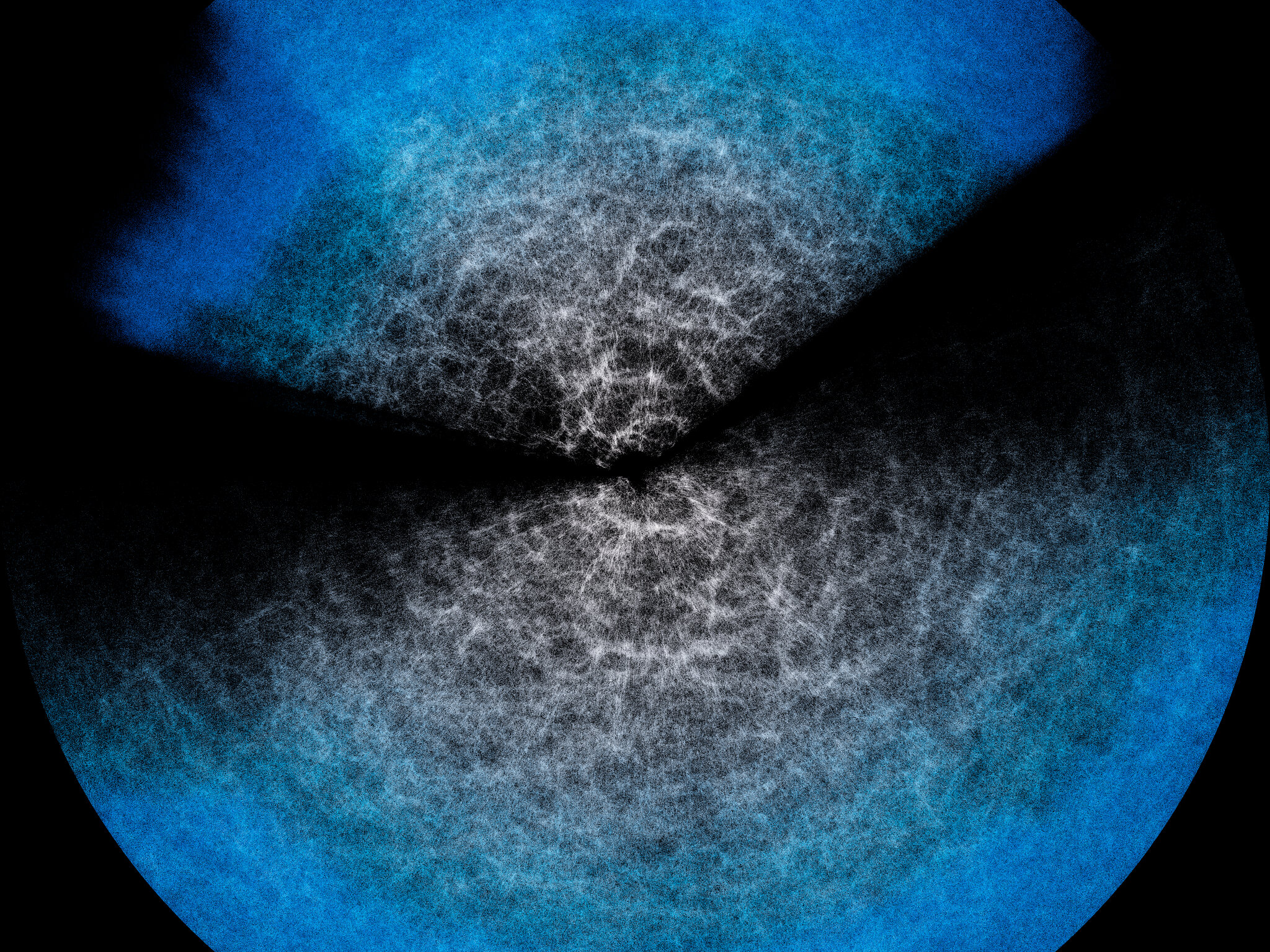
Using JWST’s COSMOS-Web survey, astronomers mapped about 164,000 galaxies over a 255‑hour program to produce the largest, most detailed view of the cosmic web. The map shows how dense regions foster early galaxy growth and eventually quench star formation, revealing the large-scale structure of the universe up to redshift z~7 and refining our understanding of cosmic evolution since the universe’s infancy.

JWST Maps the Cosmic Web in Unprecedented Detail Across Cosmic Time
science17 days ago

JWST Maps the Cosmic Web in Unprecedented Detail Across Cosmic Time

Using the James Webb Space Telescope’s COSMOS-Web survey, researchers produced the sharpest map yet of the universe’s cosmic web by charting about 164,000 galaxies, tracing large-scale structures back to when the universe was roughly 1 billion years old. The map reveals dense filaments and voids and will help study how galaxies evolve within this cosmic skeleton; the data are publicly released for wider use.

Hidden Galaxy Giant Behind Our Galaxy: The Vela Supercluster Emerges as a Cosmic Powerhouse
space25 days ago

Hidden Galaxy Giant Behind Our Galaxy: The Vela Supercluster Emerges as a Cosmic Powerhouse

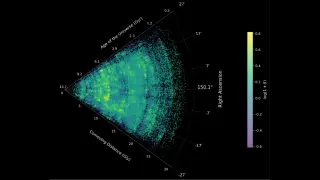
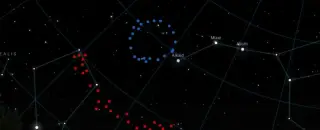
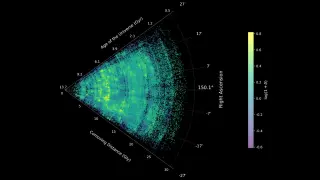
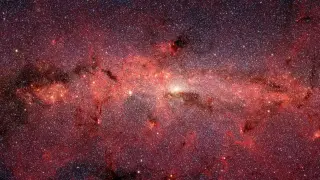
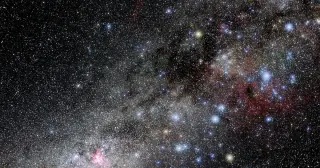
Astronomers mapping the Milky Way’s dust-shrouded Zone of Avoidance have revealed the Vela Supercluster, a vast structure about 300 million light-years across containing roughly 33,800 trillion solar masses, located around 870 million light-years away. Using 65,518 galaxy distance measurements plus 8,283 new redshifts from SALT and MeerKAT, they show Vela is comparable in mass to the Shapley Supercluster and its gravity exceeds that of the Great Attractor, helping explain observed cosmic flows and completing our map of the local universe.

Astronomers Map a Hidden Giant: the Vela Supercluster Behind the Milky Way
space1 month ago

Astronomers Map a Hidden Giant: the Vela Supercluster Behind the Milky Way

Researchers have mapped the Vela Supercluster, a massive galaxy assembly hidden behind the Milky Way’s dust in the Zone of Avoidance. Using SALT and the MeerKAT radio telescope, the structure—about 300 million light-years across and roughly 800 million light-years from Earth—contains the mass of ~30 quadrillion suns, making it one of the largest known local-universe structures. The discovery, ten years after its initial identification, helps refine models of cosmology and the distribution of matter in the universe, with future radio telescopes expected to yield even more detailed maps.

Unveiling the Cosmic Neutrino Background: Is it Visible to Us?
astronomy2 years ago

Unveiling the Cosmic Neutrino Background: Is it Visible to Us?

The cosmic neutrino background, a relic from the early stages of the hot Big Bang, has not been directly detected yet. However, evidence for its existence has been found indirectly through its imprints on the cosmic microwave background (CMB) and the clustering of galaxies in the large-scale structure of the Universe. Direct detection of the cosmic neutrino background is challenging due to the extremely tiny cross-section of neutrinos for interacting with other particles. Current experiments are not capable of detecting the signals from these relic neutrinos unless novel physics or technological advancements are involved. Future observations with more precise CMB measurements and large-scale structure surveys may provide further evidence for the cosmic neutrino background.

Cosmic Large-Scale Structure: Surprising Slow Growth in Molasses
science2 years ago

Cosmic Large-Scale Structure: Surprising Slow Growth in Molasses

The growth of the large-scale structure of the universe, which is mostly composed of dark matter, is slower than expected, according to a recent analysis. This discrepancy, known as the S8 tension, suggests a suppression of growth beyond what is predicted by the standard model. The evidence for this suppression comes from multiple cosmological data sets and indicates a deviation from the standard model's picture. The late-time suppressed growth could have implications for our understanding of dark energy and gravity, and it may help alleviate the S8 tension. Further research is needed to determine whether this discrepancy is due to new physics or systematic errors in the measurements and analyses.

"Euclid's Survey: Unveiling the Universe in a Box"
science-and-technology2 years ago

"Euclid's Survey: Unveiling the Universe in a Box"

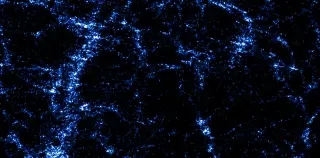
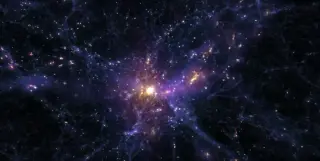
Scientists in the Euclid Consortium have developed the Euclid Flagship simulation, one of the most accurate and comprehensive computer simulations of the large-scale structure of the Universe, to prepare for the massive amount of data that will be produced by the Euclid mission. This mission aims to create a 3D-map of the Universe to measure the properties of dark energy and dark matter. The simulation allows astrophysicists to model the formation and evolution of galaxies, galaxy clusters, and the cosmic web, providing insights into the structure of the dark Universe.