Tag

Cosmic Web

All articles tagged with #cosmic web

MOTHRA: a 1,140-lens telescope to map the cosmic web and dark matter
science28 days ago

MOTHRA: a 1,140-lens telescope to map the cosmic web and dark matter

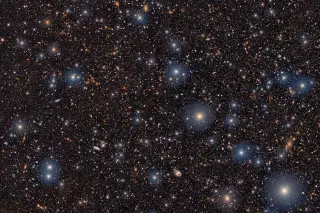
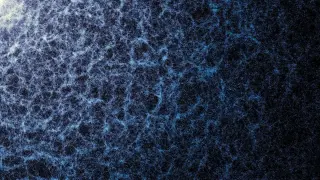
Researchers are building MOTHRA in Chile using 1,140 Canon EF 400mm f/2.8L IS lenses across 30 mounts to form a 4.7-meter-equivalent aperture. The project, expanding on the Dragonfly concept, pairs each lens with Apx26/60 cameras (Sony IMX571/IMX455 sensors) to image diffuse ionized gas that traces the cosmic web and dark matter. Construction is underway at El Sauce Observatory with completion targeted by year’s end, funded by Alex Gerko of XTX Markets. The goal is to directly image the unseen mass connecting galaxies, an ambitious step beyond traditional starlight observations.

MOTHRA sprint starts: 1,140 lenses to map the cosmic web
innovation29 days ago

MOTHRA sprint starts: 1,140 lenses to map the cosmic web

Construction has begun on MOTHRA, the world’s largest all-lens telescope, which uses 1,140 Canon telephoto lenses as a distributed aperture to detect faint hydrogen gas linking galaxies and map the cosmic web, revealing the distribution of dark matter. Built at the El Sauce Observatory in Chile, it aims to begin scientific observations by the end of 2026, funded by Alex Gerko and Convergent Research as part of the Dragonfly FRO initiative.

Cosmic web revealed: 3D map shows hidden sea of light in early universe
astronomy1 month ago

Cosmic web revealed: 3D map shows hidden sea of light in early universe

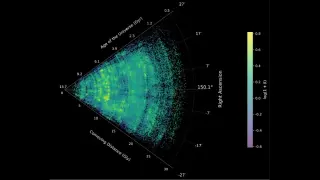
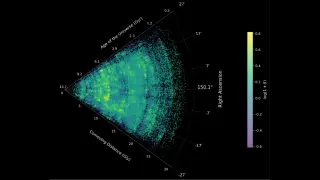
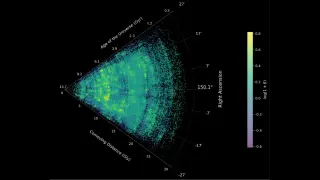
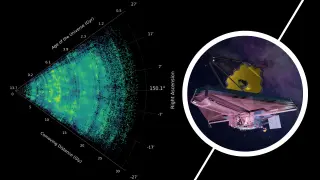
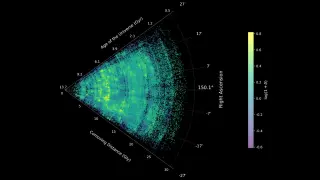
Space researchers used the Hobby-Eberly Telescope Dark Energy Experiment (HETDEX) to produce the largest 3D map of Lyman-alpha light from hydrogen dating to 9–11 billion years ago, exposing a vast “sea of light” between galaxies and outlining the cosmic web. By applying Line Intensity Mapping to thousands of spectra, the team mapped faint hydrogen gas beyond bright galaxies, shedding light on how gas accreted, galaxies formed, and the large-scale structure of the early universe.

Milky Way Enveloped in a Vast Dark Matter Plane That Shapes Local Motion
science1 month ago

Milky Way Enveloped in a Vast Dark Matter Plane That Shapes Local Motion

A new Nature Astronomy study using constrained, Lambda-CDM–based simulations finds the Local Group’s unseen mass is arranged not in a spherical halo but in a flattened dark matter plane tens of millions of light-years across. This geometry better reproduces the observed motions of nearby galaxies and the local Hubble flow, reducing discrepancies seen in spherical models while remaining consistent with overall cosmology. The result highlights how the dark matter around us likely forms sheets and filaments in the cosmic web, though more data is needed to pin down the plane’s thickness and orientation.

Webb maps the universe's invisible backbone in unprecedented detail
science2 months ago

Webb maps the universe's invisible backbone in unprecedented detail

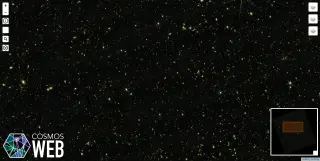
The James Webb Space Telescope has produced the sharpest-ever map of dark matter, revealing the universe's invisible scaffolding and how gravity links dark matter to the distribution of galaxies and the cosmic web. The Webb map covers a Sextans region about 2.5 full moons across, highlights about 800,000 galaxies (roughly 10x more than ground-based surveys and twice Hubble’s count), and shows dark and regular matter co-located in clusters and filaments. This strengthens the case that dark matter shaped the formation of galaxies—and plans exist to expand the map with the Roman Space Telescope.

Webb Maps Dark Matter in Unprecedented Detail, Revealing the Cosmic Scaffold
space2 months ago

Webb Maps Dark Matter in Unprecedented Detail, Revealing the Cosmic Scaffold

NASA’s James Webb Space Telescope has produced the sharpest-ever map of dark matter by analyzing how its gravity bends light from nearly 800,000 galaxies in the COSMOS region, showing that dark matter’s invisible scaffolding closely aligns with regular matter and has guided galaxy and star formation—and by extension the conditions for planets like Earth—with Webb revealing finer dark-matter clumps than previous maps and setting the stage for expanded surveys with the Roman Space Telescope.

Astronomer Reveals Distribution of Most Normal Matter in the Universe
science3 months ago

Astronomer Reveals Distribution of Most Normal Matter in the Universe

Most of the universe's normal matter isn't in stars or galaxies but is distributed in the cosmic web between galaxies, with recent studies using fast radio bursts confirming that about 76% of normal matter resides in intergalactic space, supporting the Big Bang theory. Dark matter, which makes up most of the universe's mass, remains largely mysterious, but scientists are actively studying it through various methods including underground detectors and telescopes.

James Webb Telescope Reveals Stunning Views of the Early Universe and Galaxy Interactions
science3 months ago

James Webb Telescope Reveals Stunning Views of the Early Universe and Galaxy Interactions

The James Webb Space Telescope has released a stunning image revealing a dense cluster of galaxies and cosmic filaments in the early universe, providing new insights into galaxy formation, the structure of the cosmic web, and the influence of dark matter and dark energy, with observations reaching back over 13 billion years.

Deep Space Radio Bursts Hit Earth in Rapid Succession
science7 months ago

Deep Space Radio Bursts Hit Earth in Rapid Succession

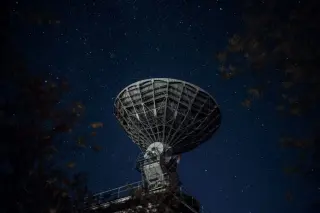
A team using MeerKAT in South Africa discovered a highly active repeating fast radio burst source, FRB 20240619D, emitting hundreds of short radio pulses across multiple frequencies, providing valuable insights into the nature of these cosmic phenomena and their potential origins near magnetars, while also setting limits on optical counterparts and helping map the universe's ionized gas.