
Cassini’s 1671 Discovery of Iapetus: The Origin of Saturn’s Yin-Yang Moon
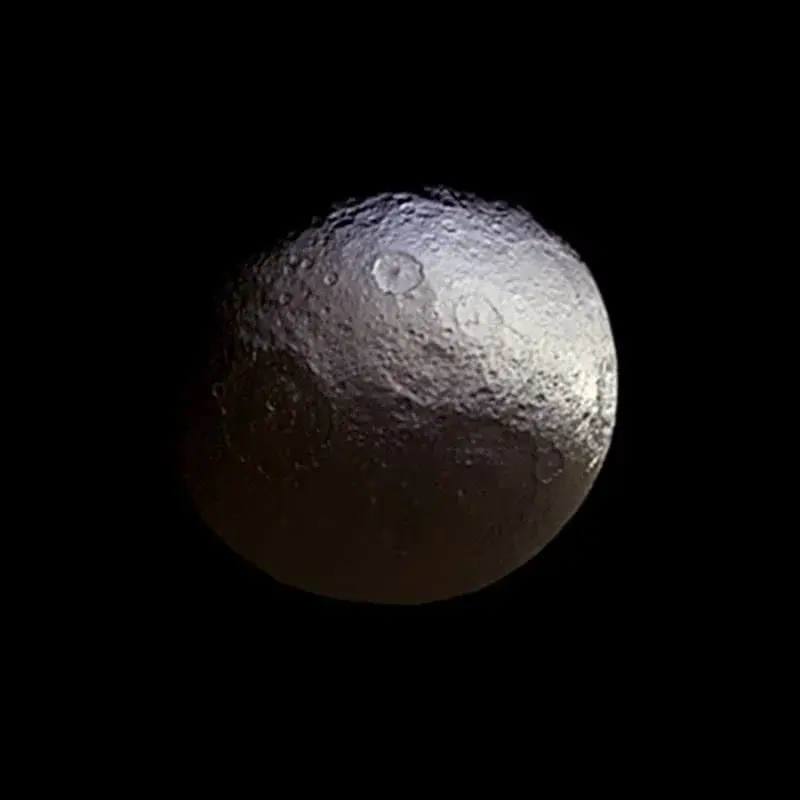
On October 25, 1671, Italian astronomer Giovanni Cassini discovered Iapetus, the second known moon of Saturn. Initially appearing as a faint speck, its elusive orbit led Cassini to deduce that one hemisphere is significantly darker than the other. This two-toned appearance, later confirmed by NASA’s Cassini spacecraft, earned Iapetus the nickname 'yin-yang moon' and has since informed models of how Saturn’s moons and rings formed from ancient collisions.
Key points
- Giovanni Cassini identified Iapetus on October 25, 1671, making it the second moon ever found orbiting Saturn after Christiaan Huygens discovered Titan in 1655.
- Cassini initially observed Iapetus as a tiny speck on the west side of Saturn but could not locate it on the east side 39 days later, leading him to conclude the moon had a dark side that was difficult to see from Earth.
- NASA’s Cassini spacecraft later captured images confirming Iapetus’s two-tone surface, where one hemisphere is bright and the other is dark, resulting in its 'yin-yang' nickname.
- Researchers use Iapetus’s characteristics to understand the formation of Saturn’s system, suggesting that current moons and rings formed from the rubble of collisions between earlier, now-extinct moons.
Background
This historical discovery is part of a broader timeline of Saturnian exploration, including William Herschel’s 1789 discovery of Mimas and the 1997 launch of the Cassini-Huygens probe. Recent studies of other Saturnian moons, such as Methone, have also utilized data from the Cassini mission to understand surface geology and tidal effects.
Why it matters
The discovery of Iapetus was pivotal for early planetary science, as it was the first evidence that a moon could have a non-uniform surface brightness. Its unique two-tone appearance has become a key case study in planetary formation, helping scientists model how orbital resonances and collisions shaped the current configuration of Saturn’s moons and rings.
What to watch
While the primary discovery is historical, ongoing research continues to analyze data from the Cassini mission to refine models of Saturn’s moon formation. Future missions may further investigate the geological processes that created Iapetus’s distinct hemispheres.
Want the full story? Read the original reporting
Read on Space