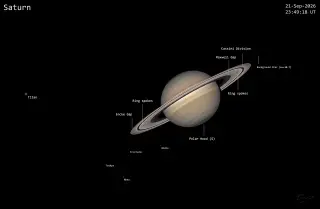
Astrophotographer Tom Williams captured a highly detailed image of the Saturn system on October 8, 2026, leveraging exceptional atmospheric conditions in the United Kingdom. The image, featured by NASA's Astronomy Picture of the Day, highlights features like Titan and Enceladus, benefiting from Saturn's recent opposition on October 4, which maximizes illumination and proximity for observers.
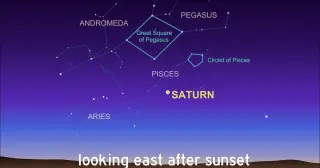
Saturn reached opposition on October 4, 2026, offering the planet's closest approach to Earth this year and optimal visibility for naked-eye and telescopic observation. The event coincides with a brightening of the rings due to the Seeliger effect and new Hubble observations of a strengthening ten-sided atmospheric wave at Saturn's south pole. While Saturn dominates early October, the Orionid meteor shower peaks on October 21-22, though moonlight may obscure fainter meteors. The Moon also passes near the Pleiades star cluster on October 27-28.
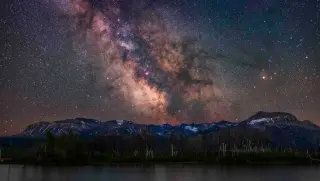
October 2026 offers prime viewing for Saturn at opposition on Oct. 4, the Orionid meteor shower peaking Oct. 21-22, and the Hunter's Moon on Oct. 26. The Milky Way core is visible until mid-month, and the Draconid shower occurs Oct. 8-9.
On October 4, 2026, astrology coverage diverges sharply between caution and opportunity. USA Today emphasizes a Sun-Saturn clash, advising most signs to persist through pressure or compromise. In contrast, YourTango highlights a Uranus retrograde, predicting unique opportunities for Gemini, Scorpio, and Capricorn. This follows a week of shifting astrological themes, including Venus retrograde and Mercury-Lilith alignments.
On October 4, 2026, astrology publications advise Cancer signs to prioritize rest and mental breaks due to a Sun-Saturn clash. While Vogue India emphasizes emotional sensitivity and the need for solitude, USA Today highlights anxiety regarding life direction. Yahoo’s content was inaccessible due to technical errors.
Saturn reaches opposition on October 4, 2026, making it the brightest and largest it will appear this year. Local observatories in Kansas City and Louisburg are hosting viewing events, while the planet's rings are once again visible after disappearing in 2025.
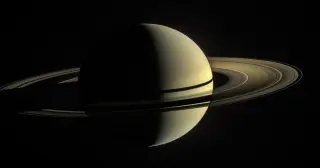
Saturn reaches opposition on October 4, 2026, becoming the brightest and closest to Earth this year. The event offers optimal viewing conditions for the planet's rings, which are now tilted 7.5 degrees from Earth's perspective. While clouds may obscure views in some regions, the planet remains visible throughout October, with the Seeliger effect enhancing ring brightness.
On October 1, 2026, astrology publications highlight a Gemini Moon alignment with Saturn in Aries as a catalyst for renewed optimism. While YourTango singles out Cancer, Libra, and Aquarius for specific breakthroughs, other outlets like The Cut and USA Today offer broader, sign-specific advice focused on focus, flexibility, and self-acceptance.
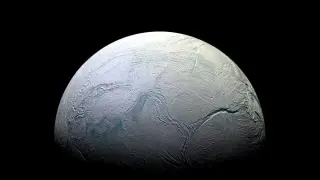
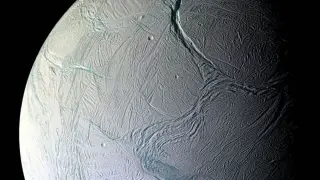
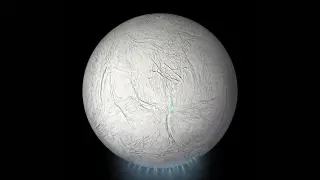
Two new studies suggest that detecting signs of life on Saturn's moon Enceladus may be easier than previously thought. Research indicates that the moon's plumes naturally concentrate organic compounds and salts into ice grains, while Earth microbes can survive in simulated conditions of Enceladus's subsurface ocean.
New studies confirm that Earth-based methanogenic microbes can survive in laboratory conditions mimicking Saturn's moon Enceladus. The research also reveals that Enceladus's ice plumes naturally separate and concentrate oceanic compounds, making it easier for future spacecraft to detect potential biosignatures.
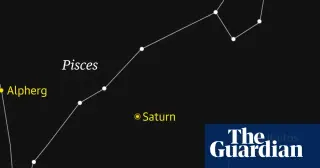
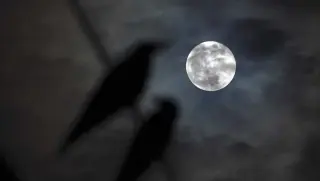
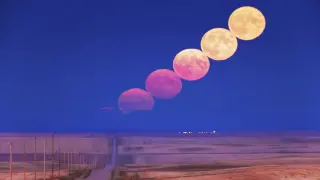
The September 2026 full moon, known as the Harvest Moon, reaches peak illumination on Saturday, September 26, at 12:49 p.m. ET. Although the moon is brightest at midday, observers are advised to view it just after sunset to appreciate its warm hue and proximity to Saturn. The ringed planet appears near the moon between Friday and Monday, offering a dual viewing opportunity. Saturn will reach its best visibility on October 4, but its current position makes it a notable sight this weekend. Neptune is also nearby but requires binoculars or a telescope for clear observation. The Harvest Moon’s traditional name stems from its historical use by farmers to extend harvesting hours after sunset. Indigenous groups have various names for this moon, including 'corn maker' and 'yellow leaf.' The orange glow often associated with the Harvest Moon is due to atmospheric scattering when the moon is near the horizon. Three more full moons are expected in 2026, including supermoons in November and December.
The 2026 Harvest Moon reaches full illumination on September 26, coinciding with the autumnal equinox and offering a rare celestial pairing with Saturn and Neptune. While the moon is technically brightest at midday, observers are advised to view it just after sunset to appreciate its warm hue and proximity to the ringed planet. This event is notable for its unusually close moonrise times across consecutive evenings, a phenomenon that historically aided farmers in extending harvest hours. The alignment provides a naked-eye opportunity to see Saturn, with Neptune visible only through optical aids.
New laboratory experiments demonstrate that Earth-based methanogenic microbes can survive in conditions mimicking the subsurface ocean of Saturn’s moon Enceladus. The findings suggest the moon’s ocean is potentially habitable and that its ice plumes may concentrate biological signatures, making detection easier for future spacecraft. While the results strengthen the case for life beyond Earth, long-term survival remains unproven, and dedicated missions to investigate are not expected until the 2050s.
The September 2026 full moon, known as the Harvest Moon, reaches peak illumination on Saturday, September 26. This event coincides with a rare alignment where Saturn appears near the moon, offering a dual viewing opportunity for sky-gazers. The moon’s proximity to the autumnal equinox reinforces its traditional name, while Saturn will reach its best visibility on October 4.
The September 2026 full moon, known as the Harvest Moon, reaches peak illumination on Saturday, September 26, at 12:49 p.m. ET. This celestial event coincides with a rare alignment where Saturn appears near the moon between Friday and Monday, offering a dual viewing opportunity. The moon’s proximity to the autumnal equinox, which occurred on Tuesday, reinforces its traditional name. While the moon is brightest at midday, optimal viewing occurs just after sunset. Saturn will reach its best visibility on October 4, but its current position near the moon makes it a notable sight this weekend. Neptune is also nearby but requires binoculars or a telescope for clear observation. The Harvest Moon’s traditional name stems from its historical use by farmers to extend harvesting hours after sunset. Indigenous groups have various names for this moon, including 'corn maker' and 'yellow leaf.' The orange glow often associated with the Harvest Moon is due to atmospheric scattering when the moon is near the horizon. Three more full moons are expected in 2026, including supermoons in November and December.