
"Exploring New Frontiers: The Impact of Space Lasers on Gravitational Wave Research"
TL;DR Summary
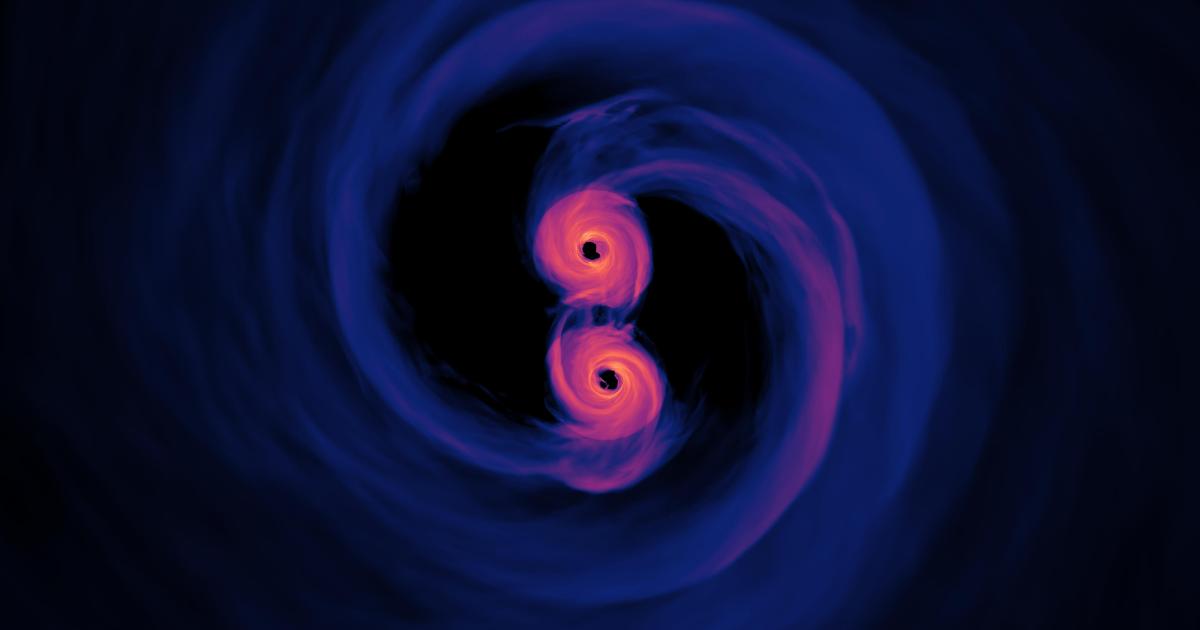
Gravitational wave astronomy has opened up four frontiers in the study of black holes, including the detection of the most massive black holes, supermassive black holes, intermediate mass black holes, and the boundary between neutron stars and black holes. Ground-based and space-based detectors, as well as pulsar timing arrays, are being used to push these frontiers, with the ultimate goal of characterizing the entire population of black holes throughout the Universe. Advances in technology and observational techniques are expected to provide robust data to answer these fundamental questions in the coming decades.
- The 4 big black hole frontiers for gravitational waves Big Think
- Space Lasers Will Seek a New Kind of Gravitational Waves Scientific American
- How LISA – A Gravitational Wave Observatory in Space – Will Transform Our Cosmic Understanding SciTechDaily
- Herbert Wertheim College of Engineering to play key role in groundbreaking Laser Interferometer Space Antenna mission University of Florida
- European Space Agency approves 'Lisa' mission - SWI swissinfo.ch SWI swissinfo.ch in English
Reading Insights
Total Reads
0
Unique Readers
10
Time Saved
15 min
vs 16 min read
Condensed
97%
3,026 → 92 words
Want the full story? Read the original article
Read on Big Think