
James Webb Space Telescope Makes Groundbreaking Discoveries in Early Universe
TL;DR Summary
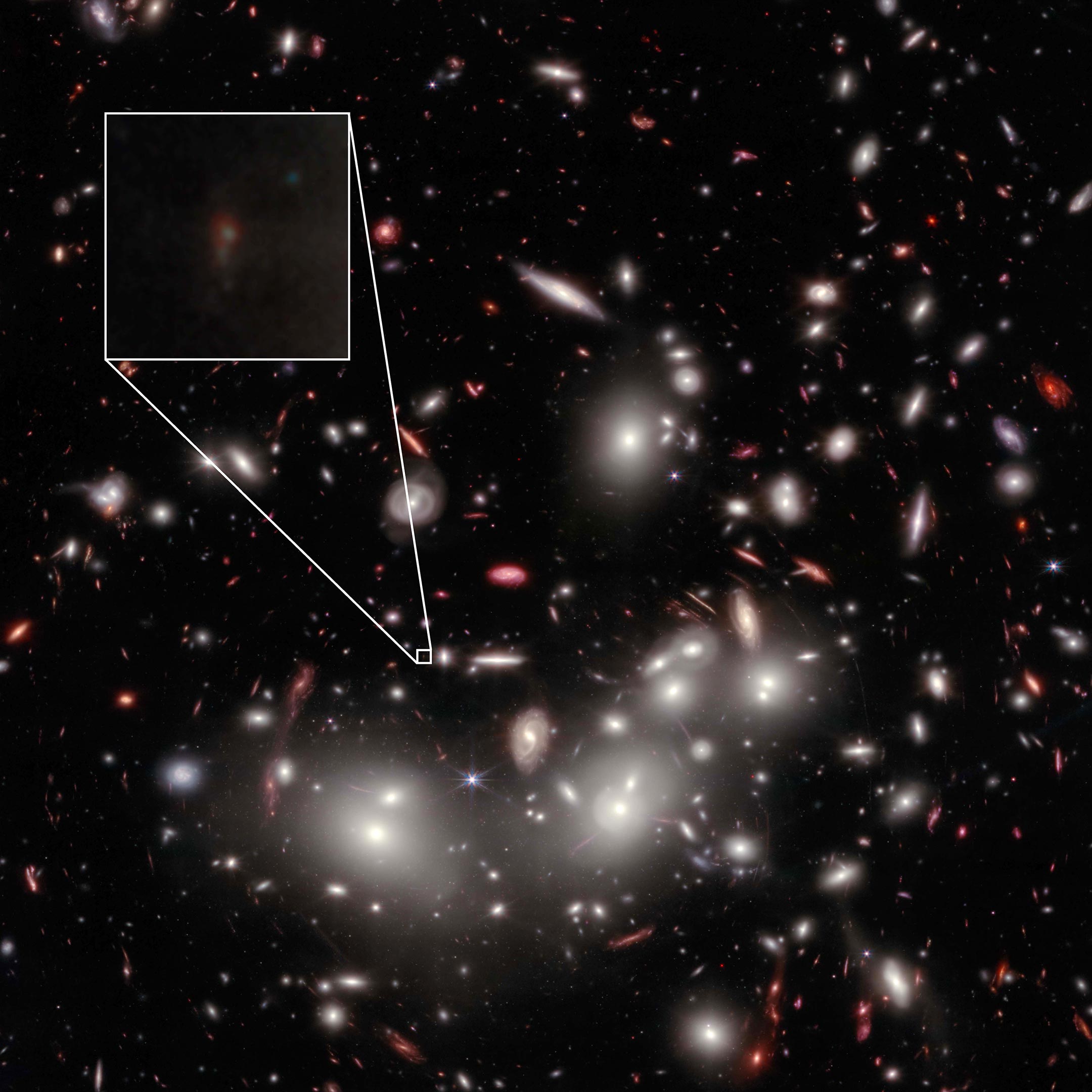
Astrophysicists have discovered the faintest galaxy ever observed in the early universe, JD1, using NASA's James Webb Space Telescope. The galaxy is typical of those that burned through the hydrogen atoms left over from the Big Bang, rendering the universe transparent. The discovery contributes to the understanding of the universe's evolution and the Epoch of Reionization. JD1 is located behind a galaxy cluster that magnified its light, making it appear larger and brighter. The galaxy's structure was studied in unprecedented detail and resolution, revealing three main elongated clumps of dust and gas that are forming stars.
- Astrophysicists Spot a Cosmic Whisper: The Faintest Galaxy in the Early Universe SciTechDaily
- James Webb Space Telescope spots faintest galaxy yet in infant universe Space.com
- James Webb Space Telescope discovers oldest organic molecules in the known universe, 12 billion light-years from Earth Livescience.com
- James Webb Space telescope: what is the furthest known galaxy? | NationalWorld NationalWorld
- James Webb telescope detects smoke, but no 'fire' in space Deccan Herald
Reading Insights
Total Reads
0
Unique Readers
12
Time Saved
4 min
vs 5 min read
Condensed
90%
995 → 96 words
Want the full story? Read the original article
Read on SciTechDaily