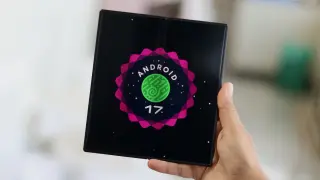
Leak hints broad Galaxy support for One UI 9.5
A leak outlines which Galaxy phones and tablets could receive the One UI 9.5 update, but Samsung has not published an official list yet and the lineup may change as rollout policies evolve.

All articles tagged with #galaxy
A leak outlines which Galaxy phones and tablets could receive the One UI 9.5 update, but Samsung has not published an official list yet and the lineup may change as rollout policies evolve.
APOD highlights M83, a 12-million-light-year-old spiral galaxy in Hydra nicknamed the Southern Pinwheel (also Thousand-Ruby Galaxy); its dusty spiral arms host blue star clusters and red star-forming regions, the galaxy spans about 40,000 light-years, and its core glows in X-rays from neutron stars and black holes formed in a past starburst.
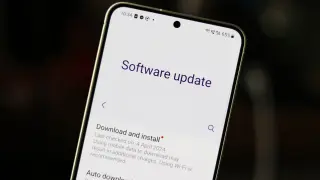
Samsung detailed the September 2026 security patch for Galaxy devices, addressing 90 vulnerabilities (58 Google-origin fixes: 18 Critical, 40 High; 31 Samsung Mobile fixes: 2 Critical, 3 High, 15 Moderate; 11 with undisclosed severity) plus one High-risk fix from Samsung Semiconductor. Forty Google issues aren’t applicable to Galaxy, and one issue was resolved in a prior update. Rollout to eligible devices will begin soon.
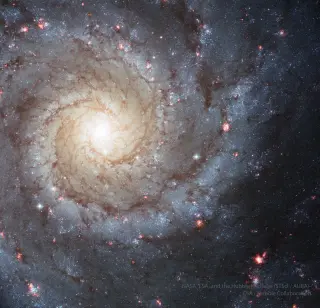
Using a sharp Hubble-based composite, M74 appears as a nearly face-on grand-design spiral galaxy about 32 million light-years away in Pisces, spanning ~30,000 light-years with bright blue star clusters and dark dust lanes tracing its arms and highlighting large star-forming regions.
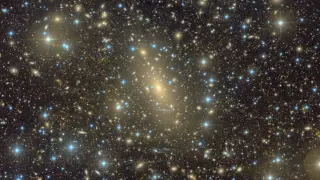
Deep imaging of IC 1101 places the edge of its main stellar body at about 260 kiloparsecs from the center, corresponding to a diameter of roughly 1.7 million light-years—the largest galaxy known. Although its core ends, faint outer structures indicate ongoing accretion, likely from past mergers, with X-ray gas disturbances suggesting a merger history. Located in the Abell 2029 cluster, IC 1101 may still grow and could be one example of a population of ultra-giant galaxies awaiting discovery. The study, accepted in Astronomy & Astrophysics, demonstrates how pushing imaging depth reveals the outskirts where galaxies continue assembling material.
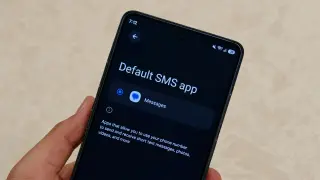
Samsung Galaxy owners who migrated to a new device with Smart Switch report Google Messages’ RCS failing, sometimes showing error 3100. Google says corrupted cache files transferred during Smart Switch may cause the issue and suggests updating Google Messages, turning off and on RCS, clearing Carrier Services data, rebooting, and re-enabling RCS, though not all users see relief and some have only resolved it via factory reset; carrier porting issues may also play a role.
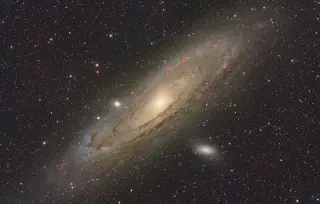
A Hubble-based study of Andromeda (M31) using PHAT/PHAST surveys finds its star formation has declined for about 500 million years, with a sharper drop in the last 40 million, especially on the side near the satellite galaxy M32. While not proven, M32 is the leading candidate for helping slow star birth. The work highlights Andromeda as a Milky Way analog and points to future Roman Space Telescope observations that could map the entire disk and add hundreds of millions of stars to the record.
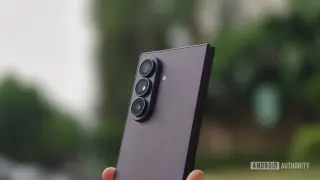
A leaker shared screenshots of an early One UI 9.5 build running on a Galaxy device, hinting at notable changes as Samsung stays busy rolling out One UI 9.0 to older devices while developing 9.5 for the Galaxy S27 series next year; details are sparse.
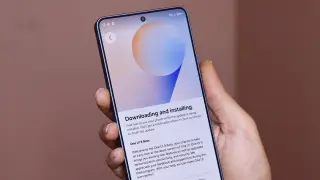
Samsung and Qualcomm are rolling out Personal AI across Galaxy smartphones, watches, and intelligent eyewear, powered by Snapdragon 8 Elite Gen 5 (with Wear Elite and AR1 Gen 1) and featuring ‘Now Nudge,’ which reads what’s on your screen in real time to surface context‑aware suggestions. The update promises CPU gains around 19–20%, GPU gains 23–24%, and NPU AI-task boosts of about 37%, while foldables like Galaxy Z Fold 8 gain crease-reduction tech and higher pixel density. The move ties phones, wearables, and eyewear into a seamless AI experience, with Samsung highlighting AI memory innovations (zHBM, zNAND-O, V10 BV-NAND) and One UI 9 enhancements.
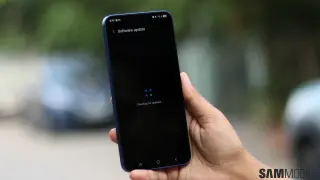
Samsung’s August 2026 security patch fixes 56 vulnerabilities across Galaxy devices (38 Google CVEs and 18 Samsung SVEs), with most fixes targeting Android 14–16 and core apps like Contacts, Dialer, Messages, and Galaxy Themes. Google delivers eight critical and 30 high-priority fixes, while Samsung adds two high, 14 moderate, and two undisclosed-priority fixes; nine Google fixes aren’t part of this patch (one already included in July 2026, eight not applicable). A worldwide rollout could begin soon.
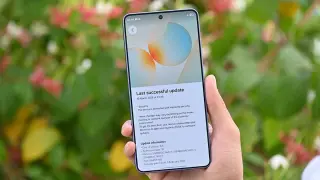
Samsung lifts the lid on the August 2026 Security Maintenance Release (SMR) for Galaxy devices, packing 56 patches from Google and Samsung, including 38 Android security fixes (8 Critical, 30 High) and 18 One UI improvements; it also details the One UI Security Bulletin and a refreshed rollout plan that keeps flagship devices on a monthly update cadence for up to six years while pushing non-flagship devices to quarterly updates, with explicit device lists for each cadence (foldables, S-series, A-series, Tab, and Enterprise models).

Samsung unveils the Galaxy Z Fold8 Ultra, Z Fold8, Z Flip8, Galaxy Watch Ultra2 and Watch9 with a design language centered on comfort. Concepts like Emotive Geometry and Emotive Slim guide slimmer profiles, curved frames and softer grips; Fold8 borrows passport-inspired ergonomics for one-handed use; watches get refined cushions, tactile button spacing, and lighter, breathable bands validated by over 100 million wrist data points and 10,000 simulations to ensure fit and stability across diverse wrists.
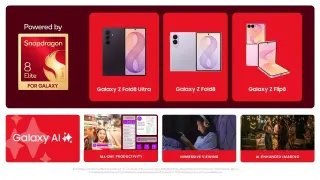
Samsung’s Unpacked 2026 showcase centers on Qualcomm’s Snapdragon powering a unified AI ecosystem: its new Snapdragon 8 Elite Gen 5 for Galaxy drives faster on‑device AI, gaming, cameras and efficiency across the Galaxy Z Fold 8 Ultra, Z Fold 8, and Z Flip 8; the Galaxy Watch 9 and Watch Ultra 2 run on Snapdragon Wear Elite, boosting health insights; Qualcomm and Samsung also tease Android XR eyewear with intelligent features and AR glasses, signaling a broader AI‑driven future for Samsung’s devices beyond foldables, though real‑world usefulness remains to be proven.
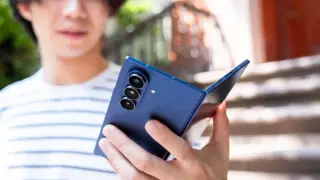
Leaks ahead of Samsung’s July Galaxy Unpacked 2026 point to three foldables (Z Flip 8, Z Fold 8, Z Fold 8 Ultra) with Flex Titanium durability and reduced crease, plus two smartwatches (Galaxy Watch Ultra 2 and Galaxy Watch 9) and expanded Galaxy AI features, with hints of smart glasses and a Galaxy Ring 2 for the July 22 event.
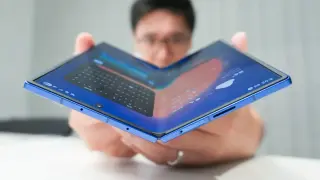
ZDNET previews Samsung's Galaxy Unpacked 2026, expecting a wider Galaxy Z Fold 8 with a 5,000 mAh battery and a tablet-like aspect ratio, alongside the Z Flip 8. The lineup reportedly includes Galaxy Watch 9 and Galaxy Watch Ultra 2 with no Classic this year, plus rumors of a Galaxy Ring 2 and a second-generation Galaxy XR Glasses with an eye-level camera that plugs into the Galaxy ecosystem. The event is set for July 22, with pre-order perks such as a $30 reservation credit and up to $1,200 off via trade-ins.