Tag

Reionization

All articles tagged with #reionization

Massive star clusters break free from birth clouds in 5 million years, reshaping galaxy growth models
science3 days ago

Massive star clusters break free from birth clouds in 5 million years, reshaping galaxy growth models

NASA/ESA observations with Webb and Hubble identified ~9,000 young star clusters in four nearby galaxies, revealing that the most massive clusters clear their birth gas in about 5 million years, while smaller clusters take roughly 7–8 million years. This challenges the simple expectation that bigger clusters clear faster and provides a sharper clock for how stellar feedback heats and pushes gas, influencing galaxy evolution models and the potential role of early massive clusters in cosmic reionization. The result tightens constraints for simulations of star formation and feedback and has implications for planet-forming disks in dense cluster environments. Future work will expand the survey to more galaxies and distant systems to test if local trends scale to the early universe.

JWST Finds the Most Metal-Poor Galaxy Yet, a Fossil from Cosmic Dawn
science14 days ago

JWST Finds the Most Metal-Poor Galaxy Yet, a Fossil from Cosmic Dawn

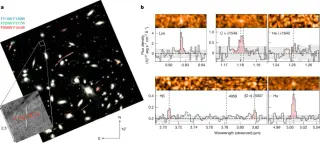
James Webb Space Telescope spectroscopy of LAP1-B, a strongly lensed galaxy at zspec ≈ 6.63, reveals an ultra-faint, chemically primitive star-forming system with gas-phase oxygen abundance of ~4×10⁻³ Z☉—the lowest yet for a high-redshift galaxy. It hosts a hard ionizing radiation field inconsistent with enriched populations, shows an elevated C/O ratio suggesting metal-free/poor stellar origins, and has a stellar mass <3,300 M⊙ while its dynamical mass exceeds baryons, implying a dominant dark-matter halo. LAP1-B is a direct high-redshift progenitor of local ultra-faint dwarfs, providing a rare window into early galaxy formation.

Webb Telescope Pinpoints a Dawn-Drenched Galaxy Near the Big Bang
science3 months ago

Webb Telescope Pinpoints a Dawn-Drenched Galaxy Near the Big Bang

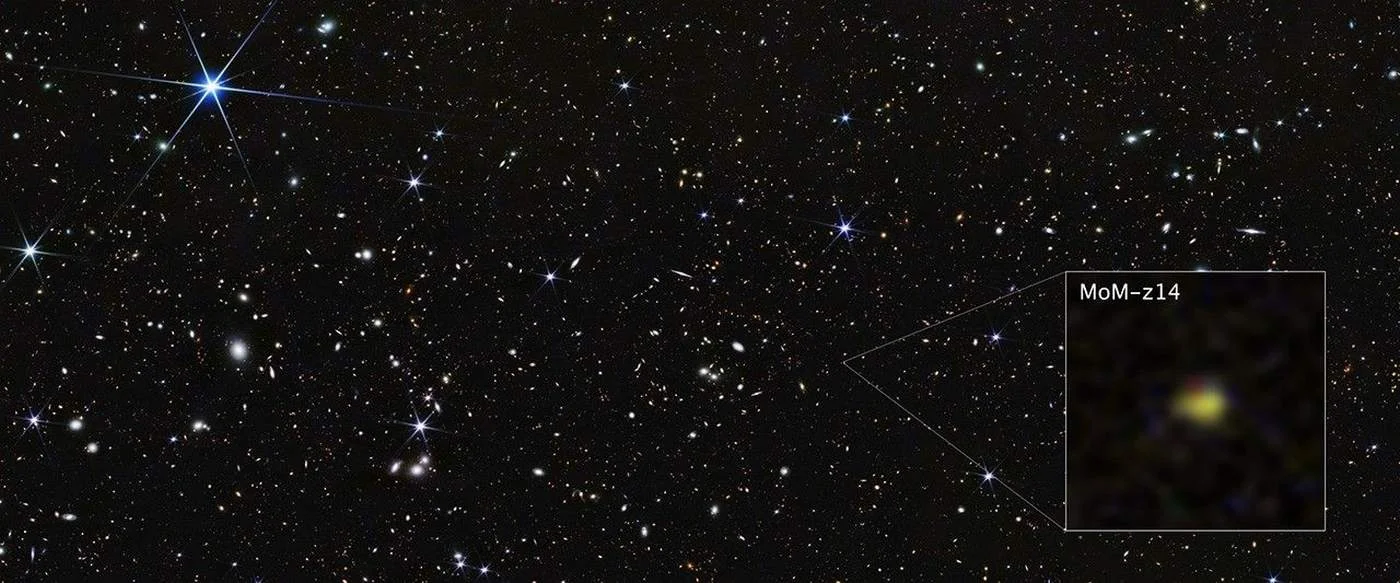
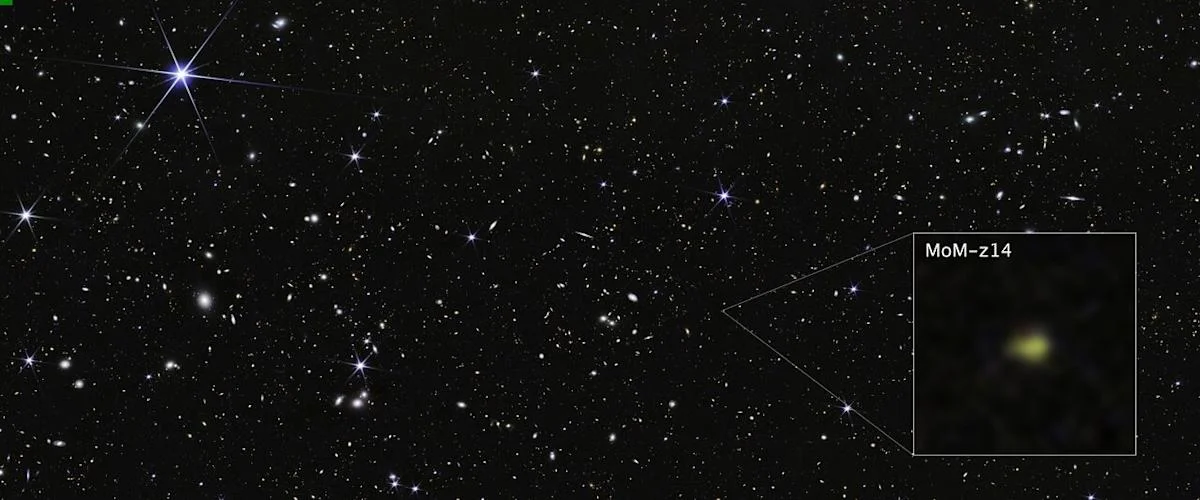
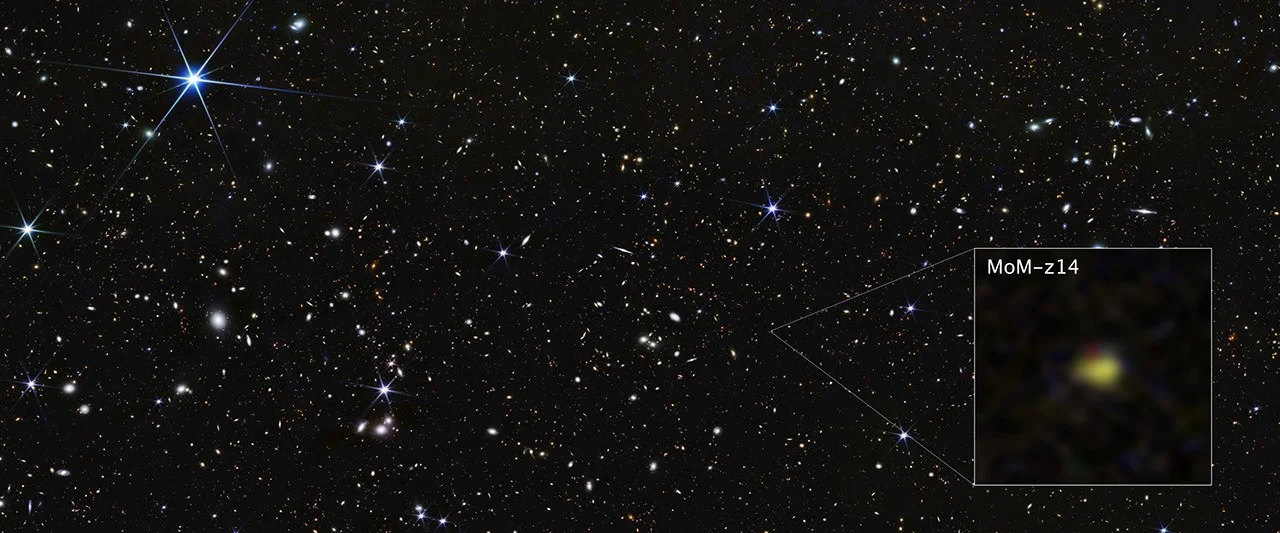
NASA’s James Webb Space Telescope confirmed the bright galaxy MoM-z14 existed about 280 million years after the Big Bang (redshift 14.44), pushing the observable frontier of the universe farther back than expected and suggesting early galaxies were more luminous than models predicted. The finding sheds light on the reionization era and nitrogen enrichment in the first galaxies, with Webb’s results hinting at a richer early universe than theorized and paving the way for thousands of similar discoveries with future missions like the Roman Space Telescope.

Dawn of the cosmos: Webb reveals MoM-z14 galaxy
space3 months ago

Dawn of the cosmos: Webb reveals MoM-z14 galaxy

Astronomers using the James Webb Space Telescope identify a bright galaxy named MoM-z14 dating to about 280 million years after the Big Bang, dating its light with Webb’s Near-Infrared Spectrograph. The findings include unexpected nitrogen enrichment and insights into reionization, offering new clues about the universe’s infancy and challenging previous predictions.

Webb Spots MoM-z14: A Bright Beacon 280 Million Years After the Big Bang
space3 months ago

Webb Spots MoM-z14: A Bright Beacon 280 Million Years After the Big Bang

NASA’s James Webb Space Telescope confirmed the bright galaxy MoM-z14 at a cosmological redshift of 14.44, placing it about 13.5 billion years in the past and roughly 280 million years after the Big Bang. It is about 100 times brighter than prelaunch predictions, challenging existing models of the early universe and offering clues about unusual nitrogen enrichment and the epoch of reionization. Webb’s findings continue to push observational boundaries ahead of future missions like the Roman Space Telescope.

Unveiling the Dawn of Time's First Light
science7 months ago

Unveiling the Dawn of Time's First Light

Recent observations from the Hubble and James Webb Space Telescopes suggest that small dwarf galaxies played a crucial role in illuminating the early Universe during cosmic reionization, challenging previous assumptions that larger galaxies and black holes were the primary sources of ionizing radiation. This discovery highlights the importance of low-mass galaxies in shaping the Universe's evolution and opens new avenues for understanding our cosmic origins.

Unveiling the Cosmic Dawn: What Ignited the Universe's First Light
science1 year ago

Unveiling the Cosmic Dawn: What Ignited the Universe's First Light

Recent research using data from the Hubble and James Webb Space Telescopes has revealed that small dwarf galaxies played a crucial role in the early Universe by emitting ionizing photons that reionized the murky hydrogen fog, effectively "switching on" the lights of the cosmos. These dwarf galaxies, far more numerous and brighter than previously thought, outnumber larger galaxies by 100 to 1 and collectively emit significant ionizing radiation. This discovery challenges previous assumptions about the sources of cosmic reionization and highlights the importance of understanding low-mass galaxies in the Universe's evolution.

"JWST Unveils Most Distant and Massive Galaxy Ever Found"
science-and-technology2 years ago

"JWST Unveils Most Distant and Massive Galaxy Ever Found"

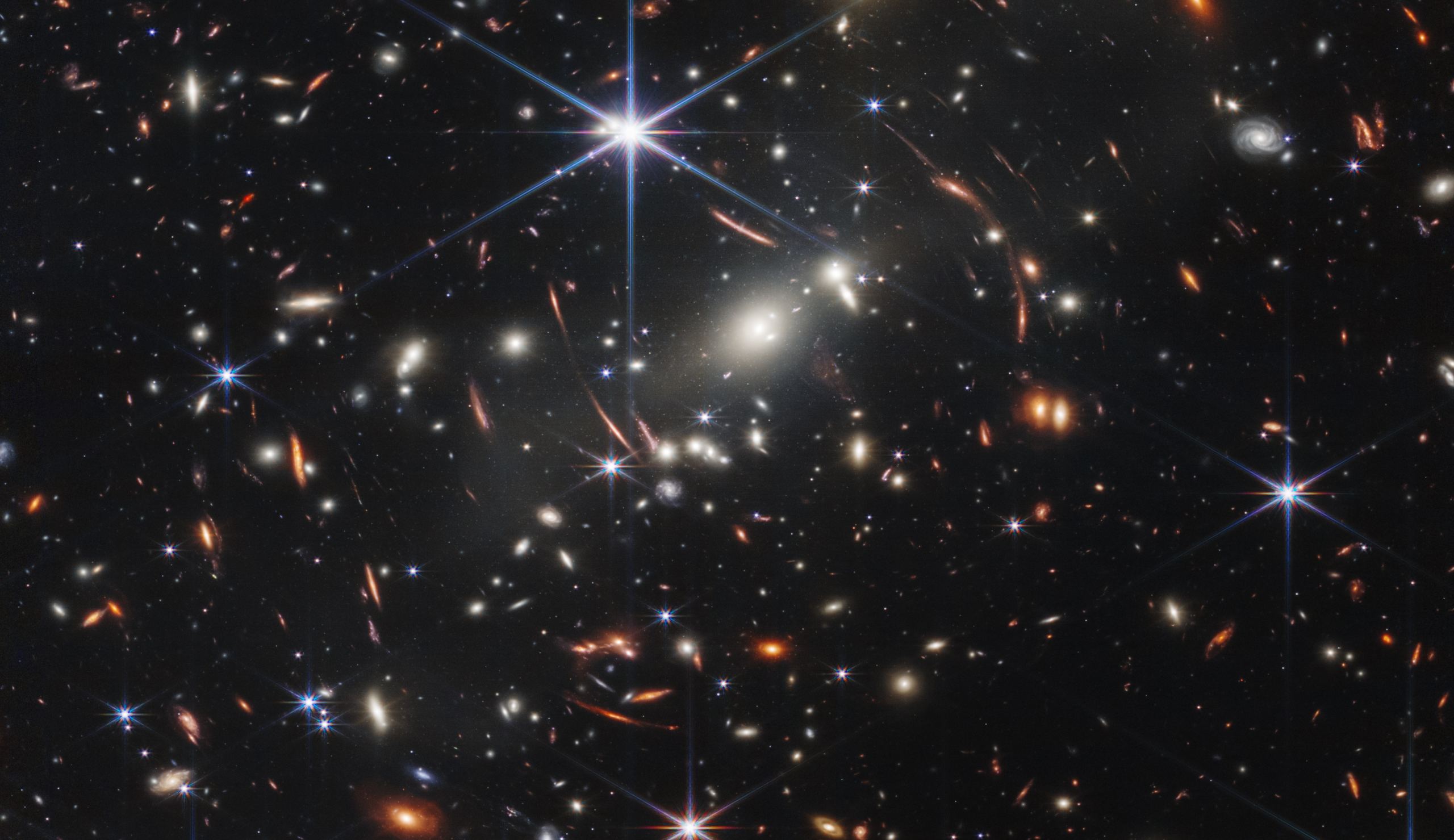
The James Webb Space Telescope (JWST) is revolutionizing our understanding of the early Universe, prompting significant updates to astronomy textbooks. Its advanced capabilities have revealed unexpected properties of early galaxies, the nature of ancient black holes, and new insights into the Epoch of Reionization. The JWST's findings are reshaping foundational cosmological theories and highlighting the collaborative efforts of the international scientific community.

"James Webb Telescope Reveals Ancient Cosmic Secrets"
astronomy2 years ago

"James Webb Telescope Reveals Ancient Cosmic Secrets"

Data from NASA's James Webb Space Telescope has revealed the earliest starlight spectra, shedding light on the pivotal role of low-mass galaxies in the universe's reionization, challenging existing cosmic evolution theories. These groundbreaking observations provide the clearest picture yet of very low-mass, newborn galaxies less than a billion years after the Big Bang, suggesting their central role in the cosmic origin story. The findings offer insight into the process of early star formation and the evolution of galaxies into the universe we know today.

Unveiling the Role of Dwarf Galaxies in Reionizing the Universe
astronomy2 years ago

Unveiling the Role of Dwarf Galaxies in Reionizing the Universe

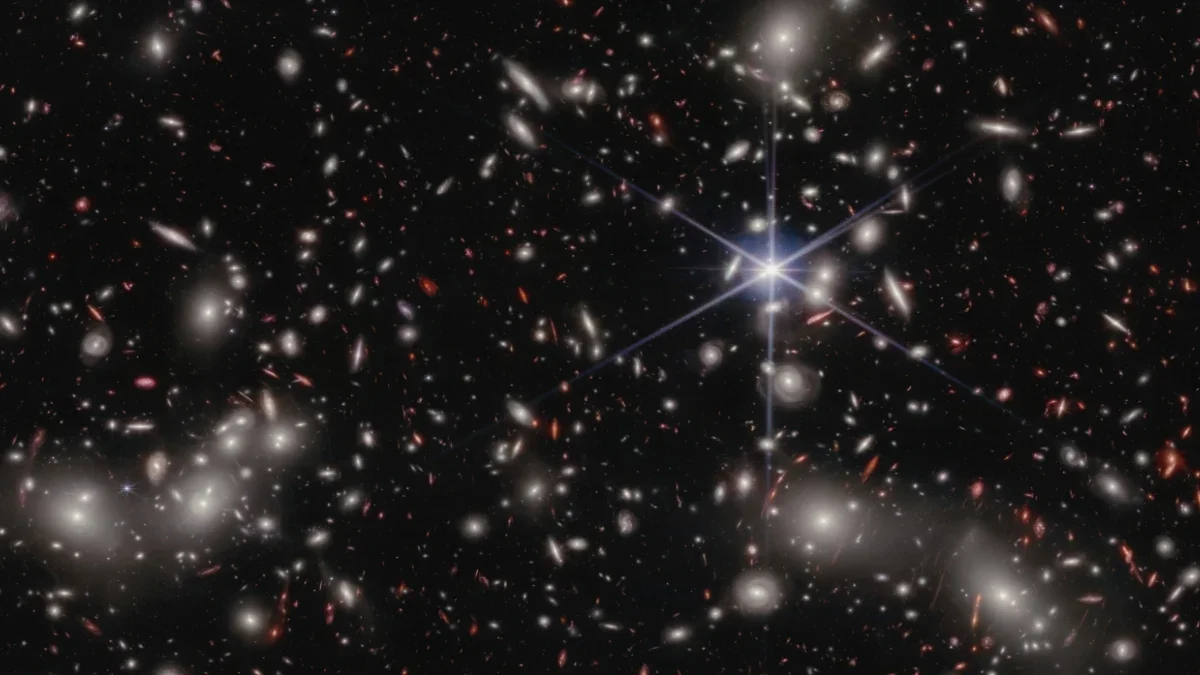
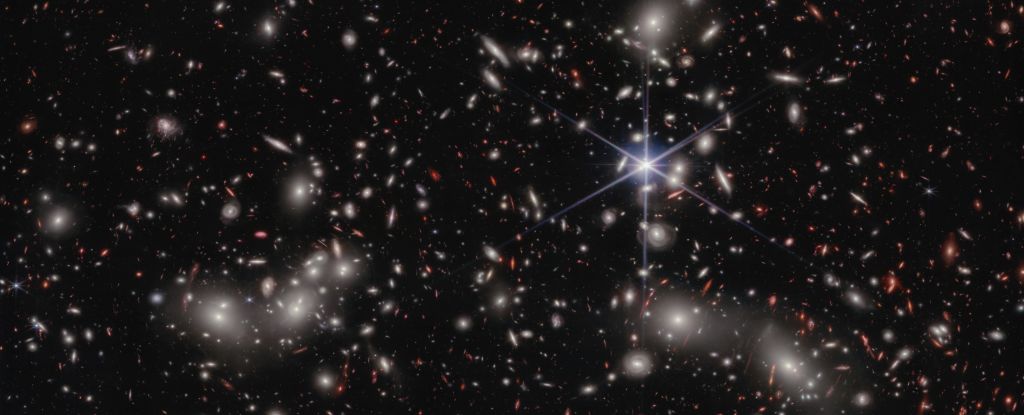
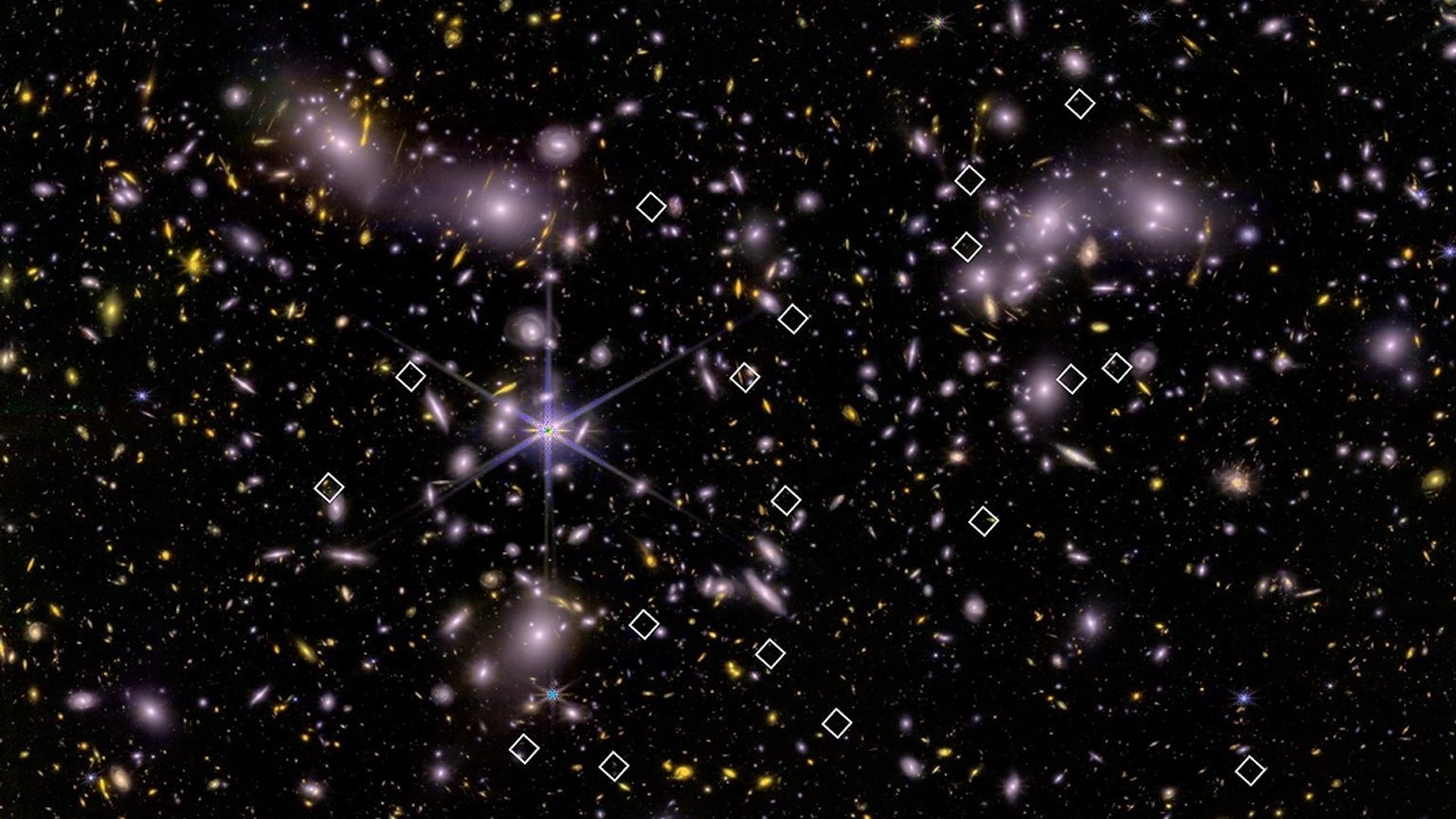
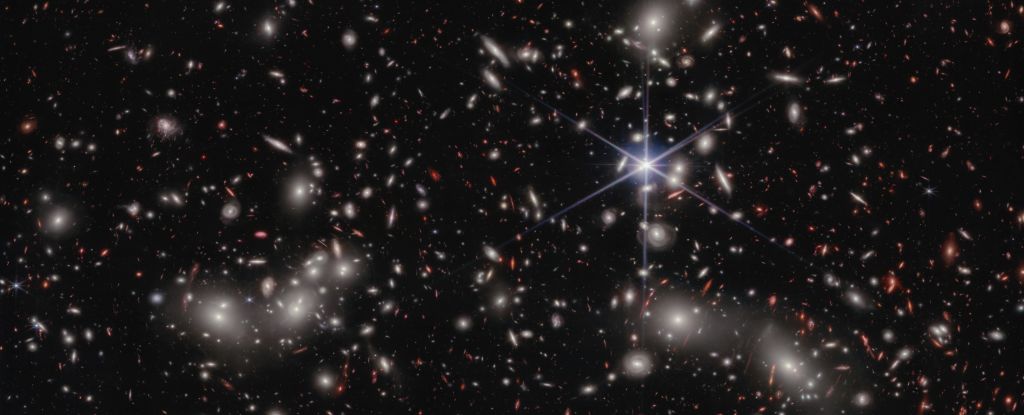
Using the James Webb Space Telescope and Hubble, scientists have made the first spectroscopic observations of some of the oldest galaxies in the universe, shedding light on the reionization period. Gravitational lensing allowed the discovery of eight extremely distant and faint galaxies within the Abell 2744 galaxy cluster, producing four times more ultraviolet light than expected and likely responsible for reionizing the universe. These findings highlight the crucial role of ultra-faint galaxies in shaping the universe's history and will aid in further investigations of the Cosmic Dawn period.

"Dwarf Galaxies: Illuminating the Early Universe with JWST"
astronomy2 years ago

"Dwarf Galaxies: Illuminating the Early Universe with JWST"

The James Webb Space Telescope (JWST) has revealed a multitude of galaxies in a small patch of space, shedding light on cosmic evolution and the reionization of the Universe. Gravitational lensing has unveiled the presence of eight tiny, faint, distant dwarf galaxies, which are producing four times as many ionizing photons as previously assumed, suggesting that these cosmic dwarfs, not quasars or bright galaxies, primarily reionized the Universe. This challenges previous assumptions and provides new insights into the early history of the cosmos.