
"James Webb Telescope Reveals Secrets of Primeval Galaxies"
TL;DR
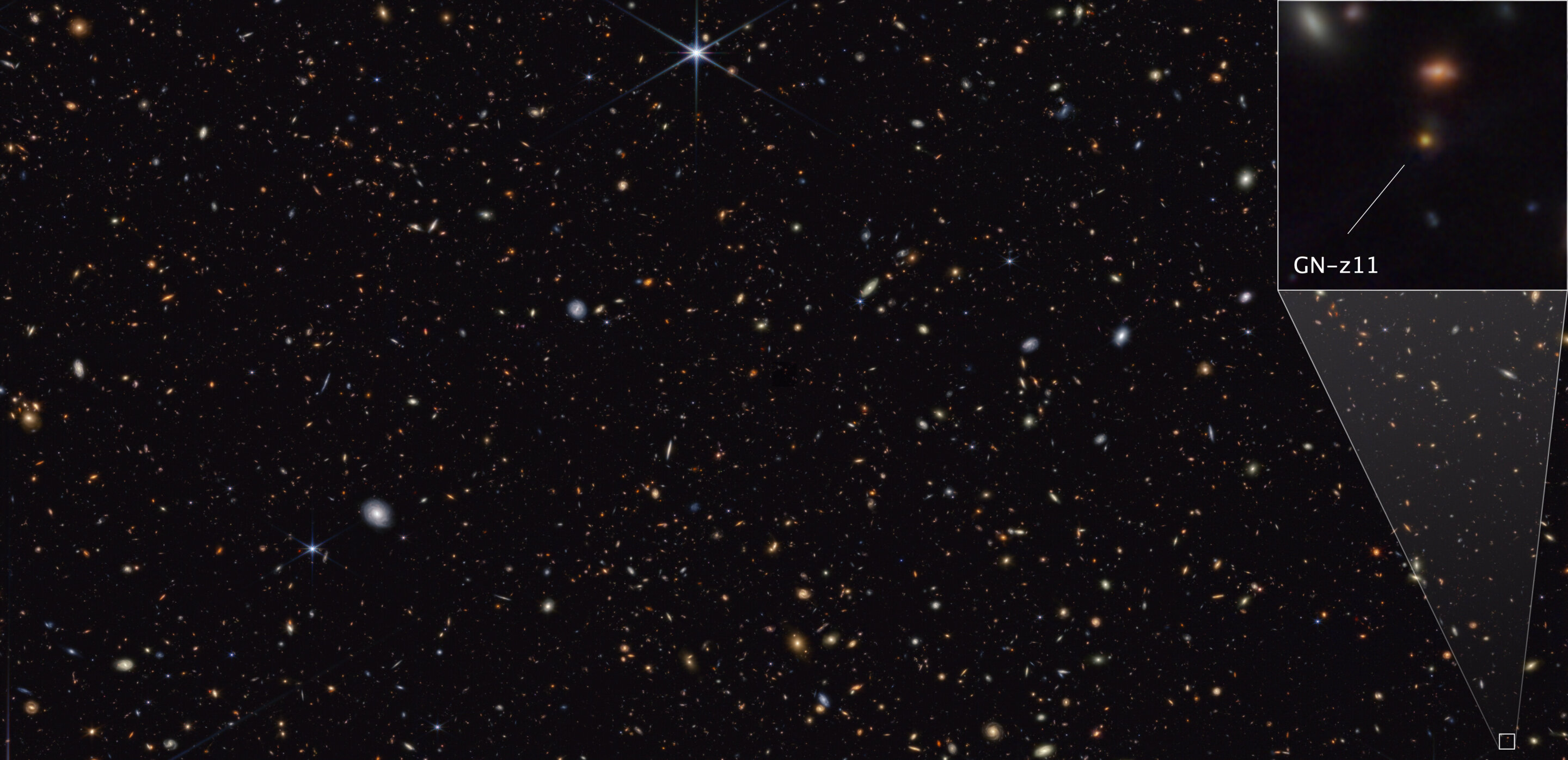
The James Webb Space Telescope has provided new insights into the exceptionally luminous galaxy GN-z11, which existed when the universe was only about 430 million years old. Researchers using Webb have found evidence of a central, supermassive black hole rapidly accreting matter within GN-z11, making it the most distant active supermassive black hole observed to date. Additionally, indications of ionized chemical elements near the black hole and the discovery of a gaseous clump of helium in the galaxy's halo suggest the potential formation of Population III stars, marking a fundamental shift in cosmic history.
Topics:scienceastronomy#astronomy#early-universe#gn-z11#james-webb-space-telescope#population-iii-stars#supermassive-black-hole
- Webb unlocks secrets of primeval galaxy Phys.org
- Webb Unlocks Secrets of One of the Most Distant Galaxies Ever Seen Science@NASA
- The James Webb Space Telescope may have found some of the very 1st stars Space.com
- Did the James Webb telescope 'break the universe'? Maybe not Science News Magazine
- Daily Telescope: A new Webb image reveals a cosmos full of galaxies Ars Technica
Want the full story? Read the original reporting
Read on Phys.org