Tag

Population Iii Stars

All articles tagged with #population iii stars

Webb Telescope Spots One of the Earliest Galaxies, Tracing the First Stars
astronomy14 days ago

Webb Telescope Spots One of the Earliest Galaxies, Tracing the First Stars

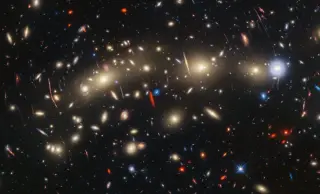
Using the James Webb Space Telescope, astronomers captured LAP1-B, one of the universe’s earliest and faint galaxies, dating to about 13 billion years ago (roughly 800 million years after the Big Bang). Gravitational lensing by a foreground cluster amplified its light ~100x, enabling spectroscopy that reveals extremely low metal content and signatures of Population III stars, including a high carbon-to-oxygen ratio. The data also suggest the galaxy sits in a massive dark matter halo, offering critical clues about how the first galaxies formed and evolved in the early cosmos (Nature).

JWST Finds Pristine Galaxy from Cosmic Dawn via Gravitational Lens
science17 days ago

JWST Finds Pristine Galaxy from Cosmic Dawn via Gravitational Lens

Using JWST and a foreground galaxy cluster to lens the faint object LAP1-B, astronomers observe a tiny, 800-million-year-old galaxy whose glow comes from gas rather than stars. Its extremely low heavy-element content, plus emission from highly ionized carbon, points to fingerprints of the first Population III stars. With stellar mass only a few thousand suns and a dark-matter–dominated halo inferred from gas dynamics, LAP1-B serves as a rare fossil from cosmic dawn, shedding light on early star formation and the pre-reionization era.

JWST Dots May Be Monster Population III Stars Near Collapse
science2 months ago

JWST Dots May Be Monster Population III Stars Near Collapse

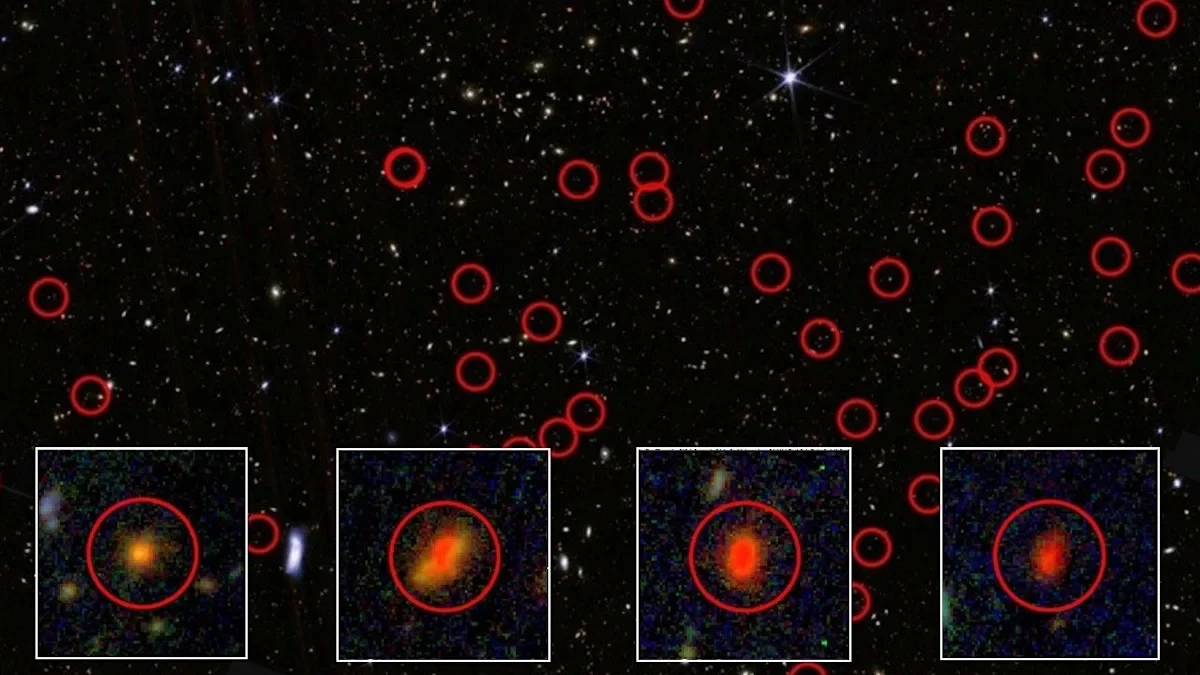
A new study proposes that JWST-detected “little red dots” are not black holes but supermassive Population III stars from the early universe that are in their final moments before collapsing into black holes. The models reproduce the objects’ extreme brightness and a distinctive V-shaped spectral dip, which may arise from the stars’ atmospheres and mass loss. Such monster stars would have very short lifetimes (tens of thousands to ~10,000 years for near-million-solar-mass stars), meaning only a narrow window to observe them; alternative explanations include direct-collapse black holes. Future X-ray checks and especially radio observations could decisively distinguish between the star and black hole scenarios.

Scientists Identify the Most Pristine Star in the Universe, Offering Insights into the Early Cosmos
science7 months ago

Scientists Identify the Most Pristine Star in the Universe, Offering Insights into the Early Cosmos

Astronomers may have identified the most pristine star to date, likely formed from gas originating from the universe's first stars, Population III, which are theorized to be massive, hot, and metal-free. The star, SDSS J0715-7334, is the most metal-poor star observed in our galaxy, providing insights into the early universe, although it is not a direct detection of Population III stars. The search for these primordial stars continues with advanced telescopes like James Webb.

Understanding the Universe's First Stars
science11 months ago

Understanding the Universe's First Stars

The article explains that the 'first stars' in the universe, known as Population III stars, formed from pristine hydrogen and helium shortly after the Big Bang, around 50-100 million years later, and were much larger and shorter-lived than stars today. Despite advanced telescopes like JWST, these first stars have not yet been observed directly, but their formation is predicted by simulations based on cosmic evolution models.

"Webb Telescope's Historic Discovery: Unveiling the Universe's Earliest Stars and Farthest Supermassive Black Hole"
astronomy2 years ago

"Webb Telescope's Historic Discovery: Unveiling the Universe's Earliest Stars and Farthest Supermassive Black Hole"

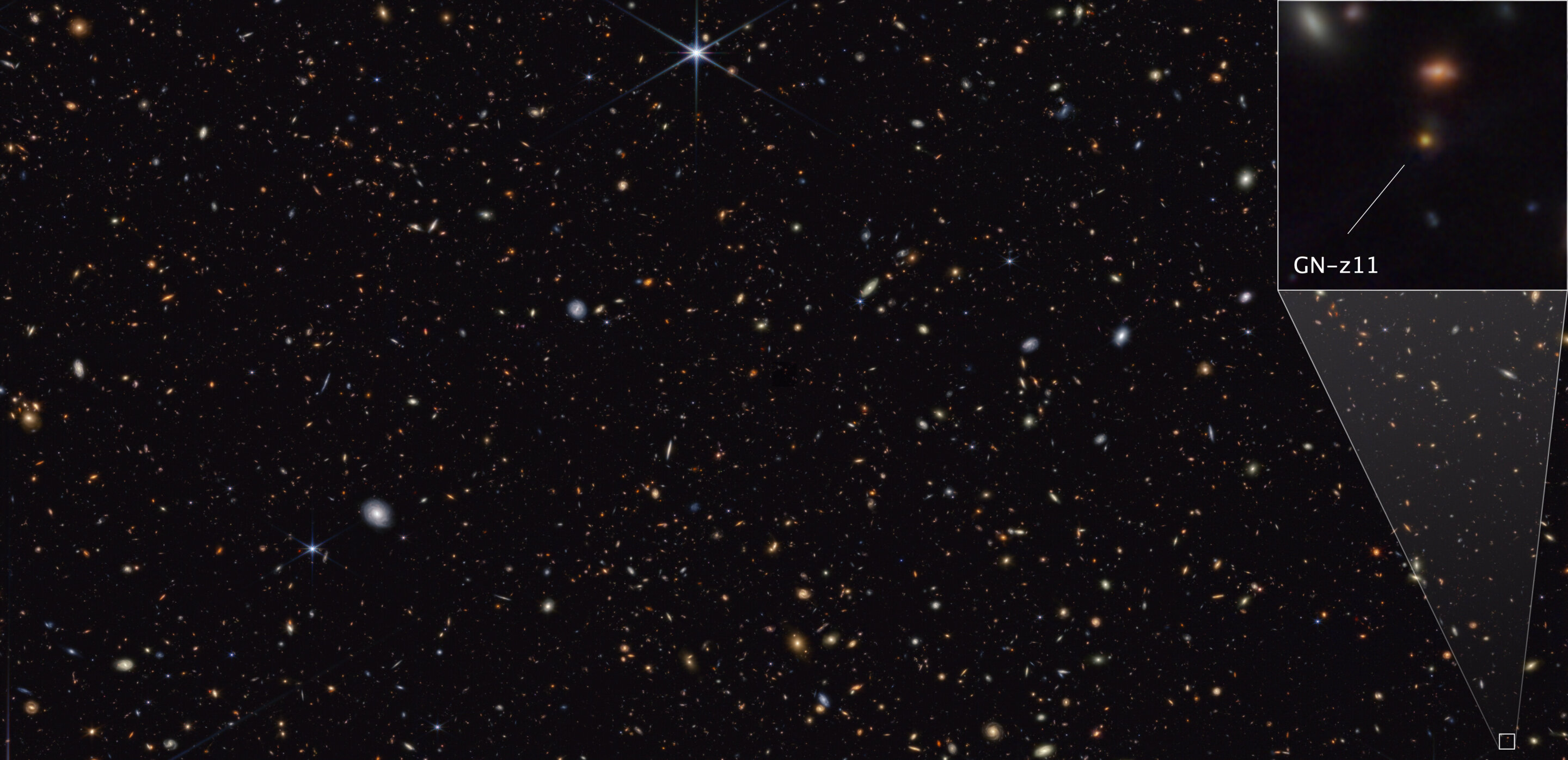
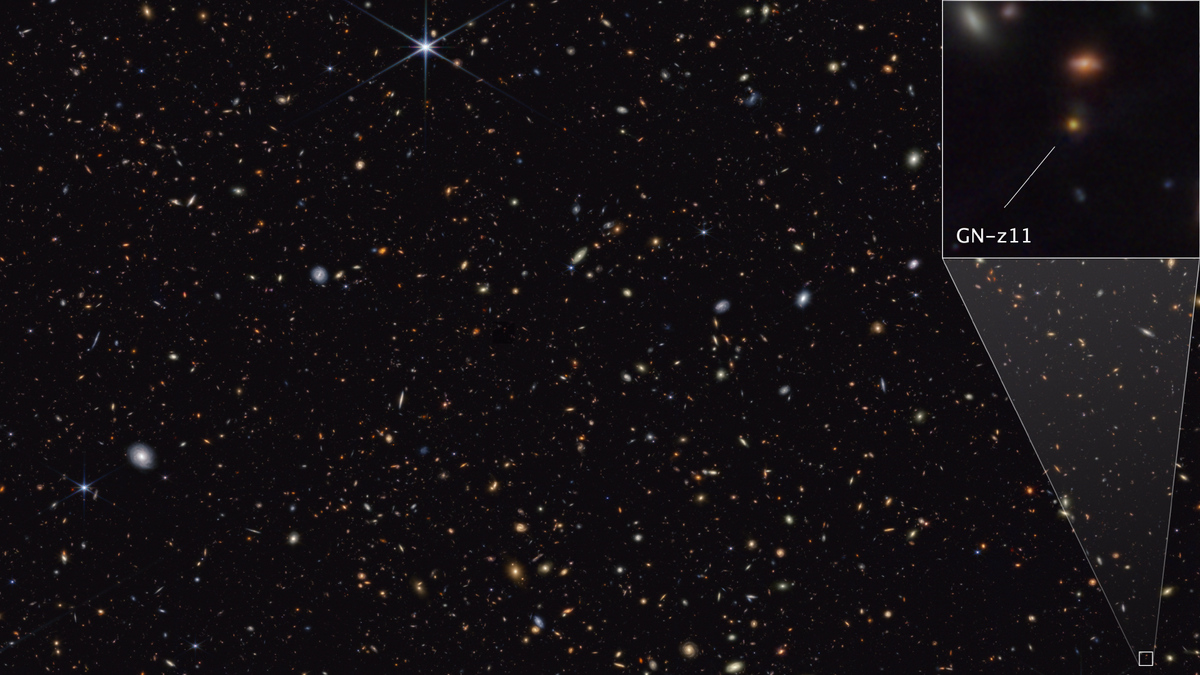
Using the James Webb Space Telescope, researchers have made groundbreaking discoveries in galaxy GN-z11, identifying a supermassive black hole responsible for the galaxy’s brightness and finding a pristine gas clump that may lead to the discovery of the universe’s first stars, providing significant insights into cosmic evolution. This discovery marks the farthest active supermassive black hole ever found and offers tantalizing evidence for the existence of Population III stars, shedding light on the early universe's evolution.

"James Webb Telescope Reveals Secrets of Primeval Galaxies"
astronomy2 years ago

"James Webb Telescope Reveals Secrets of Primeval Galaxies"

The James Webb Space Telescope has provided new insights into the exceptionally luminous galaxy GN-z11, which existed when the universe was only about 430 million years old. Researchers using Webb have found evidence of a central, supermassive black hole rapidly accreting matter within GN-z11, making it the most distant active supermassive black hole observed to date. Additionally, indications of ionized chemical elements near the black hole and the discovery of a gaseous clump of helium in the galaxy's halo suggest the potential formation of Population III stars, marking a fundamental shift in cosmic history.

"James Webb Space Telescope Reveals Evidence of Universe's First Stars and Galaxies"
astronomy2 years ago

"James Webb Space Telescope Reveals Evidence of Universe's First Stars and Galaxies"

The James Webb Space Telescope has potentially discovered evidence of the first generation of stars, known as Population III stars, in the distant galaxy GN-z11. This discovery also includes evidence of a supermassive black hole at the heart of GN-z11, shedding light on how galaxies in the early universe were able to grow. The findings suggest that distant galaxies like GN-z11 were more adept at forming massive stars than galaxies in the modern universe, and the research has been accepted for publication in the journal Astronomy & Astrophysics and Nature.

"Webb Telescope Reveals Secrets of Universe's First Stars and Distant Galaxies"
astronomy2 years ago

"Webb Telescope Reveals Secrets of Universe's First Stars and Distant Galaxies"

The James Webb Space Telescope has potentially discovered evidence of the first stars in the universe by detecting a clump of helium in the halo of galaxy GN-z11, which existed when the universe was only about 430 million years old. This finding supports the theory of Population III stars, which are believed to have formed from pristine pockets of gas before the existence of metals. The telescope's ability to observe infrared wavelengths allows it to study the early cosmos and potentially witness the universe's first stars and galaxies.

"James Webb Telescope Discovers Enormous Threat in Distant Galaxy"
astronomy2 years ago

"James Webb Telescope Discovers Enormous Threat in Distant Galaxy"

The James Webb Space Telescope has detected a supermassive black hole in the galaxy GN-z11, one of the farthest known galaxies. This discovery is significant as it could help astronomers understand the extreme luminosity of the galaxy and potentially reveal the presence of Population III stars, which are among the earliest to have formed in the universe. The findings, published in the journal Nature, provide valuable insights into the early stages of the universe and mark a key area of research for astrophysicists.