
Mars Marks New Year at Northern Equinox, Starting 22-Month Orbit
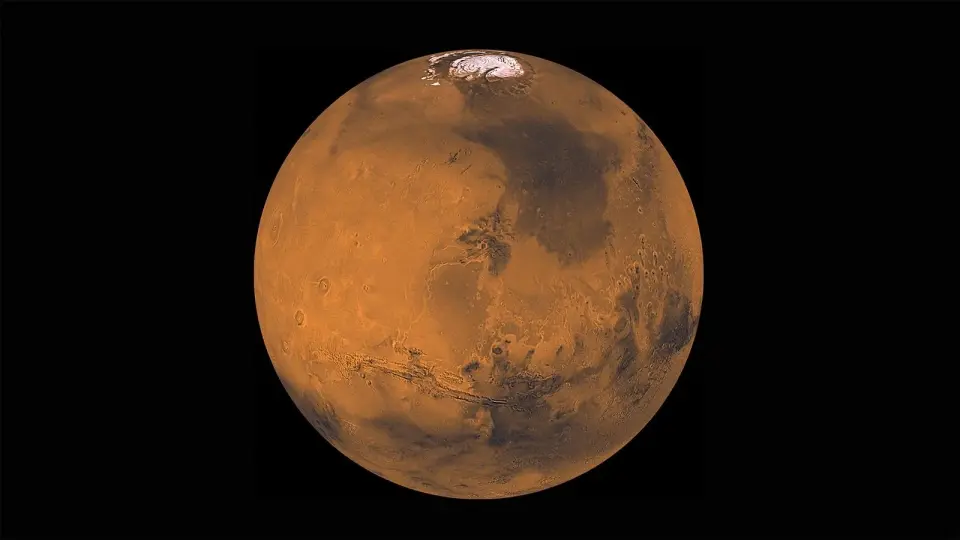
Mars began a new year on September 30, 2026, at 4:16 a.m. EDT, marking the start of its 687-Earth-day orbit. This date corresponds to the northern equinox, initiating spring in the north and autumn in the south. A Martian year consists of 668 sols, each lasting 24 hours and 39 minutes. Due to Mars' elliptical orbit, its seasons are unequal in length, with the northern hemisphere receiving more sunlight during its summer.
Key points
- The Martian new year started on September 30, 2026, at 4:16 a.m. EDT (0816 GMT).
- A full Martian year lasts approximately 687 Earth days, or 668 sols.
- The date was chosen by astronomers because it aligns with the northern equinox.
- Mars' elliptical orbit causes unequal season lengths, affecting sunlight distribution between hemispheres.
- Warmer temperatures in the latter half of the year can lift dust from the surface into the atmosphere.
Background
This event follows recent developments in Mars exploration, including NASA's selection of Blue Origin for a $700 million telecommunications relay network expected to operate by 2030. While Earth faces long-term climate shifts due to solar brightening, Mars' seasonal dynamics remain a key factor for current rover operations and future human missions.
Why it matters
Tracking the Martian calendar is essential for coordinating rover operations, such as those of Curiosity and Perseverance, which rely on seasonal light and dust conditions. Understanding these orbital mechanics helps plan future missions and ensures optimal timing for scientific observations and communication windows.
What to watch
As Mars progresses through its new year, observers will monitor seasonal changes, particularly the increase in dust activity during the warmer months. Future missions, including the planned Mars Telecommunications Network, will rely on accurate orbital data to maintain communication and navigation.
Want the full story? Read the original reporting
Read on Space