
JWST data reveals Neptune's inner moons are debris from shattered ice giants
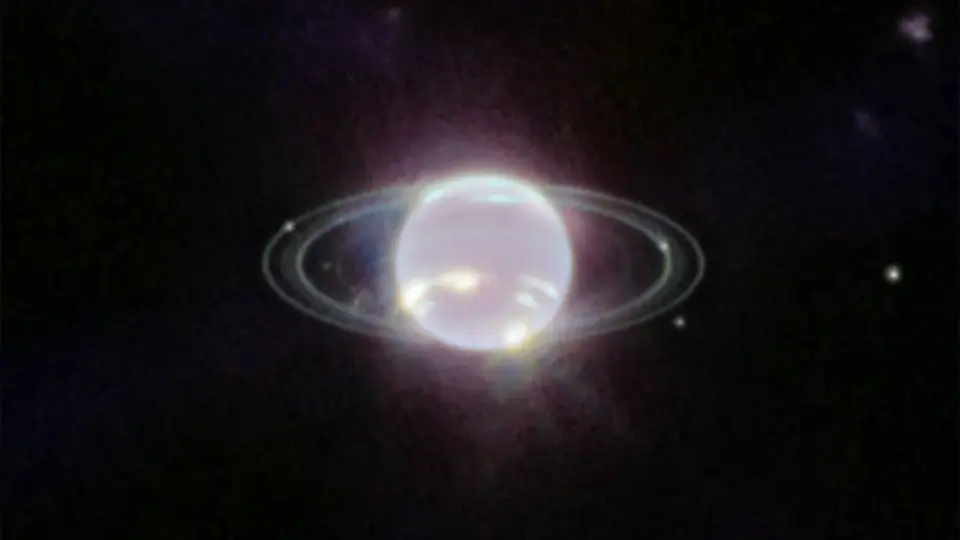
A new study using James Webb Space Telescope data suggests that three of Neptune's inner moons and its rings are remnants of larger icy worlds destroyed when Triton was captured. The discovery of clay minerals requiring liquid water implies these bodies were once part of a massive, differentiated moon system.
Key points
- JWST spectroscopy detected phyllosilicate clay on moons Larissa and Galatea, minerals that require liquid water to form.
- The presence of these clays suggests the inner moons are debris from larger, warmer bodies that were shattered during Triton's capture.
- Triton, which holds 99% of Neptune's moon mass, orbits in retrograde, indicating it was captured from the Kuiper Belt.
- An unidentified hydrated mineral was found on all three inner moons, potentially representing a new material in the solar system.
- The findings support the theory that Neptune's current small moon system is the result of a catastrophic event that destroyed its original satellites.
Background
Previous coverage in August 2026 highlighted early JWST hints of phyllosilicate clays on Neptune's moons, suggesting a violent past. This aligns with broader discussions about the need for dedicated missions to Uranus and Neptune to understand ice giant interiors and the formation of their moon systems.
How outlets are covering it
Space.com and Caltech emphasize the 'catastrophic crash' narrative, focusing on how Triton's capture destroyed Neptune's original moon system. ABC News highlights the surprise of finding clay minerals that require liquid water, noting the team's initial skepticism. Universe Today provides specific diameter comparisons, contrasting the small inner moons with Triton's massive size. All sources agree on the core finding but differ in emphasis: Caltech notes the alternative theory of tidal shredding of a Kuiper Belt object, while ABC focuses on the implications for future missions.
Why it matters
This discovery offers a unique window into the interiors of icy worlds, which are usually hidden beneath thick ice shells. Understanding how Neptune's moon system formed helps explain the evolution of other ice giants and may reveal new materials in the solar system.
What to watch
Researchers hope for a dedicated Neptune mission to further study the inner moons and rings. Future spectroscopic analysis may identify the mysterious hydrated mineral and clarify the dynamics of the moon-destruction and reaccretion process.
- 3 moons of Neptune may be remnants of ice worlds shattered in a catastrophic crash Space
- Webb telescope finds signs of ancient disaster for Neptune's moons Reuters
- Neptune's moon system is bizarre. JWST data helps explain why ABC News & Headlines – Australian Broadcasting Corporation
- Neptune's Inner Moons May Be Shattered Remains of Ancient Icy Worlds Caltech
- Smashed Ice Worlds Formed Neptune's Inner Moons and Rings Universe Today
Want the full story? Read the original reporting
Read on Space