Tag

Solar System

All articles tagged with #solar system

Voyager 1 nears a light-day from Earth, marking humanity’s farthest ongoing beacon
space1 day ago

Voyager 1 nears a light-day from Earth, marking humanity’s farthest ongoing beacon

NASA’s Voyager 1 is set to reach exactly one light-day from Earth in November 2026, about 25.9 billion kilometers away, continuing to send science data despite aging power and limited instruments. It has already crossed the termination shock and heliopause into the interstellar medium, but remains far from the Solar System’s edge; by around 2036 it could become undetectable, after which it will drift through the Milky Way for eons as a relic of humanity’s first grand interstellar-leaning probes.

Earth’s Sub-Pixel Spotlight: Sagan’s Push Turns Voyager 1 Photo into a Timeless Icon
space2 days ago

Earth’s Sub-Pixel Spotlight: Sagan’s Push Turns Voyager 1 Photo into a Timeless Icon

In 1990, after Carl Sagan urged it, Voyager 1 photographed Earth from about 6 billion kilometers away, capturing a sub-pixel Pale Blue Dot; though scientifically minimal, the image gained iconic status through Sagan’s writing and a 2020 processing update, and with Voyager’s cameras long since turned off, it stands as the mission’s last full-family portrait of the solar system.

Antarctic stardust in ice could rewrite our solar system’s origin story
science6 days ago

Antarctic stardust in ice could rewrite our solar system’s origin story

Scientists analyzing microscopic presolar dust grains trapped in Antarctic ice say these grains predate the sun and carry isotopic fingerprints from ancient stars. Studying them could illuminate the materials and processes present at the birth of the solar system, helping researchers understand how dust coagulated into planets and how interstellar material was delivered to early Earth.

Earth’s Ice Reveals Traces of a Local Interstellar Cloud
space-and-spaceflight11 days ago

Earth’s Ice Reveals Traces of a Local Interstellar Cloud

New Antarctic ice analyses show trace iron-60, a signature of stellar explosions, was delivered to Earth as the solar system moves through the Local Interstellar Cloud. The measured iron-60 levels are lower than some predictions, but the dating (about 40,000–80,000 years ago) aligns with recent estimates that our solar system has been passing through the cloud within roughly 40,000–124,000 years, meaning Antarctica preserves a geological record of this interstellar journey.

Distant Solar System Visitor Illuminates Our Origins
space16 days ago

Distant Solar System Visitor Illuminates Our Origins

Astronomers say comet C/2025 R3 PANSTARRS — a long-period visitor likely from the Oort Cloud — has been visible in the northern hemisphere for weeks, offering a rare glimpse at material from the solar system's birth. With such comets taking extremely elongated orbits, this one may not return for around 170,000 years, making its current pass a unique opportunity to study early solar-system building blocks and clues about how planets formed, as gravitational interactions could eventually eject it from the system.

Hidden Fifth Force: Could Solar-System Tests Unveil Cosmic Gravity Clues
science1 month ago

Hidden Fifth Force: Could Solar-System Tests Unveil Cosmic Gravity Clues

A NASA physicist argues that a proposed fifth force—potentially screened in dense environments—could explain cosmic acceleration while staying hidden in the Solar System; current observations align with general relativity locally, so any breakthrough would require a dedicated, falsifiable mission built on precise predictions and guided by cosmological survey data to bridge local gravity tests with the large-scale universe.

Bezos envisions a trillion humans living in space to spark breakthroughs
space1 month ago

Bezos envisions a trillion humans living in space to spark breakthroughs

Amazon founder Jeff Bezos said on the Lex Fridman Podcast that he would love to see a trillion humans living in the solar system, with giant rotating space stations capable of hosting cities, farms, and industry. He argues more people could drive breakthroughs—“1,000 Mozarts and 1,000 Einsteins”—and emphasizes moving beyond planetary surfaces while Earth remains a protected base. The plan centers on reducing the cost of getting materials into space (via Blue Origin and related efforts) to enable this long‑term expansion, though no timeline is provided.

NASA Unveils Ultra-High-Definition Portraits of the Solar System
space2 months ago

NASA Unveils Ultra-High-Definition Portraits of the Solar System

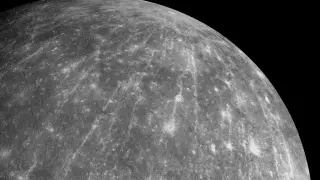
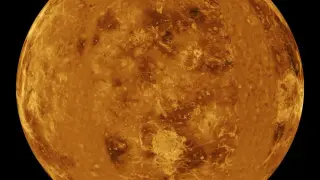
NASA released a new batch of ultra-high-resolution images of Solar System planets, including Earth, Jupiter, Saturn, Uranus, Mercury, and Venus, showcasing extraordinary detail from Earth’s weather and continents to Jupiter’s storms and Saturn’s perfectly visible rings, while Uranus appears blue and desolate and Mercury/Venus are shown in vibrant color thanks to advanced imaging tech.

Space snowmen in the Kuiper Belt: a new clue to their formation
astronomy2 months ago

Space snowmen in the Kuiper Belt: a new clue to their formation

New simulations show that spinning clouds of pebble-sized particles can form contact binaries—two linked bodies—and even triple planetesimals, offering a simple explanation for space snowmen in the Kuiper Belt; the study finds about 4% of simulated planetesimals become contact binaries, a share below the previously thought 10–25%, and notes that more detailed particle modeling could raise that fraction.

Cosmic Planes: Why Our Solar System and Galaxy Are Flat
astronomy4 months ago

Cosmic Planes: Why Our Solar System and Galaxy Are Flat

The Sun and planets all orbit in a single, flat disk aligned to the ecliptic because the solar nebula collapsed with rotation; similarly, the Milky Way and Local Group lie in near-planes (galactic and supergalactic), though these planes tilt relative to one another. “Down” isn’t universal in space—it depends on the reference plane—demonstrating how initial angular momentum during formation shapes the cosmos’s familiar flat structure from the solar system outward.

What’s Below the Solar System’s Plane? A Cosmic Perspective
science4 months ago

What’s Below the Solar System’s Plane? A Cosmic Perspective

Earth’s planets orbit the Sun in a relatively flat plane called the ecliptic, and there is no universal 'down' in space—the direction depends on the scale and frame of reference: beyond the solar system, stars lie in a galactic plane inclined about 60° to the ecliptic, and galaxies lie in the supergalactic plane; traveling in the apparent 'down' would eventually take you to other stars and galaxies, illustrating that spatial orientation in the cosmos is relative rather than fixed.

New simulations suggest Jupiter harbors 1.5 times the Sun’s oxygen
space4 months ago

New simulations suggest Jupiter harbors 1.5 times the Sun’s oxygen

A detailed set of simulations modeling Jupiter’s interior atmosphere finds the gas giant contains about 1.5 times more oxygen than the Sun, likely due to Jupiter’s early accretion of icy material beyond the snow line. The models couple atmospheric chemistry with hydrodynamics, explaining why deep oxygen (mostly in water) is hidden from direct measurement and suggesting slower deep atmospheric circulation (gas movement taking weeks). The findings support formation scenarios for Jupiter and offer insight into the solar system’s history, with the study published Jan 8 in the Planetary Science Journal.

Down in Space Is Relative: Planes, Orbits, and the Cosmic Bearings
science4 months ago

Down in Space Is Relative: Planes, Orbits, and the Cosmic Bearings

There isn’t a universal ‘down’ in space. The solar system lies in a flattened disk (the ecliptic) because the collapsing rotating solar nebula shaped planets to orbit in roughly the same plane. The Milky Way has its own galactic plane (tilted about 60° to the ecliptic), and the Local Group sits in a nearly perpendicular supergalactic plane (about 84.5° to the galactic plane). Orientation of these planes comes from the initial rotation of matter when clouds collapsed, so every star, planet, and galaxy can have its own plane and direction depending on where you’re looking.