
"Surprising Mass Influx Patterns Discovered in Early Universe Galaxy's Black Hole"
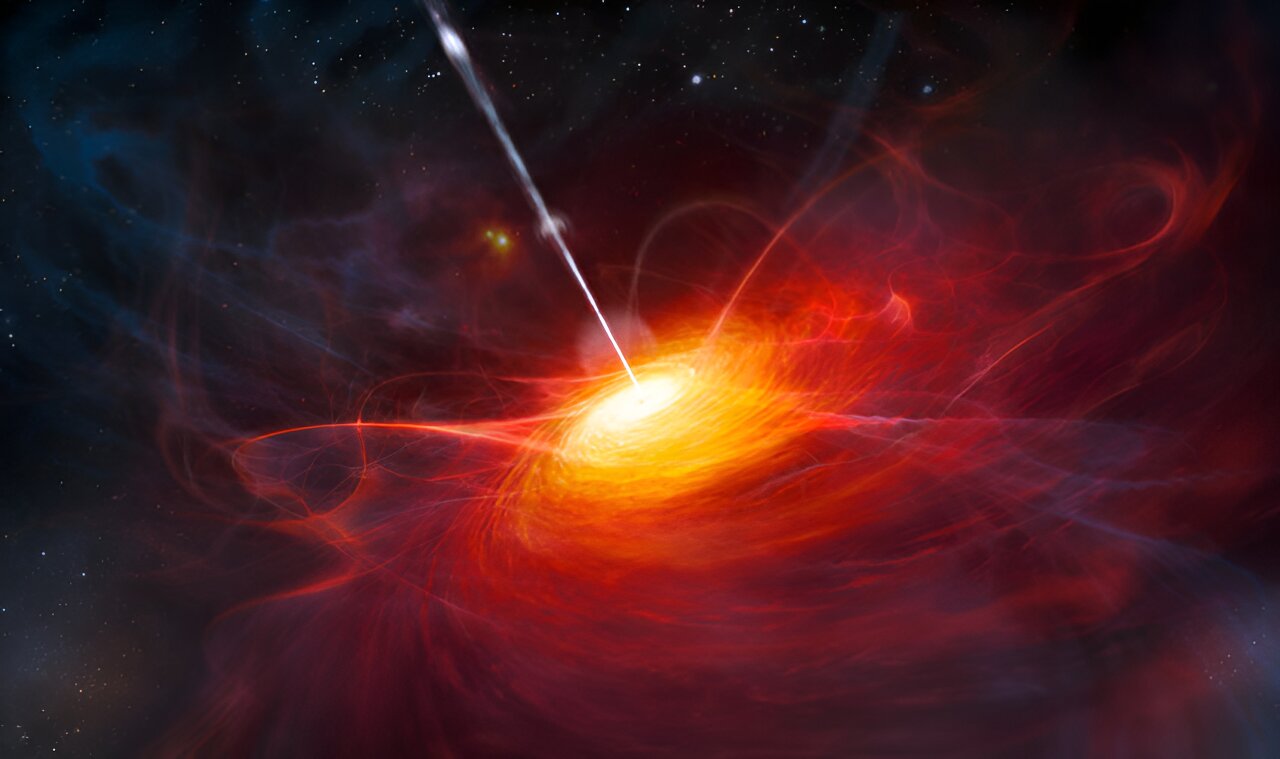
Astronomers using the upgraded GRAVITY-instrument at the Very Large Telescope Interferometer have determined that a black hole in a galaxy only 2 billion years after the Big Bang received less mass influx than expected, with a mass of 300 million solar masses, making it under-massive compared to its host galaxy. This suggests a delay between galaxy and black hole growth, possibly due to strong supernova feedback expelling gas from the central regions before it can reach the black hole, and further high-precision mass measurements of black holes in the early universe are needed to determine if this scenario is dominant for other galaxies and their central black holes.
Reading Insights
0
10
4 min
vs 5 min read
87%
811 → 108 words
Want the full story? Read the original article
Read on Phys.org