
eROSITA Catalog Nearly Doubles Known X-ray Sources, Revealing 2 Million Active Black Holes
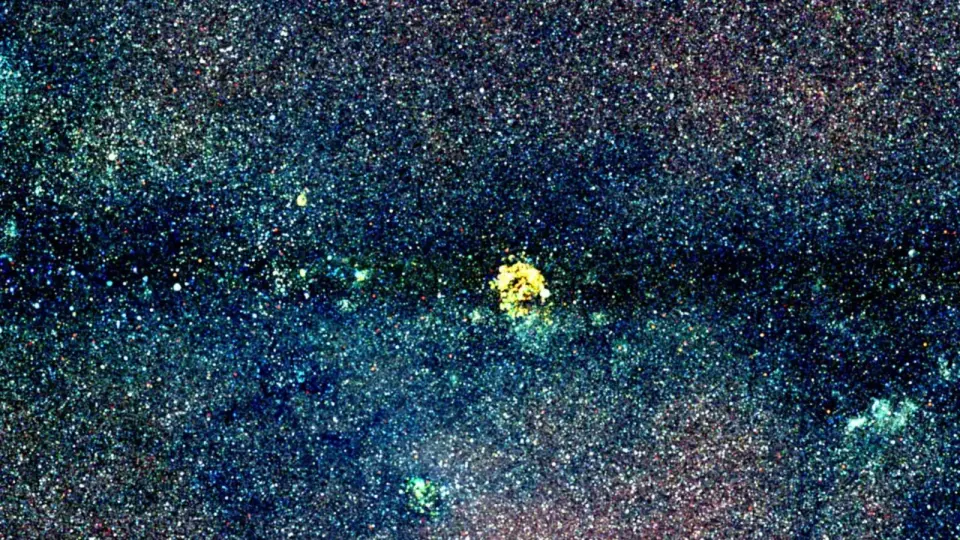
The Max Planck Institute for Extraterrestrial Physics released the second major public data set from the German-led eROSITA X-ray telescope, cataloging nearly 2 million high-energy cosmic objects. This release, known as DR2, nearly doubles the known inventory of X-ray sources and provides the most comprehensive public view of the high-energy universe to date. The catalog includes over 1.9 million point-like sources, primarily active supermassive black holes and stellar remnants, alongside approximately 64,000 extended sources such as galaxy clusters. By combining observations from eROSITA’s first three all-sky scans over 556 days, the dataset allows astronomers to detect fainter objects previously missed, offering new insights into black hole growth, galaxy evolution, and the formation of large-scale cosmic structures.
Key points
- The eROSITA DR2 catalog contains nearly 2 million X-ray-emitting objects, nearly doubling the previous known count of high-energy sources.
- Over 1.9 million entries are point-like sources, mostly active supermassive black holes in distant galaxies or stars within the Milky Way.
- Approximately 64,000 sources are extended objects, including galaxy clusters and other large-scale structures.
- The data combines observations from eROSITA’s first three all-sky scans, totaling 556 days of observation.
- The release enables robust statistical studies of cosmic populations and helps investigate how black holes grow and galaxies evolve.
Background
This release follows recent efforts to map the universe’s high-energy and radio environments. In July 2026, the Euclid telescope identified 31 new quasars from the universe’s first 770 million years, doubling the known count for that era and shedding light on early black hole formation. Earlier in 2026, studies proposed gravastars as potential alternatives to black holes, though these remain theoretical. Additionally, in April 2026, the LOFAR Two-metre Sky Survey mapped 13.7 million radio sources, creating a detailed census of actively growing supermassive black holes and revealing violent collisions and star formation. The eROSITA DR2 release complements these efforts by focusing on X-ray emissions, providing a different but complementary view of cosmic activity.
How outlets are covering it
Space.com emphasizes the unprecedented scale of the eROSITA DR2 catalog, highlighting its role in nearly doubling the known X-ray sources and enabling robust statistical studies of cosmic populations. The outlet notes that the dataset will help astronomers investigate black hole growth, galaxy evolution, and the formation of large-scale structures. Earth.com, while not directly covering the eROSITA release, provides context on the broader trend of mapping the universe through different wavelengths. Its coverage of the LOFAR radio survey underscores the importance of comprehensive censuses in understanding black hole activity, galaxy collisions, and rare cosmic signals. Both outlets agree that large-scale surveys are essential for advancing our understanding of the universe, but they focus on different observational bands—X-ray for eROSITA and radio for LOFAR—highlighting the complementary nature of these efforts.
Why it matters
The eROSITA DR2 catalog provides a foundational dataset for studying the high-energy universe, enabling astronomers to analyze how black holes grow, galaxies evolve, and large-scale structures form. By nearly doubling the known X-ray sources, it offers a more complete picture of cosmic activity, helping researchers understand the life cycles of stars and the behavior of supermassive black holes. This data will support future studies on the formation and evolution of galaxies, as well as the role of black holes in shaping the universe. Additionally, the catalog’s inclusion of fainter sources allows for more detailed statistical analyses, potentially revealing new insights into the distribution and behavior of cosmic objects.
What to watch
Astronomers will use the eROSITA DR2 catalog to conduct detailed studies on black hole growth, galaxy evolution, and the formation of large-scale structures. The dataset’s inclusion of fainter sources will enable more robust statistical analyses, potentially revealing new insights into the distribution and behavior of cosmic objects. Future missions, such as the upgraded LOFAR2.0, will complement these efforts by providing deeper radio observations, creating a more comprehensive picture of the universe. Additionally, the catalog will serve as a baseline for future surveys, helping researchers track changes in cosmic activity over time and refine models of black hole and galaxy evolution.
- Scientists find 2 million active black holes, exploding stars and more, nearly doubling our view of the high-energy universe Space
- New map of the universe reveals colossal collisions, strange stars, and unusual signals earth.com
- eROSITA has published a catalog of nearly 2 million X-ray sources UA.NEWS
Want the full story? Read the original reporting
Read on Space