Tag

X Ray Astronomy

All articles tagged with #x ray astronomy

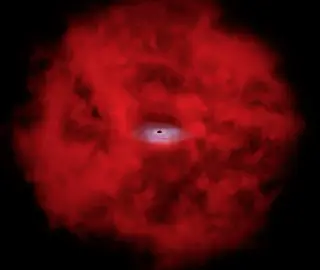
From Frenzy to Freeze: Chandra Maps a 10-Billion-Year Slowdown in Black Hole Growth
science16 days ago

From Frenzy to Freeze: Chandra Maps a 10-Billion-Year Slowdown in Black Hole Growth

NASA’s Chandra X-ray Observatory shows that supermassive black holes grew rapidly in the early universe but have slowed dramatically over more than ten billion years, likely due to dwindling cold gas, fewer galaxy mergers, and feedback processes; the study combines multiple X-ray datasets to provide a comprehensive view of this long-term decline and its implications for how galaxies evolve.

AXIS X-ray Telescope Cancellation Sparked by NASA Management Chaos, Says PI
space-exploration29 days ago

AXIS X-ray Telescope Cancellation Sparked by NASA Management Chaos, Says PI

AXIS (Advanced X-ray Imaging Satellite), NASA’s planned replacement for the Chandra X-ray Observatory, was halted from eligibility in NASA’s Astrophysics Probe Explorer program amid 2025 budget-related mismanagement and turmoil at Goddard Space Flight Center. Project leader Christopher Reynolds says GSFC staff losses, furloughs, and leadership upheaval compromised AXIS’s Phase A submission, while NASA maintains the cancellation followed its standard review process. The upheaval included the early retirement of key tech developer Will Zhang and a seven-week shutdown, contributing to cost/schedule delays and prompting Reynolds to blame programmatic chaos rather than the science value of AXIS.

Black Hole Tears White Dwarf, Hinting at Hidden Intermediate-Mass BHs
science1 month ago

Black Hole Tears White Dwarf, Hinting at Hidden Intermediate-Mass BHs

Astronomers using China’s Einstein Probe spotted an extreme X-ray outburst (EP250702a) in a distant galaxy that models as an intermediate-mass black hole tearing apart a white dwarf, a finding supported by HKU simulations and follow-up observations. The event’s unusual timing and rapid evolution provide what researchers call the first direct evidence of this feeding process and could help uncover the long-m missing population of intermediate-mass black holes, with implications for multi-messenger astronomy.

XRISM reveals the turbulent winds around supermassive black holes
astronomy1 month ago

XRISM reveals the turbulent winds around supermassive black holes

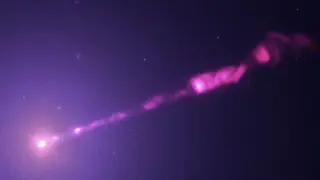
NASA/JAXA’s XRISM X‑ray mission uses high‑resolution spectroscopy to measure gas motions around supermassive black holes, notably M87* and the Perseus cluster, unveiling the strongest turbulence seen near a black hole and the kinetic energy of surrounding gas. This helps explain how black holes heat their environments and influence galactic evolution; findings published late Jan 2026 in Nature and built on XRISM’s 2023 launch in collaboration with ESA.

New cosmic tunnels: Local Hot Bubble hosts possible interstellar channels to other stars
science2 months ago

New cosmic tunnels: Local Hot Bubble hosts possible interstellar channels to other stars

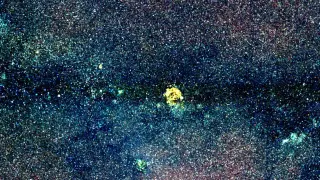
Astronomers using the eROSITA X-ray instrument have mapped a hot, low-density plasma channel extending from the Local Hot Bubble toward Centaurus (and possibly toward Canis Major), a finding that supports the idea of interstellar “tunnels” linking the solar neighborhood to distant stars and suggesting a larger network of channels in the Milky Way; researchers note more data are needed to fully understand these structures.

Massive Black Hole Reveals Its Hidden Secrets
science3 months ago

Massive Black Hole Reveals Its Hidden Secrets

Using XRISM's high-resolution instruments alongside ESA's XMM-Newton and NASA's NuSTAR, scientists captured unprecedented details of a supermassive black hole in galaxy MCG–6-30-15, confirming relativistic effects near the event horizon, identifying multiple wind zones, and challenging previous models of distant reflection, thus advancing our understanding of black hole physics and galaxy growth.

XRISM reveals unexpected speeds in cosmic wind from X-ray binary
science-and-exploration6 months ago

XRISM reveals unexpected speeds in cosmic wind from X-ray binary

The XRISM mission has discovered that the winds from a neutron star system are unexpectedly dense and slower than those from supermassive black holes, challenging current understanding of how such winds form and influence their environments. The findings suggest that differences in accretion disc temperature and size may explain the variations, providing new insights into cosmic feedback mechanisms and galaxy evolution.