
Webb Spots Dramatic Day-Night Atmosphere Split on WASP-121 b
TL;DR
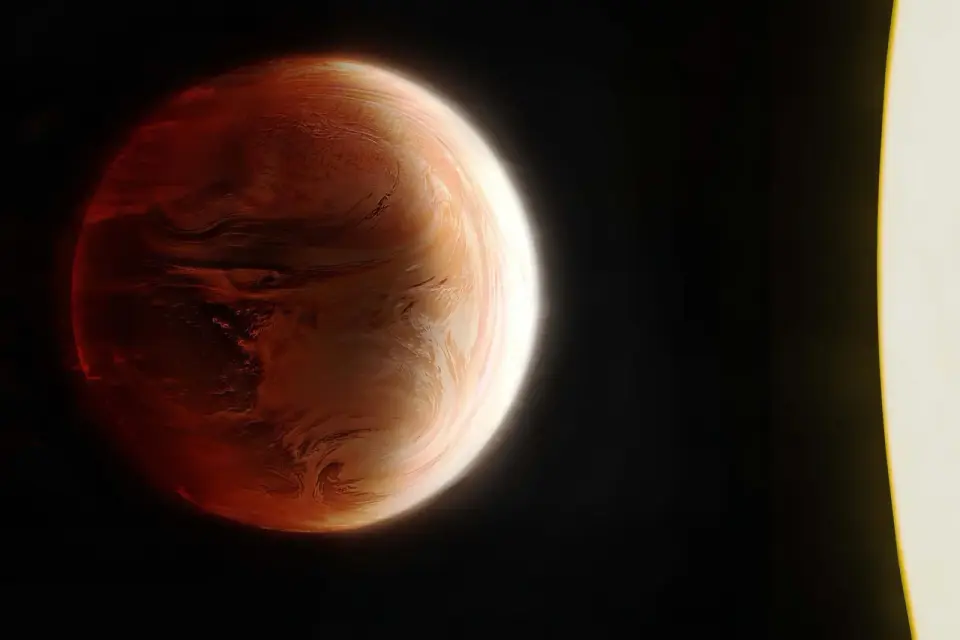
JWST transit observations of WASP-121 b reveal a clear day–night atmospheric split: the evening terminator is hotter and expands more, absorbing more starlight, likely driven by eastward winds; CO signals rise with temperature, while water is depleted at the upper atmosphere, hinting at clouds cooling the morning side. By tracking the planet's rotation during transit, researchers map atmospheric conditions by longitude and aim to study more ultra-hot Jupiters with this method.
Topics:scienceastronomy#astronomy#atmospheric-dynamics#exoplanets#infrared-spectroscopy#james-webb-space-telescope#wasp-121-b
- James Webb Spots Something Strange Between Day and Night on an Alien Planet SciTechDaily
- James Webb Space Telescope forecasts extreme weather on exoplanet that rains rubies and sapphires Space
- Asymmetric weather pattern reveals exoplanet’s true atmosphere Physics World
- Atmospheric asymmetries in WASP-121 b revealed by rotational transits detected with JWST Nature
- A Hot Jupiter’s Cloudy Mornings and Clear Evenings Provide Clues to Its Chemistry eos.org
Want the full story? Read the original reporting
Read on SciTechDaily