
A Shared Genetic Playbook Drives Butterfly and Moth Color for 120 Million Years
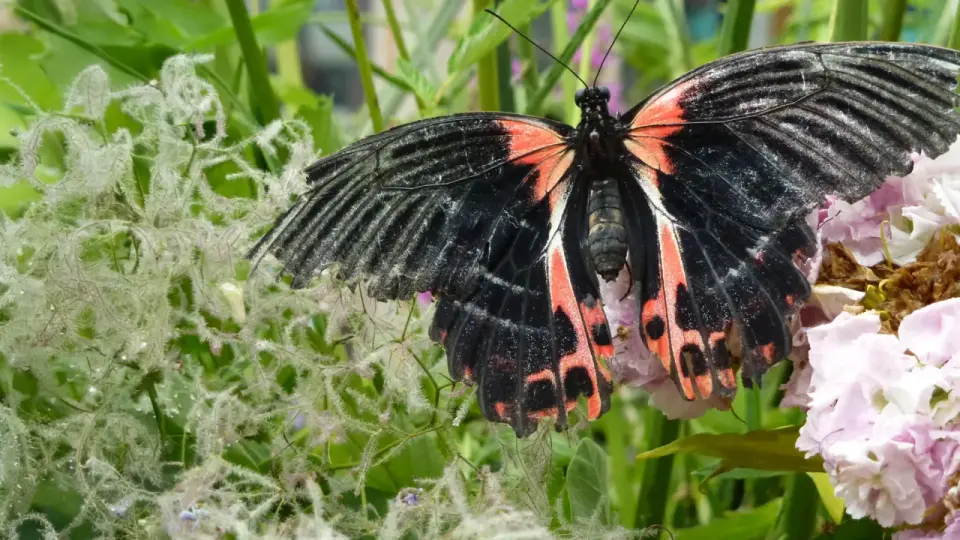
TL;DR
Researchers found that distantly related butterflies and a day-flying moth repeatedly rely on the same two genes, ivory and optix, to produce warning coloration. Rather than changing the genes themselves, evolution tweaks regulatory switches that control when and where these genes are active, a pattern conserved across seven butterfly lineages and a moth for over 120 million years. This suggests evolution may be more predictable than previously thought and could help scientists anticipate future adaptations, with findings published in PLoS Biology.
- Evolution isn’t random. Scientists find the same genes used for 120 million years ScienceDaily
- Genetic parallelism underpins convergent mimicry coloration in Lepidoptera across 120 million years of evolution PLOS
- Study: Butterflies and Moths Have Reused Same Genetic Toolkit for 120 Million Years Sci.News
- ‘Evolution is not always random’: Study finds same gene reused for 120 million years The News International
- Butterfly genes reused for 120 million years show that evolution isn’t random Earth.com
Want the full story? Read the original reporting
Read on ScienceDaily