
Mechanical Forces and Evolutionary Strategies in Gastrulation and Organ Development
TL;DR
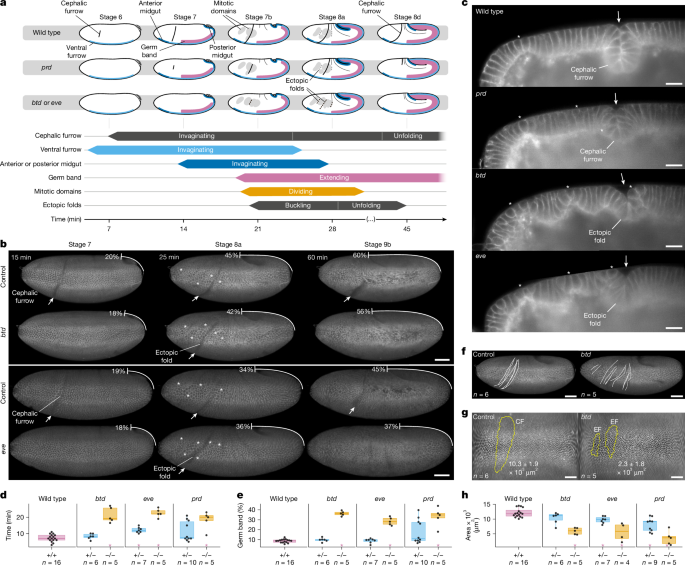
The study reveals that the patterned invagination of the cephalic furrow in Drosophila prevents mechanical instability during gastrulation by absorbing compressive stresses caused by mitotic domains and germ band extension, with its formation regulated by specific gene expression patterns, and suggests that mechanical challenges have driven the evolution of this morphogenetic feature in dipteran flies.
- Patterned invagination prevents mechanical instability during gastrulation Nature
- Divergent evolutionary strategies pre-empt tissue collision in gastrulation Nature
- Tissue Forces Help Shape Developing Organs Syracuse University News
- Fruit fly research shows that mechanical forces drive evolutionary change Phys.org
- Diverse Evolutionary Strategies Prevent Tissue Collision BIOENGINEER.ORG
Want the full story? Read the original reporting
Read on Nature