
Greenland’s Petermann Glacier Sheds Largest Ice Island in a Decade
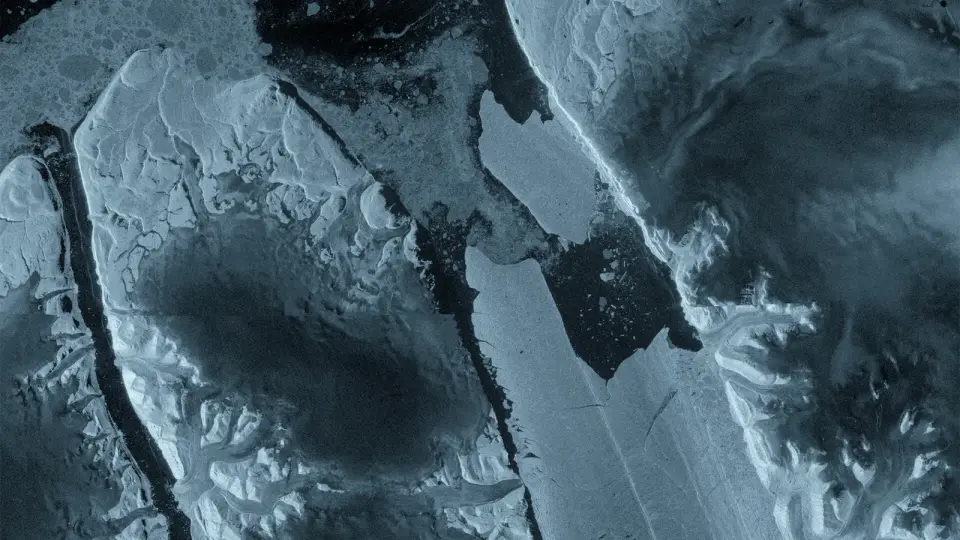
On August 4, 2026, a 76 square kilometer section of floating ice broke away from Petermann Glacier in northwest Greenland. This event marks the glacier’s largest loss of floating ice since 2012 and the most significant calving in the Arctic since 2020. The detached ice island, comparable in size to Manhattan and up to 150 meters thick, was detected by the European Space Agency’s Sentinel-1 mission. Researchers anticipate two further major calvings in the near future.
Key points
- A 76 square kilometer ice island detached from Petermann Glacier on August 4, 2026.
- The event is the largest floating ice loss for the glacier since 2012 and the biggest Arctic calving since 2020.
- The ice island is estimated to be up to 150 meters thick and roughly the size of Manhattan.
- Two additional large calvings are expected, potentially removing another 181 square kilometers of ice.
- The drifting ice poses navigation risks for Arctic shipping and offshore operations.
Background
Petermann Glacier has a history of major calving events, including significant ice island formations in 2008, 2010, and 2012. Since 2012, its floating ice tongue had remained relatively stable, despite smaller-scale losses. Recent satellite observations dating back to 2019 documented expanding fractures and signs of instability in the glacier’s floating tongue, leading researchers to anticipate this break for years. The broader context includes ongoing concerns about accelerating ice loss in polar regions due to warming oceans, which contributes to rising sea levels.
How outlets are covering it
Space.com and the European Space Agency (ESA) emphasize the significance of the event as a record-breaking loss for Petermann Glacier since 2012 and the largest Arctic calving since 2020. They highlight the role of Sentinel-1 radar imagery in capturing the event, noting that the mission’s ability to observe through cloud cover and day/night conditions is crucial for monitoring remote Arctic glaciers. SciTechDaily and Environment Coastal & Offshore focus on the collaborative international research effort, involving the University of Ottawa, University of Stirling, and others, which had been tracking the glacier’s instability since 2019. These sources stress the rarity of such large tabular icebergs in the Arctic compared to Antarctica and the practical implications for marine safety. ESA’s Martin Wearing underscores the value of long-term satellite observations for understanding polar environmental changes, while researchers like Adam Garbo and Anna Crawford highlight the unique opportunity to study the drift and fragmentation of such a massive ice mass.
Why it matters
The calving event underscores the rapid changes occurring in Earth’s polar landscapes due to climate change. The loss of such a large ice mass contributes to rising sea levels and alters ocean currents. The anticipated further calvings could remove up to 254 square kilometers of ice from Petermann Glacier, equivalent to about 22 percent of its floating tongue. This has significant implications for global sea levels and the stability of the Greenland Ice Sheet. Additionally, the drifting ice island poses risks to Arctic navigation and offshore operations, as it can break into smaller, harder-to-track fragments over time. Monitoring these events is critical for understanding glacier dynamics and mitigating potential hazards.
What to watch
Researchers expect two more major calving events from Petermann Glacier in the near future, with projected ice island sizes of approximately 94 and 84 square kilometers. The international research team will continue to monitor the newly detached ice island using satellite imagery, aerial observations, and tracking data to study its movement and fragmentation. Environment and Climate Change Canada is assessing the iceberg’s trajectory for potential risks to shipping routes and infrastructure. The data collected will help scientists better understand the processes driving calving and the broader impacts on the polar environment and Earth system.
- Satellite sees Greenland's most significant floating ice loss in over a decade photo of the day for Aug. 24, 2026 Space
- A Manhattan-Sized Ice Island Just Broke Off Greenland SciTechDaily
- Petermann Glacier Sheds Manhattan-Sized Ice Island in 2026 Calving environment coastal & offshore
- Sentinel-1 interferometry highlights fractures of Petermann ice tongue European Space Agency
- Manhattan-sized iceberg just broke off greenland, marking Petermann glacier’s biggest ice loss since 2012 The Times of India
Want the full story? Read the original reporting
Read on Space