
Fossil Evidence Shows Ancient Warming Caused Forest Collapse, Not Growth
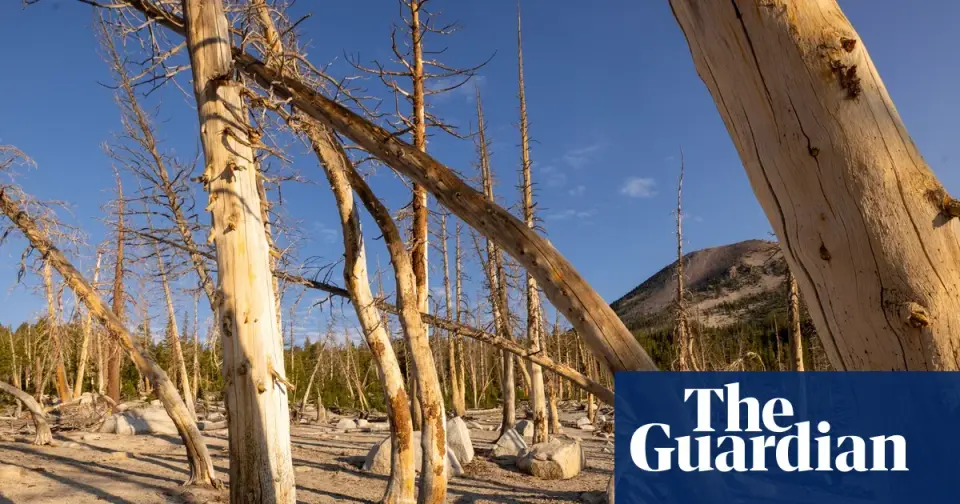
A new study in Science reveals that during the Paleocene-Eocene Thermal Maximum (PETM) 56 million years ago, rapid carbon release led to a 60% loss of forest canopy, contradicting claims that high CO2 levels 'green' the planet. Researchers analyzed fossil leaf cuticles in Wyoming to reconstruct this ancient ecosystem collapse, which took over 100,000 years to recover. The findings warn that current human-driven warming, occurring 10 times faster than the PETM, may push modern forests past critical thresholds, leading to irreversible ecological damage.
Key points
- Study in Science shows PETM warming caused a 60% drop in forest canopy density, not growth.
- Fossil leaf cuticles from Wyoming's Hanna Basin were used to reconstruct ancient forest structure.
- Recovery from the PETM forest collapse took over 100,000 years, a timescale far exceeding human lifespans.
- Current carbon emissions are 10 times faster than the natural PETM event, increasing risk of rapid ecosystem failure.
- The 'greening' effect of CO2 reversed around 2000 as heat and drought stress outweighed growth benefits.
Background
This study builds on earlier concerns about the long-term carbon storage capabilities of planted forests, such as those in China's Great Green Wall, which grow faster but may not sustain carbon as effectively as natural forests over time. It also aligns with ongoing debates about the pace of decarbonization in major industrial hubs like the Port of Rotterdam, where rapid transitions are necessary to avoid tipping points.
How outlets are covering it
The Guardian and Gizmodo emphasize the 'browning' of the planet, highlighting that while CO2 initially boosted plant growth, heat and drought eventually caused massive tree mortality. The Conversation provides a detailed technical explanation of the methodology, noting that the forest canopy reached peak density just before the warming event, only to collapse as temperatures rose. All sources agree that the current rate of human-driven carbon release is significantly faster than the PETM, leaving ecosystems less time to adapt. The Guardian specifically contrasts these findings with claims by US officials like Doug Burgum and Chris Wright, who argue that CO2 is beneficial for plant growth, labeling such views as scientifically erroneous.
Why it matters
The research demonstrates that forests are not resilient to rapid warming, challenging the narrative that increased CO2 will lead to a greener planet. With current emissions outpacing natural historical events by a factor of ten, the risk of crossing irreversible ecological thresholds is high. The 100,000-year recovery time of the PETM suggests that if modern forests collapse, the damage could persist for millennia, severely impacting global carbon storage and climate stability.
What to watch
Researchers plan to investigate forest changes during the PETM in other global locations, particularly the tropics, to understand the response of major carbon sinks like the Amazon. Immediate action to reduce fossil fuel emissions is urged to prevent crossing the same thresholds that led to the ancient forest collapse, as recovery from such events is measured in tens of thousands of years.
- Fossils show huge carbon emissions harm forests, not ‘green the planet’ theguardian.com
- Ancient forests took 100,000 years to recover from the last global warming period similar to today – Wyoming fossils reveal what happened The Conversation
- Paleontologists reconstruct forests of 56 million years ago with chilling parallels for our warming planet Phys.org
- Forests Withered During an Ancient Warming Episode. History Could Repeat Itself Gizmodo
Want the full story? Read the original reporting
Read on theguardian.com